

What Does It Really Mean to Rise Above Cancer?
Drawing on her own healing journey through cancer, Sarah Hurst is a coach and creator of the Mind Medicine Movement™. She helps people calm the nervous system, reconnect with themselves, and take back their power to heal body, mind, and soul.

When I first began using the words Rising Above Cancer, they were never meant to suggest beating cancer, defeating it or somehow becoming untouched by fear. Cancer had already taught me that life is far more complicated than that. For me, rising above gradually came to mean something quieter and more personal: reaching a point where cancer could still be part of my life without being allowed to occupy every part of me.
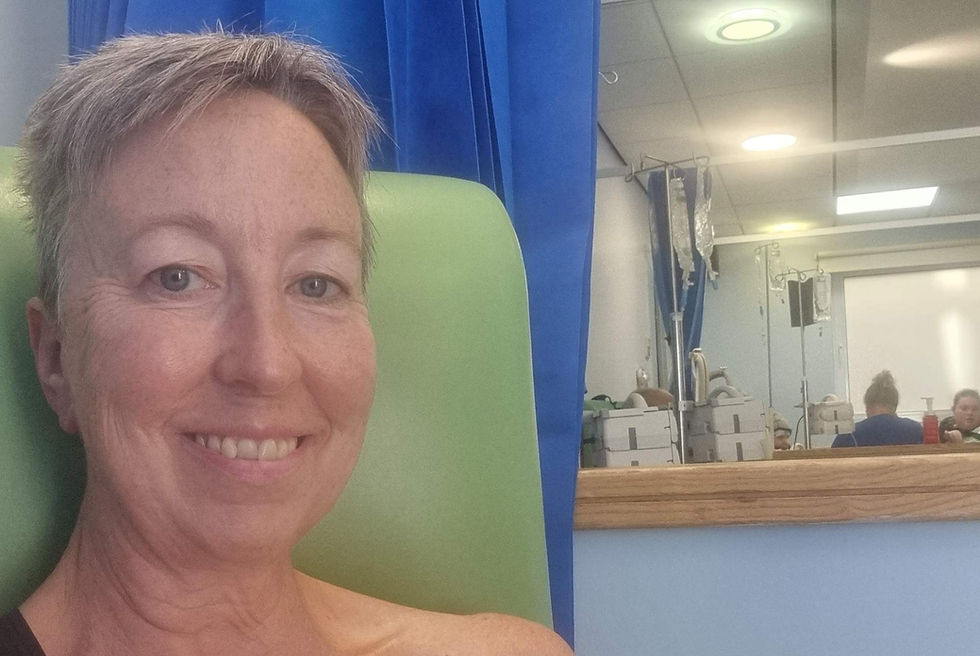
After three diagnoses, treatment, surgery, uncertainty and the emotional impact that came with all of it, I began to understand that healing was not simply about what happened medically. It was also about how I lived inside myself while life was happening, how I responded to fear, how I related to my body and whether I could still recognise myself beneath everything cancer had brought. Rising above became less about escaping the experience and more about finding a way to remain connected to myself within it.
What does rising above mean?
The language we use around cancer is deeply personal. Some people embrace the word survivor, others prefer warrior, patient, thriver or simply their own name without any additional label at all. Research into cancer identity has shown that people relate to the term “cancer survivor” in very different ways, which is why I believe those labels should always belong to the individual rather than being imposed from outside.
The National Cancer Institute’s definition of survivorship is much broader than many people realise. It begins at diagnosis and continues throughout life, encompassing the physical, emotional, social and practical effects of cancer, while also recognising family members, friends and carers as part of that experience. That breadth matters because rising above cancer should never belong only to somebody whose treatment has finished or whose scans are clear.
It can also belong to the person sitting in a chemotherapy chair, somebody living with recurrence or advanced disease, a carer trying to hold life together, or somebody years beyond treatment who still feels the emotional reverberations of what happened. For me, rising above is not a medical outcome. It is a way of relating to what is happening and recognising that, even when you cannot control everything cancer brings, there are still parts of your life, your attention and your inner world that belong to you.
That is an important distinction because cancer language is often full of battle metaphors. We fight, battle, beat and lose to cancer, and for some people those words feel empowering. For others, they can create a painful implication that the outcome somehow reflects how hard somebody fought. I have never believed that illness is a competition in courage, and I do not believe somebody becomes more deserving of recovery because they stayed positive, meditated every day or fought harder.
Rising above cancer does not mean rising over it as though you have conquered it. It means refusing to let the diagnosis become the only lens through which you see yourself. There may still be treatment, fear, scans, fatigue, pain and difficult days, and there may be moments when you feel anything but powerful. Rising above does not require you to deny those experiences. In many ways, I think it begins when we stop pretending they are not there.
You are allowed to be frightened and still be moving forward. You are allowed to be angry and still have hope. You can be grateful for parts of your life while also wishing cancer had never entered it. Human beings are capable of holding more than one truth at once, and perhaps that is one of the most important things I have learned.
Taking back your power
One of the most destabilising parts of cancer can be the sudden loss of control. Appointments appear in the diary, treatment decisions have to be made, your body may change in ways you did not choose and the future can suddenly feel far less predictable than it did before. The life you assumed you were living can be interrupted almost overnight.
My own experience taught me that taking back power did not mean regaining control over everything. That was impossible. It meant recognising where choice still existed. I could not choose whether fear appeared, but I could learn how to respond when it did. I could not guarantee what a scan would show, but I could decide how much of the waiting period I gave over to imagining the result.
I could not change everything that had happened to my body, but I could begin changing the relationship I had with it. I could choose to ask questions, to rest when I needed to, to accept support, to say no when something did not feel right and to stop believing that strength always meant carrying everything alone.
This is where my phrase “Power begins with presence” became so important to me. Fear pulls us into the future, while regret and grief can pull us backwards. Presence brings us back to the only place where we can actually make a choice, which is now.
That may sound simple, but during cancer it can be profound. Sometimes taking back your power is not making a huge decision. It is taking one breath before reacting, asking another question at an appointment, allowing yourself to cry instead of trying to be brave, or noticing that this particular moment is not as frightening as the one your mind is predicting.
Power does not always look powerful from the outside. Sometimes it looks very quiet indeed.
Becoming more than the diagnosis
Cancer can very quickly become an identity, partly because life begins revolving around it. People ask about treatment, blood results and scans. Your calendar fills with medical appointments, and conversations that once had nothing to do with health suddenly seem to begin with, “How are you doing?”
It is completely understandable that the diagnosis can start taking up enormous psychological space. The difficulty is that even when cancer changes your life, it does not represent the whole of who you are. You are still a parent, partner, friend, professional, creative person, dog walker, gardener, music lover, traveller, introvert, extrovert or whatever else has always made you who you are.
This has been one of the central ideas throughout my work on identity. In my article Why Healing Begins With Gentle SIPS™, I explored Identity as one of the four pillars of my SIPS™ framework, alongside Slow Down, Purpose and Self-Love. Illness may change us, but change does not have to mean disappearance.
There can be grief for the person you were before diagnosis, particularly when the body, relationships, work or future plans have changed. There can also be a strange pressure to “get back to normal”, as though healing means restoring the person you were before everything happened. I no longer believe that is always possible, nor do I think it is necessarily the right goal.
That is why one line has become so important in my work: Healing isn't about getting your old identity back. It's about growing into the person your experiences have invited you to become.
That does not mean cancer happened for a reason, and it certainly does not mean we need to feel grateful for it. It simply acknowledges that profound experiences change us, and eventually we may have some choice about what we do with that change. We can grieve what has been lost while also becoming curious about what might now matter more.
Growth without the pressure
There is a recognised psychological concept called post-traumatic growth, which describes positive changes that can sometimes develop following highly challenging experiences. These may include shifts in priorities, deeper relationships, greater appreciation of life, a stronger sense of personal strength or new possibilities. Research in people affected by cancer has explored these changes, but I think the idea of growth needs to be handled with considerable care.
Growth is not compulsory. Nobody should feel pressure to turn cancer into a gift, find the lesson, become inspirational or emerge as a better person because of what they have been through. Sometimes an experience is simply painful and unfair, and there may be periods when getting through the day is more than enough.
Nor does growth mean distress disappears. People can develop new perspectives while still carrying grief, fear or vulnerability. That makes complete sense to me because human experience is rarely as tidy as the language we sometimes use to describe it.
You can feel stronger and still have days when you fall apart. You can appreciate life differently and still resent what cancer took from you. You can discover new purpose while still grieving the version of your life you expected to have.
That is much closer to my understanding of rising above. It is not replacing darkness with light. It is discovering that both can exist, while gradually allowing life to become larger than the darkness again.
Meaning can emerge in this process, but I do not believe it should be forced. Cancer has a way of bringing questions to the surface that may have been easy to ignore before: What matters to me now? How do I want to spend my time? Who do I want around me? What am I waiting for?
Those questions can change the direction of a life, but purpose does not need to become something enormous. You do not need to start a charity, change career or devote the rest of your life to helping other people because you have had cancer. Purpose may simply be spending more time with people you love, creating something, travelling, being outside, tending your garden or deciding that your life no longer needs to be filled quite so tightly.
In my own life, cancer eventually changed the direction of my work. It became part of the reason I created Rising Above Cancer and later the Mind Medicine Movement™, but I would never suggest that everybody needs to transform their experience into a mission. Purpose is personal, and sometimes it is not about doing more. Sometimes it is about finally allowing yourself to live differently.
Hope, meaning and uncertainty
Hope has become one of the most important words in my work, but I do not mean the kind of hope that insists everything will turn out exactly as we want it to. That kind of hope can become fragile because it depends on certainty, and cancer has a habit of showing us how little certainty life actually offers.
The hope I am interested in has more room around it. It can sit beside uncertainty. You can hope for good scan results while acknowledging that you are frightened. You can hope treatment works while also having difficult conversations about what happens if it does not. You can hope for many more years while still recognising that none of us is guaranteed them.
This is why I see hope as very different from forced positivity. Hope does not ask us to lie to ourselves or suppress fear. It simply gives us somewhere to look while we are living with what we do not yet know.
Sometimes hope is very small. It may be the next appointment, the next family meal, spring arriving, a holiday you want to take or simply believing that tomorrow could feel a little easier than today. These small points of light matter because they keep us connected to life beyond the diagnosis.
They also help us remember that meaning is not always found in grand moments. Often it lives in the ordinary. A conversation, a walk, a meal, a hand held across a hospital waiting room or a few minutes sitting quietly in the garden can carry far more significance than we realise at the time.
Perhaps that is why the small rituals we return to matter so much. In Why Small Daily Rituals Matter More Than Big Wellness Goals, I wrote about ordinary repeated moments as a way of reconnecting with ourselves. Those moments can become anchors when life feels uncertain, not because they remove fear, but because they remind us that fear is not the only thing happening.
Living while cancer exists
Perhaps the most important shift for me has been understanding that we do not have to wait for every fear to disappear before we start living again. It is tempting to postpone life. We tell ourselves we will relax after the scan, travel after treatment, make changes once we feel stronger or allow ourselves to trust the future when enough time has passed.
But cancer has already taken enough time.
That does not mean ignoring treatment or pretending uncertainty is not real. It means refusing to allow uncertainty to become the only story. Living can happen alongside treatment. Joy can happen during difficult periods. Laughter can exist on the same day as fear, and moments of peace can appear in the middle of a week filled with appointments.
We often imagine that rising above cancer will feel dramatic, as though there should be a moment when we suddenly realise we have conquered our fear and become a different person. In reality, it may be much quieter than that. Sometimes it looks like noticing that you enjoyed today, or that you went several hours without thinking about cancer at all.
It may look like making plans again, even though part of you is still afraid to. It may be allowing yourself to buy tickets, book the holiday, start the course or say yes to something without waiting for absolute certainty that the future will behave itself.
For somebody in active treatment, it may simply mean finding small ways to stay connected to yourself when so much of life feels medicalised. For a carer, it may mean remembering that you still have needs of your own. For somebody beyond treatment, it may mean allowing life to expand again after months or years of feeling as though everything revolved around scans, appointments and recovery.
There is no single version of rising above because there is no single experience of cancer.
Rising above is ongoing
I do not think there is a finish line where somebody finally rises above cancer and never feels afraid again. There are still scans, anniversaries and unexpected symptoms. Sometimes hearing about somebody else's diagnosis or simply walking back into a hospital can bring an earlier version of yourself rushing back.
That does not erase the work you have done. Healing is not measured by never being triggered, frightened or overwhelmed. It can be seen in how we meet ourselves when those feelings return.
Perhaps you recognise fear more quickly now. Perhaps you know what helps. Perhaps you reach out instead of carrying everything alone, or you can remind yourself that an anxious thought is not the same as a medical fact. Maybe you recover from the spiral more quickly, or you are kinder to yourself while you are in it.
These changes are easy to overlook because they can seem small, but they matter. The path is rarely linear, and I think we do people a disservice when we pretend otherwise. Rising above cancer is not something we achieve once. It is something we practise.
Some days it will feel natural. Other days you may feel as though you are back at the beginning, but you are not. You are meeting the experience with everything you have learned along the way.
What it means to me now
When I wrote my first Brainz article, Rising Above Cancer: My Story and the Birth of the Mind Medicine Movement™, I was writing about the journey that had brought me here. Eleven articles later, I think I understand those words even more deeply.
Rising above cancer does not mean cancer disappears from the story. It means the story becomes bigger. It means learning to slow down enough to hear yourself, recognising that your identity is larger than a diagnosis, allowing hope and purpose to return in whatever form feels true for you, and treating yourself with compassion rather than demanding constant strength.
It is rebuilding trust with a body that may have frightened you, learning to live alongside uncertainty and discovering that taking back your power rarely means controlling the outcome. More often, it means choosing how you want to meet the life that is here.
For me, that is where SIPS™ comes together. Slow Down creates the space to notice what is happening. Identity asks who you are now, rather than demanding you become who you were before. Purpose reconnects you with what still matters, while Self-Love changes the way you accompany yourself through all of it.
None of this needs to be done perfectly or fearlessly. Cancer may become a chapter you never would have chosen, and for some people it may remain an ongoing part of life. But it does not have to become the whole book.
Perhaps rising above cancer is not about rising away from what happened at all. Perhaps it is about allowing the experience to become part of your story without allowing it to write every chapter that follows.
For me, it has ultimately become about rising more fully into my own life.
If you are navigating cancer, living with the emotional impact of treatment, supporting somebody you love or simply trying to find yourself again after life has changed, you can explore the Mind Medicine Movement™ and ways to work with me. You do not need to have everything figured out before you begin. Sometimes taking back your power starts with slowing down, coming back to yourself and taking the next gentle step from there.
Read more from Sarah Hurst
Sarah Hurst, Coach & Creator of the Mind Medicine Movement™
After walking her own path through cancer, Sarah Hurst discovered that true healing isn’t just physical, it’s emotional, spiritual, and deeply personal. She went on to create the Mind Medicine Movement™, helping others calm their nervous systems, rediscover purpose, and reconnect with themselves through her SIPS™ framework: Slow Down, Identity, Purpose, Self-Love. Today, Sarah supports people living with or beyond cancer and anyone seeking calm, clarity, and wellness through her coaching, meditation, and touch therapy practice in Hove, East Sussex. She also offers an online coaching service.







