How AI Agents Are Revolutionizing Business Automation in 2026
Written by Adnan Ghaffar, AI-Driven Automation Expert
Adnan Ghaffar is an AI-driven automation expert and the CEO of CodeAutomation.ai. With over a decade of experience, he specializes in business process automation and custom tech solutions across industries like fintech, healthcare, and e-commerce.

Back then, companies relied on basic programs to repeat tasks over and over. Now, jump ahead to 2026, everything feels different. These days, smart systems do more than obey orders; they adjust paths and improve processes while growing smarter through experience.
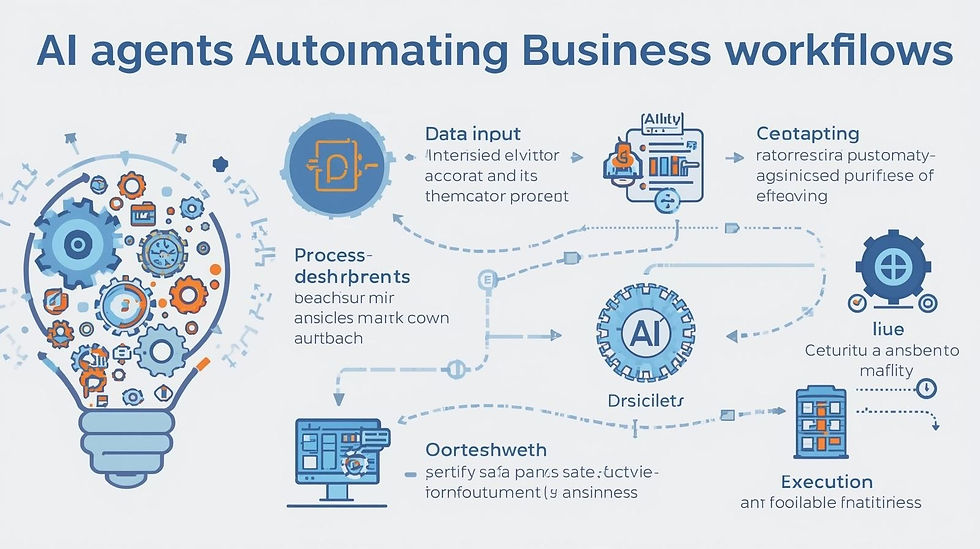
Firms now operate differently due to this change, adapting tasks and growing workflows while racing ahead in a web-driven era. Picture machines that act on their own, these tools now drive routine work inside organizations, turning what once felt optional into something essential.
What are AI agents for business automation?
AI agents work independently, handling jobs by adjusting as situations shift. Unlike traditional automated systems that follow fixed instructions, these agents learn from real-time data. Because they process live information through smart algorithms, decisions are made dynamically. What sets them apart is their ability to use patterns discovered through experience, rather than relying on static code.
Starting with routine tasks like chat responses, these agents smoothly transition into managing behind-the-scenes work. Not limited to one role, they form the backbone of today’s smart business systems. Once handled by humans, many workflows now run on their own through these digital helpers.
Their real strength lies in their deeper awareness, as they don’t merely perform tasks, they grasp meaning, study information, and continually improve.
The evolution from workflow automation to intelligent systems
Old ways of automating work focused on making routine jobs faster, like triggering email replies without human input, sorting billing documents, or adjusting entries in digital files. While these methods worked well enough, they stumbled when faced with unfamiliar situations. Their actions strictly followed prewritten rules, with no room for surprises.
What happens when machines start thinking on their feet? These systems go beyond basic automation by adapting as things unfold. Imagine a helper who sorts messages not just by order, but by urgency. It weighs what matters most right now and then picks a path forward.
Sometimes, it hands over answers directly, no waiting, no handoff needed. Decisions happen in real-time, shaped by context instead of fixed rules. A question arrives, the system responds, not because it was told exactly how, but because it figured out what fits.
Now, companies break free from fixed routines. With shifting needs comes the opportunity to shape fluid operations, ones that refine themselves over time instead of staying stuck. Outcomes improve because movement replaces rigidity, while adjustments happen without pause.
How AI agents improve business operations
What really stands out about AI agents? How do they smooth out work across various teams? Instead of waiting, customers get answers instantly, cutting delays and improving satisfaction. Transactions move faster in finance, anomalies are detected quickly, and reporting is almost flawless every time.
By tracking task flow, AI identifies where bottlenecks occur and suggests fixes. What sets this apart isn’t just speed, it’s depth. Old-style tools automate steps but miss patterns hiding beneath layers of activity. When smart decisions join automated workflows, performance shifts into a range once out of reach. Efficiency like this didn’t exist before machines began learning on the job.
What truly sets AI agents apart is their ability to handle massive amounts of information instantly. Instead of waiting hours, companies get results on the fly, spotting trends as they form. This enables quicker decisions, guided by actual data, not guesses. Staying ahead isn’t about making assumptions when responses come from live feedback loops.
Benefits of AI business tools
Imagine getting things done faster than ever. Teams find extra hours when routines shift from slow to nearly instant. Machines handle the heavy lifting, so people can focus on bigger ideas. Speed becomes the new normal, not something exceptional. Minutes replace hours spent on routine tasks.
Growth brings bigger challenges. As companies expand, keeping things running smoothly becomes harder. Rather than hiring more staff, smart systems take on additional tasks. These digital helpers manage heavy workloads without draining budgets, keeping efficiency high as demands rise.
Mistakes happen less often. Since these systems follow code instead of intuition, errors are rarer. With each attempt, they improve, fine-tuning their performance over time.
What stands out is how these tools sharpen decision-making. With smart automation in play, companies adapt quickly, confident in their steps when facing new market moves or internal hurdles.
Challenges businesses should consider
Though gains stand out, putting AI agents to work brings complications. Getting them into current setups often trips things up. Making sure these smart systems play well with what's already running matters a lot.
Fresh insights begin with solid information. Since AI tools rely on what they learn, businesses need to handle their data carefully. When information is inaccurate or outdated, performance suffers, no matter how sophisticated the technology.
Shifting workflows can cause uncertainty. When AI enters the workplace, old habits may clash with new rhythms. Employees adapt more easily when they can see what the technology does, not just hear about it. Clear, consistent communication accelerates learning. Trust builds gradually, typically after small successes add up.
Why AI agents are essential in 2026
Business moves faster than ever. Instant replies are crucial, as patience wears thin and attention shifts quickly. Markets change overnight. Rivals adapt fast, sometimes too fast to keep up. When everything runs with a delay, falling behind happens quietly. Simple tools, once helpful, now barely hold ground.
Starting quickly, AI helpers handle tasks with the sharpness businesses now expect. Because they adjust quickly, operations run smoothly while thinking through decisions like seasoned pros. When results matter, service feels clearer, smarter, shaped by learning what customers actually do.
Companies of all sizes now use these tools just to keep up. Left unchanged, older methods lose ground as others turn AI into real results.
The future of business automation
In the future, AI agents may do even more than they do today. As technology advances, these tools could handle more complex tasks, picking smarter paths with greater precision.
Soon, smart machines will shape how companies run. Instead of simply helping workers, these systems will work alongside people, sparking new ideas and smoother workflows across the board. A shift is underway, quiet but profound, changing who does what behind the scenes. Not replacement, but shared effort, growing stronger each day.
Businesses get it now, using AI agents isn’t optional anymore. Skipping them means falling behind, while adopting them opens doors once out of reach. Speed matters more every day, so moving early shapes what comes next. Staying ahead doesn’t just happen; it follows decisions made today.
Read more from Adnan Ghaffar
Adnan Ghaffar, AI-Driven Automation Expert
Adnan Ghaffar is a seasoned AI-driven automation expert and the CEO of CodeAutomation.ai, a company that specializes in custom tech solutions, AI automation, and business process automation. With over 10 years of experience, Adnan has worked with top-tier clients in fintech, healthcare, and e-commerce to streamline operations through advanced automation. Passionate about leveraging cutting-edge technologies like AI and machine learning, Adnan continuously seeks to innovate and optimize processes. When he’s not developing automation solutions, he’s exploring the latest in AI research and development, always pushing the boundaries of what’s possible.