

Watering Your Inner Garden From Soul Compost to Full-Court Bloom
Motise Miles is a mental wellness advocate, holistic coach, and doula who guides the human race through healing with intuitive wisdom, Spiritual Alignment, and HIPAA-informed care, blending nurturing gardening principles, witty insight, and grounded confidence while encouraging others to water the mind and bloom with intention.

This piece asserts that life’s greatest challenges can be transformed into catalysts for growth, not permanent wounds. By integrating lived experience with local understanding of the mental health crisis, I present a practical, step-by-step framework. Through brain-supportive nutrition, intentional movement, and Grounding, readers receive a strategy for overcoming internal barriers, strengthening the nervous system, and cultivating resilience. Crafted for visionaries, leaders, and builders, this is both a healing guide and an urgent call to create purposeful, enduring communities that nourish future generations.
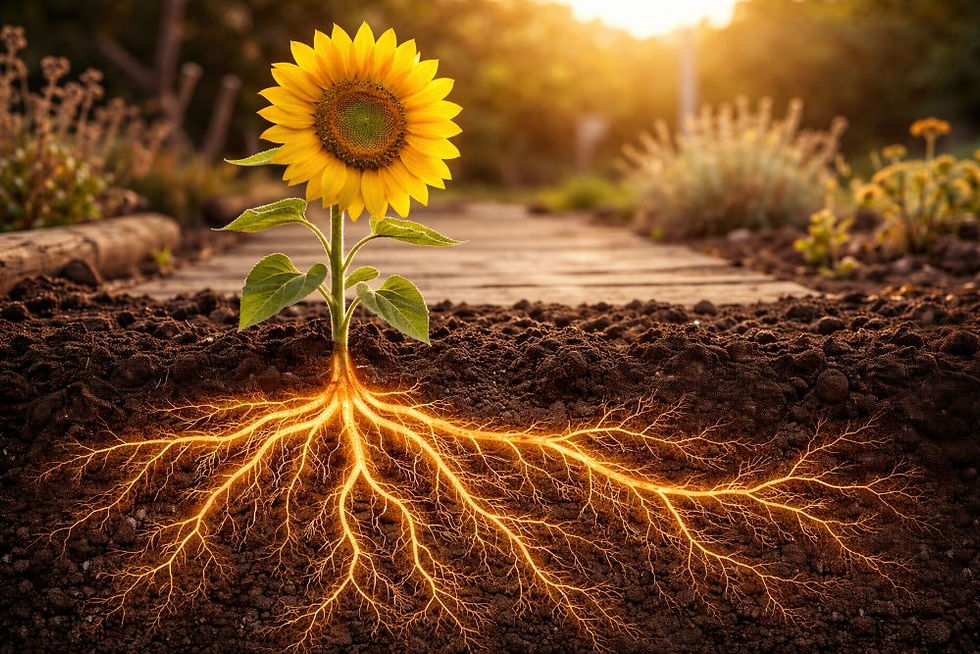
Growth carries a tender irony: it often asks for our deepest devotion in the very moments we most long for ease. There is a meaningful difference between resisting the quiet, daily work that growth requires and simply feeling depleted by life. You are not stagnant at all, perhaps you are dehydrated.
Mental wellness is not a one-dimensional power source. It is a daily practice of tending to your inner life with honesty and intention, the essential “electrolytes” your brain needs to perform. As a mentor, mental health advocate, and survivor of both mental and physical illness, I do not write from theory alone. I write from lived experience. I know what it means to feel displaced, to question your purpose, and to keep pouring into others while silently carrying personal battles.
I know what it means to sit in the heavy dark of depressive thoughts, wondering whether the pain would ever lift. However, I learned a truth that helped save my life, and it is now the foundation of how I mentor: your pain is not invalid, nor is it your infinite phase of development. It is your compost.
We often look at our internal, soiled roots and assume we have been permanently damaged by anxiety, trauma, or rejection. But compost is what makes the soil fertile. I had to learn how to turn deep pain into power. That kind of transformation requires radical consistency, especially on the days when the morning light feels too heavy and stepping onto the court of life feels impossible.
Running the play: The discipline of faith and showing up
How do you show up for yourself when you simply don’t want to? When your emotional capacity is empty, your mind is loud with overlapping doubtful thoughts, and you want to sit on the bench?
This is where you run the play.
In life, running the play means following the game plan built on Faith, regardless of how you feel in the moment. Nurturing your mind with Faith is not about waiting for a sudden burst of motivation. It is about building a habitual stance that can hold you steady. It is an honest, one-to-one handshake with your truth and your Creator, rooted in the understanding that your feelings do not have the final say over your purpose. God’s Plan!
When it is hard to pivot, you rely on the Divine Playbook: Galatians 6:9, James 1, John 3:16, Matthew 6:34, 1 Peter 5:7, Proverbs 3:5, Psalm 23, Psalm 30:5, Colossians 2:6-7, Revelation 3:1-6, and Romans 8:28.
Running the play means returning to your daily watering process, regardless of the emotional weather. It is a quiet act of defiance against depression: choosing to feed your mind before the world can drain it.
Scouting the court: Grounding ourselves in the social indicators
When we neglect our inner foundations, the effects reach far beyond the individual. As a Michigan-based mentor, I read the indicators of our society in the way a head coach studies game film. The mental health crisis demands both close attention and urgent action.
In Michigan, the 2024 age-adjusted suicide rate was 13.6 deaths per 100,000 people, representing 1,443 lives lost that year. That reflects a 25.7% increase over the past two decades. Nationally, suicide remains the second leading cause of death for people ages 15 to 34. Social rejection, exclusion, and bullying can intensify despair and deepen emotional harm.
Let me be clear: cruelty, bullying, and creating false measures of superiority are unacceptable. Real prevention means building active lines of care into daily life, refusing to let exclusion go unchecked, and intentionally creating spaces where people can heal without fear of being torn down.
Full-court alignment: Rooting the chakras, brain food, and movement
To alchemize pain into resilience, we must address the whole person: the Spiritual, the energetic, and the physical. Our mental health can impact the physical body through our energy centers, known as chakras. When trauma, stress, or bullying attacks our peace, it can create physical and emotional blockages.
Think of it as traffic on the court. We must intentionally clear the lanes using nutrition, movement, and Spiritual grounding to let our roots grow.
1. Mapping out the seven chakras
The Root Chakra, located at the base of the spine, is connected to safety, survival, and grounding. When anxiety and fear take over, your sense of stability can become completely destabilized.
The Sacral Chakra, located below the navel, is connected to creative flow, passion, and emotional identity. Rejection and depression can lock down this center, freezing expression and vitality.
The Solar Plexus Chakra, located in the upper abdomen, is connected to personal power, confidence, and the drive to execute the play. Bullying and outside criticism can drain this center, weakening motivation and self-belief.
The Heart Chakra, located at the center of the chest, is connected to compassion, forgiveness, and love. Grief and emotional trauma can block your ability to extend those qualities to yourself and others.
The Throat Chakra is connected to authentic expression. Suppression and fear of judgment can silence your voice, leaving you unable to speak your truth honestly.
The Third Eye Chakra, located between the eyebrows, is the entrance to your mind’s domain. Mental fog, doubt, and continuous stress can cloud intuition, clarity, and long-term vision.
The Crown Chakra, located at the top of the head, is connected to purpose, Spiritual Alignment, and relationship with The Creator. Prolonged isolation and disconnection can weaken that sense of divine connection.
2. Brain food alignment
To support the brain’s baseline and help reduce the physiological stress caused by mental distress and energetic blocks, we can fuel the body with natural, pure elements.
Spinach and dark leafy greens, connected here to the Root and Heart Chakras, are packed with folate, which supports dopamine production and mood regulation.
Carrots and sweet potatoes, aligned with the Sacral Chakra, are rich in beta-carotene and root-based nutrients that help anchor reproductive and creative vitality.
Honey and yellow peppers, connected to the Solar Plexus Chakra, can support steady energy and nourishment for a fatigued nervous system.
Berries, including blackberries, blueberries, and raspberries, are connected here to the Throat and Third Eye Chakras. Their antioxidants can help protect cells and support the brain under the strain of chronic anxiety.
Pure water and herbal infusions, connected to the Crown Chakra, help hydrate the body, support neural pathways, and restore clarity to the mind.
3. The movement strategy
Exercise is your ultimate physical release. When you engage in intentional movement, such as a power walk, kickboxing, weight training, yoga, or focused stretching, you are helping your body release stagnant tension and encouraging feel-good endorphins into your bloodstream. Movement can support the nervous system, clear emotional congestion, and help you get right back in the game.
4. Earthly and spiritual equipment
Alongside physical nourishment, we can utilize the natural elements God created and the frequencies of the Earth to Divinely anchor our focus, protect our space, and support each center.
Black Tourmaline, connected to the Root Chakra, is traditionally used for heavy grounding and energetic protection from outside criticism and negativity.
Carnelian and orange blossom, connected to the Sacral Chakra, are used to stimulate warmth, reignite emotional flow, and support suppressed creative passion.
Citrine and ginger, aligned with the Solar Plexus Chakra, are energizing elements focused on restoring personal power, boosting raw confidence, and driving daily motivation.
Rose Quartz and green tea, connected to the Heart Chakra, offer a reminder of unconditional compassion and encourage you to extend deep grace to yourself during uncomfortable growing pains.
Aquamarine and chamomile, connected to the Throat Chakra, can soothe a hyper-vigilant nervous system, encourage peaceful expression, and help ease vocal tension.
Lapis Lazuli and lavender, connected to the Third Eye Chakra, can calm mental noise, restore intuitive clarity, and protect the mind against loud, disruptive doubts.
Amethyst and frankincense, connected to the Crown Chakra, are used for spiritual grounding, anchoring trust in the divine game plan, and sealing your alignment.
Building your roster: Mentorship, wisdom, and community
You cannot win the game of life alone, and healing rarely happens in isolation, unless it’s one-to-one coaching with God! Whew! One of the most important parts of my own growth was realizing that I needed to build my roster with intention.
Healing often requires mentorship, someone who has already walked the terrain, can spot the blind places you cannot, and can offer wisdom for the season you are in. A mentor does more than comfort you, they help hold you accountable to the highest version of yourself.
Alongside mentorship, you need a community rooted in wisdom. You need people with deep ethical standards who can ground you in faith, speak truth when you are weary, and remind you who God called you to be. This is not about having a crowd of admirers. It is about having a steady team around you. When life tries to isolate you, community becomes the defensive line that helps hold you together.
Soul-awakening: A coaching checkpoint
Evolution requires you to get your hands dirty in the soil. Sit quietly with yourself, grab a journal, and carefully answer these grounding questions with absolute, raw honesty.
How deep is my love for self? In what ways do I need to learn deeper self-intimacy?
Am I running from my truth, or am I ready to face it honestly so I can heal the wound?
Are the pains I am carrying from previous chapters, or am I still allowing outside voices to dictate my worth?
Which wounds are tied to older, underdeveloped versions of myself, and have I offered that younger version of me true empathy and forgiveness?
Who is on my roster? Am I actively seeking mentorship and wise community, or am I trying to run the play alone?
Sinking the 3-pointer: Moving forward in grace
Letting go of older versions of yourself will feel uncomfortable. In the work of mental transformation, the final stretch often carries the most pressure. It can feel like the fourth quarter: you are far from the basket, the clock is running down, and the acoustics surrounding you are mega!
But sometimes the shot must be taken from that distance, outside your comfort zone. Sinking the 3-pointer means moving under pressure, trusting the muscle memory of your daily discipline, and releasing the ball with Faith.
We cannot run the play alone, nor bloom without a steady ecosystem. True strength is knowing when more electrolytes are needed. For the National Lifeline, call or text 988. It will instantly connect you to the Suicide & Crisis Lifeline.
Let us remember that Grace and grief coexist side by side. Rain pours, but it will hydrate your roots, making you more adaptable, more resilient, and harder to uproot. In time, your garden will stand as a living testament to your strength and perseverance.
Step into your healing. Honor your design. Commit to the daily discipline. Run the play. Shoot your shot and watch your foundation bloom.
“I failed many times on my road to success, it’s about creating opportunities, making a positive impact, and leaving a meaningful legacy for future generations.” – Percy “Master P” Miller
Follow me on Instagram for more info!
Motise Miles, Holistic Coach | HIPAA Compliance Analyst
Motise Miles is a mental wellness advocate, holistic coach, and doula who walks with the human race through healing, reminding individuals that balance, clarity, and Spiritual Alignment are birthrights. Rooted in nurturing gardening principles, she teaches others the power of grounding themselves like a flower while cultivating resilience. As a co-author of Mastering Mental Health Vol. 1, she shares insight on embracing sacred rarity through affirmations and reflective questions that support emotional processing and inner renewal. Known for her witty voice and grounded confidence, Motise encourages others to water the mind and bloom with intention.
References:
Chaudhary, S., Hoffmann, J. A., Pulcini, C. D., Zamani, M., Hall, M., Jeffries, K. N., Myers, R.,
Fein, J., Zima, B. T., Ehrlich, P. F., Alpern, E. R., Hargarten, S., Sheehan, K. M., Fleegler, E. W., & Goyal, M. K. (2024). Youth suicide and preceding mental health diagnosis. JAMA Network Open, 7(7), e2423996.
Ivey-Stephenson, A. Z., Crosby, A. E., Hoenig, J. M., Gyawali, S., Park-Lee, E., & Hedden, S. L. (2022). Suicidal thoughts and behaviors among adults aged 18 years – United States, 2015–2019. MMWR. Surveillance Summaries, 71(1), 1–19.
Snyder, H. N., & Swahn, M. H. (2004). Juvenile suicides, 1981-1998. PsycEXTRA Dataset.
Verlenden, J. V., Fodeman, A., Wilkins, N., Jones, S. E., Moore, S., Cornett, K., Sims, V., Saelee, R., & Brener, N. D. (2024). Mental health and suicide risk among high school students and protective factors: Youth Risk Behavior Survey, United States, 2023. MMWR Supplements, 73(4), 79-86.



