The Tribe Era of Beauty – Who Brands Are Really Talking To Now
Updated: Feb 25
For years, beauty marketing operated like a broadcast tower. Louder campaigns, faster content production, and constant platform presence defined competitive advantage. Editorial calendars stretched months ahead, engineered for algorithmic visibility across TikTok, Instagram, and retail media networks.
Scale became the operating system. A product launch meant tutorials everywhere, influencer seeding in waves, paid media layered across channels, and creator partnerships activated simultaneously. The assumption behind the activity was simple: reach would eventually convert into relevance.
As a boutique beauty consultant working with founders and brand leaders, I see the market moving in a different direction. The brands gaining traction are no longer beginning with content pipelines or launch calendars. They are beginning with people. The industry’s central question is shifting from “Will people buy this?” to something more revealing: Who are you talking to?
From audience to tribe
Segmentation frameworks remain useful for distribution planning, but they do not explain how beauty decisions actually form. Demographics describe consumers. Tribes explain behavior.
A consumer tribe emerges through shared environments, references, and routines. Beauty becomes meaningful through repetition inside these spaces. Products acquire value through context, not positioning.
At a drag brunch, makeup functions as identity and performance. At an esports convention, skincare routines adapt to long indoor exposure. Nightlife communities prioritize durability and portability. In a dormitory bathroom, products circulate through collective experimentation and opinion.
Digital environments operate with equal influence:
Barrier-repair routines unfold inside Discord conversations.
Dog-parent Substack communities discuss grooming products alongside sunscreen.
Podcast audiences debate beauty spending decisions with surprising seriousness.
A late-night hormonal acne question typed into ChatGPT reflects vulnerability that advertising cannot access.
These environments act as informal validation systems. Nielsen research shows that 88% of consumers trust recommendations from people they know more than brand advertising, reinforcing how credibility forms inside communities before campaigns reach them.
Within tribes, product discovery happens through observation, imitation, and recommendation rather than through messaging alone. People notice what others use, ask questions, and form opinions together. Products become part of shared language within the group. The tribe gives the product meaning long before the brand explains it.
This is why smaller environments often have outsized influence. When a product works inside a tribe, it becomes embedded in routine and conversation simultaneously.
Knowing the consumer beyond the dashboard
Dashboards reveal purchasing behavior. They do not reveal why certain products become routine while others disappear.
Brands that stay close to their communities begin to recognize patterns invisible in performance reports. They know which products are repurchased automatically and which ones generate curiosity without commitment. They recognize the difference between routine-driven purchases and experimentation-driven purchases.
Daily context shapes decision-making. Morning routines emphasize reliability and efficiency. Evenings allow patience. Weekends invite experimentation. Beauty plays different roles across these moments.
Consumers increasingly expect brands to recognize these differences. McKinsey reports that 71% of consumers expect personalized interactions from brands, and 76% feel frustrated when this does not happen.
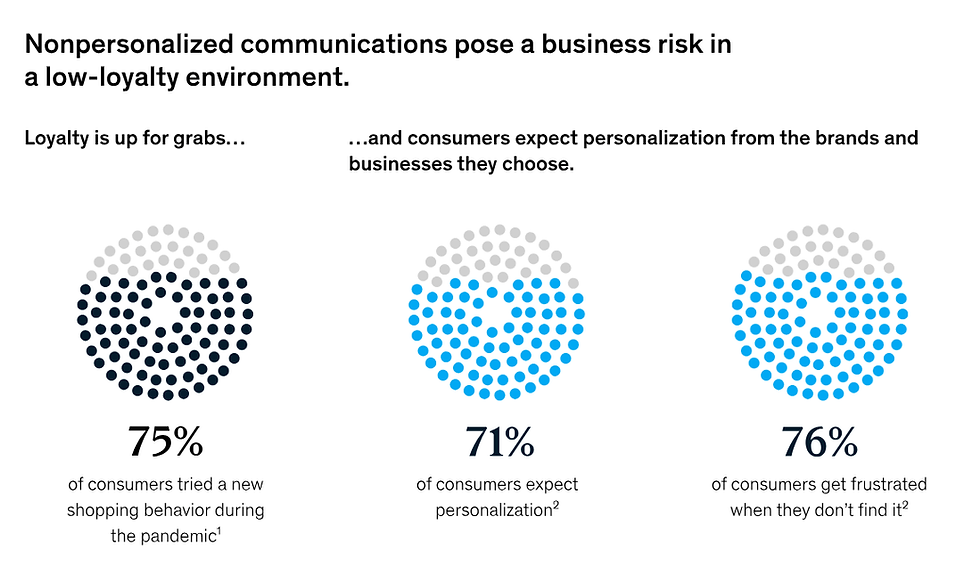
Image: Illustration showing factors affecting customer loyalty | Source: McKinsey
Observation changes how brands interpret behavior. Instead of reacting to declining engagement, teams begin to anticipate shifts in routine. Instead of guessing what consumers want next, they notice patterns forming in real time.
Proximity creates clarity that dashboards alone cannot provide.
Building products with the tribe in mind
Product development reveals whether consumer insight exists beyond research presentations.
For decades, beauty innovation followed a familiar order. A formula was developed first. The audience was defined later. Marketing translated product features into claims.
This approach carries measurable risk. Harvard Business Review estimates that up to 95% of new consumer product launches fail, often because they lack clear market relevance.
Brands gaining traction today start earlier in the process. They observe routines before writing briefs. They listen to recurring frustration before developing formulas. They pay attention to the language consumers use when describing dissatisfaction. They notice the small adjustments people make when products do not fully meet their needs.
This process produces products that feel familiar from the first use. Consumers recognize the purpose immediately because the product reflects an existing habit or need.
Over time, this approach builds stronger portfolios. Instead of isolated launches, brands create systems of products connected by shared consumer insight. Each product reinforces the brand’s role inside the tribe’s routine.
Balancing reach with depth
Scale remains necessary in beauty. Retail placement and social distribution introduce products to new consumers.
Exposure alone does not create adoption. Recognition inside a community does.
Many brands attempt to engage multiple tribes simultaneously, which often leads to communication that feels generic to everyone involved. A more focused approach allows brands to test cultural relevance before expanding.
Experiential marketing reinforces this dynamic. EventTrack research shows that 85% of consumers are more likely to purchase after participating in brand experiences.
When engagement begins inside a tribe, expansion becomes easier to interpret. Each interaction provides clearer insight into behavior, language, and expectation. Growth becomes less dependent on guesswork and more dependent on observed response.
Storytelling and tribe leaders
The rise of micro-influencers among Gen Z illustrates how credibility now forms in beauty culture. According to a Morning Consult study surveying 2,000 Americans ages 18–38, 57% of young Americans say they would become an influencer if given the opportunity, reflecting how normalized content creation and peer recommendation have become.
Image: Graph showing Gen Z sentiments on being an influence | Source: Morning Consult
Authority grows through participation in shared routines. Many TikTok Shop ambassadors speak from experience managing acne, working late shifts, attending festivals, or navigating limited budgets.
Their storytelling includes specificity that polished campaigns cannot reproduce. Texture, wear, inconvenience, comfort, and emotional context shape recommendations.
This difference appears in engagement data. Micro-influencers can generate up to 60% higher engagement rates than larger creators.
Community credibility increasingly outweighs follower count. These creators help translate products into everyday use, bridging the gap between brand intention and consumer routine.
The question beauty brands must ask now
Beauty marketing continues to evolve alongside consumer behavior.
Instead of asking whether a product will sell, brands must ask who will talk about it when the brand is absent. They must identify where those conversations happen and how consumers describe their needs in their own language.
Small communities often shape category perception because trust circulates quickly within them. A recommendation inside the right environment influences purchasing decisions more strongly than broad exposure. By the time a brand sees momentum in sales or social metrics, the decision has often already been made in smaller spaces where credibility carries more weight than visibility.
The competitive advantage of consumer proximity
The brands gaining momentum today invest in observation before messaging and relationships before campaigns.
Consumer proximity influences product design, storytelling, distribution decisions, and long-term loyalty. Harvard Business Review research shows that emotionally connected customers can generate more than three times the lifetime value of satisfied customers.
If a brand is still asking whether consumers will buy the next product, the question arrives too late. The decisive work happens earlier, inside communities where trust already exists and where beauty routines evolve through conversation.
For brands ready to approach growth differently, Cecilia Turck Consulting works with beauty companies to identify and activate consumer tribes through product insight, branding alignment, and culturally grounded marketing strategy.
By the time a product reaches mass visibility, its trajectory has often already been shaped within the communities that first tested, discussed, and validated it.
About the author
Cecilia Turck is a boutique beauty consultant who partners with founders and brand leaders to solve brand challenges, sharpen strategy, and unlock sustainable growth. She specializes in reframing brand strategy, decoding consumer tribes, designing go-to-market plans, and building DTC-first product and retail roadmaps that align brand vision, consumer behavior, and commercial reality.
Reference list:
McKinsey & Company (2021). The Value Of Getting Personalization Right — Or Wrong — Is Multiplying.
Gourville, John T. (2011, April). Why Most Product Launches Fail. Harvard Business Review.
Forbes Agency Council (2021, June). Micro-Influencers: When Smaller Is Better.
Morning Consult (2023). Gen Zers Still Really Want to Be Influencers.