

The Power of Rhythm and Why Drums4Health Is Emerging as a Natural Mood Booster
Written by Tamsin Ward, Founder of Drums4Health
Drums4Health exists to move the body and wake up the brain through rhythm-based movement that supports physical wellbeing, brain health and community connection.

In an age where mental health support is more important than ever, innovative approaches are emerging that move beyond traditional models of care. One such approach, quietly gaining momentum across the UK, is Drums4Health, a rhythm-based movement programme that is transforming how people connect with both their bodies and their minds.
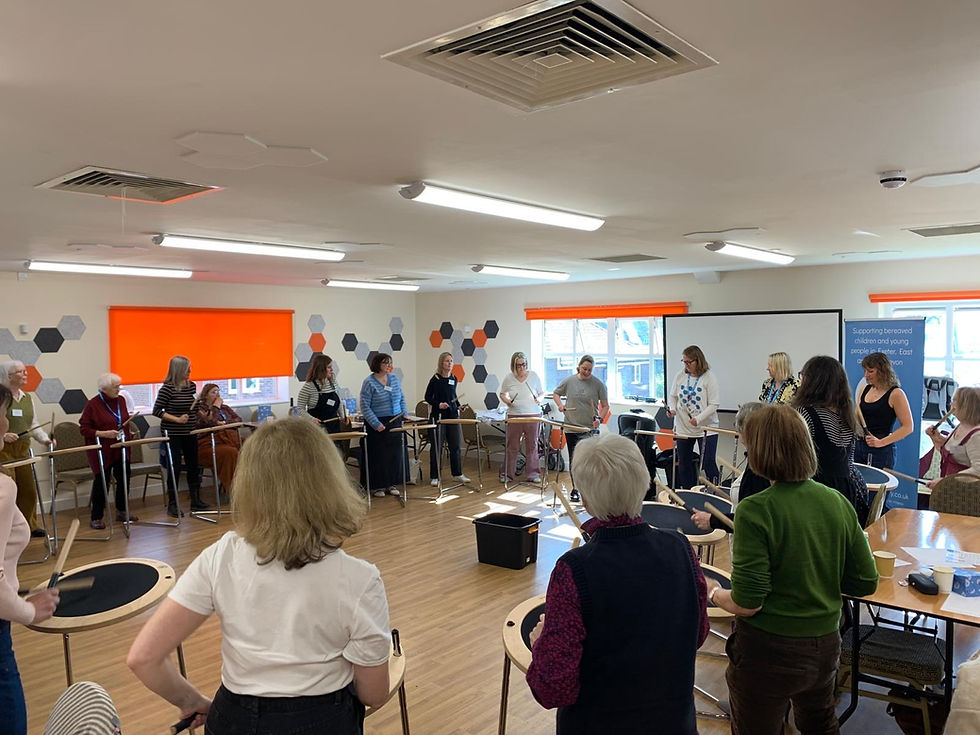
Blending exercise, music, and cognitive engagement, Drums4Health offers a powerful, accessible way to boost mood, reduce stress, and support overall wellbeing, and crucially, it does so in a way that feels uplifting rather than clinical.
A different kind of wellbeing experience
At first glance, a Drums4Health session might look like a group fitness class. But step inside, and it quickly becomes clear that something more is happening.
Participants are not simply following movements, they are learning rhythms, coordinating patterns, and engaging both sides of the brain in a way that is rarely seen in traditional exercise settings.
This combination of physical movement and rhythmic learning is key. Research increasingly highlights the role of rhythm in supporting brain function, particularly in areas such as memory, coordination, and emotional regulation. When paired with movement, the impact is amplified, creating a full-body, full-brain experience that participants can feel immediately.
From tired to energised: The immediate impact of Drums4Health
One of the most striking aspects of Drums4Health is the speed at which it shifts mood. People often arrive feeling fatigued, anxious, or disengaged. Within minutes, the room begins to change, energy builds, laughter emerges, and a sense of shared purpose takes over. By the end of the session, participants frequently describe feeling:
Uplifted
More energised
More confident
More connected to others
“It’s one of those rare activities where you can actually see and feel the shift happening in real time,” says founder Tamsin Ward. “People leave lighter, brighter, and more positive, and that’s incredibly powerful.”
Inclusive by design
A key strength of Drums4Health is its accessibility. Sessions are designed to be:
Inclusive of all ages and abilities
Delivered seated or standing
Suitable for those with physical, cognitive, or emotional challenges
This has made the programme particularly effective across a wide range of settings, including:
Community wellbeing groups
Schools and education environments
Workplace wellbeing initiatives
Dementia support organisations
Importantly, participants do not need any musical or fitness background. The focus is on engagement, enjoyment, and gradual progression, ensuring that everyone can take part and experience the benefits.
Purpose-built equipment, designed for engagement
Central to the experience are Drums4Health’s bespoke fitness drums, developed specifically to enhance both usability and impact. Unlike standard equipment often used in similar sessions, these drums are:
Fully portable and easy to store
Durable and suitable for a range of settings
Designed to produce a more satisfying, resonant sound
They are also exclusively available through Drums4Health, helping to maintain a consistent, high-quality experience across all sessions. “The sound matters,” explains Ward. “When people create something that feels and sounds good, it builds confidence instantly. and that’s a huge part of the mood boost.”
Wellbeing that extends beyond the session
Another distinguishing feature of Drums4Health is its focus on continuity. Participants are encouraged to stay engaged between sessions through:
Guided practice videos
Simple rhythm routines
Opportunities to build confidence independently
This ongoing connection helps to reinforce both the physical and psychological benefits, turning what could be a one-off experience into a sustainable wellbeing practice.
Why it matters now
With rising levels of stress, social isolation, and inactivity across all age groups, there is growing recognition that wellbeing support needs to be:
Accessible
Enjoyable
Socially engaging
Sustainable
Drums4Health meets these needs in a way that feels both modern and deeply human. It reconnects people with movement, with music, and, perhaps most importantly, with each other.
A simple but powerful outcome
Ultimately, the impact of Drums4Health can be summed up simply, people feel better. They leave sessions more energised, more connected, and more positive than when they arrived. And in today’s world, that shift, however small it may seem, can make a profound difference.
Read more from Tamsin Ward
Tamsin Ward, Founder of Drums4Health
Tamsin Ward is a former music teacher and headteacher, a qualified Personal Trainer, and holds a Master’s in Education. She founded Drums4Health to harness the combined power of movement and rhythm in supporting physical and brain health. With regular classes growing rapidly in popularity, Drums4Health is now expanding across the UK as an innovative and inclusive approach to wellbeing. You can contact her directly here.


