The Leadership (R)evolution and Why America May Need an Empathic Commoner
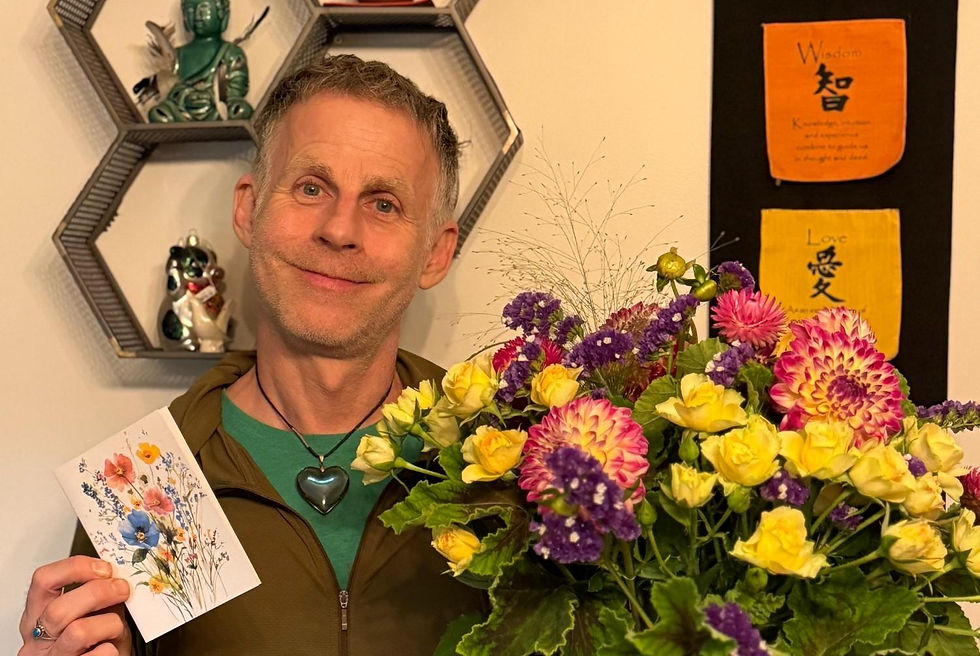
Ken Breniman is a queer author, licensed clinical social worker, yoga therapist, and thanatologist guiding fellow mindful mortals at the threshold of life, death, devotion, and (r)evolution. His work blends neuroscience, primatology, Celtic wisdom, and psychedelic integration to invite braver ways of being human.

What if the future of leadership belongs not to the loudest voice in the room, but to the person who never stopped caring? I have spent much of my life sitting beside people who believed they had reached the end of hope. As a therapist, death doula, yoga therapist, community educator, and award-winning author, I have witnessed thousands of moments when someone quietly admitted, “I don’t think the system sees me anymore.”
They were rarely asking for miracles. They were not looking for a superhero or another politician promising to fix everything. More often than not, they simply wanted to know whether anyone still cared.
Lately, I have found myself asking a question that would have sounded absurd even a decade ago: Could a commoner still become president of the United States?
Not a billionaire. Not a celebrity. Not someone born into political royalty. Just an unknown somebody, perhaps even a queer kid from rural Pennsylvania who grew up without power, spent decades serving ordinary people, learned how systems function, and has become increasingly convinced that our greatest national crisis is not simply political polarization.
It is empathic collapse. That may be precisely why this question matters.
Democracy was never supposed to be an exclusive club
The United States Constitution establishes only a few basic eligibility requirements for the presidency. A candidate must be at least thirty-five years old, be a natural-born citizen, and have lived in the United States for at least fourteen years. Pretty simple, don’t you think?
There is no constitutional requirement to be wealthy. There is no requirement to attend an Ivy League university. There is no requirement to inherit influence, build a personal brand, or become famous before serving. Yet somewhere along the way, we quietly invented our own unofficial qualifications: millions of dollars, corporate backing, media spectacle, name recognition, consultants, and endless fundraising.
Democracy slowly drifted toward aristocracy dressed in campaign logos until many of us began behaving as though leadership belonged only to a select class rather than to ordinary citizens. Perhaps that is the first illusion worth grieving.
The commoner has been here before
History has surprised us before.
Abraham Lincoln was born in a log cabin and educated largely through borrowed books. Harry S. Truman worked on his family’s farm and endured a failed business venture before entering politics. Lech Wałęsa was an electrician before becoming a labor leader and president of Poland. José Mujica became internationally respected not for extravagance, but for choosing simplicity while serving as president of Uruguay.
None of these leaders were superheroes. They remained connected to ordinary life, and perhaps that connection mattered more than polished perfection. Democracy occasionally remembers what it was designed to do. The question is whether we still do.
Empathic distress has become a national concern
There is another reason this question keeps returning.
Many of us are exhausted, not because we care too much, but because we care while living inside systems that often reward indifference. In psychology, we speak of empathic distress, compassion fatigue, moral injury, and burnout. These experiences are no longer discussed only in relation to therapists or healthcare professionals.
Teachers experience them. Parents experience them. Climate scientists, journalists, veterans, social workers, young adults wondering whether they will ever be able to afford a home, and older adults wondering where the social contract disappeared may all know something about this particular kind of exhaustion.
The human nervous system is not well equipped to absorb a twenty-four-hour stream of wars, climate disasters, economic anxiety, political outrage, and social media while simultaneously trying to remember our passwords.
We become overwhelmed. Then numb. Then distracted. Then cynical. Eventually, we begin mistaking numbness for wisdom.
That is dangerous because democracy depends upon citizens who remain capable of feeling. A society that cannot feel cannot repair. A society that cannot repair cannot evolve.
Systems are built by people
One of the most important lessons social work ever taught me is deceptively simple: people create systems, and systems eventually shape people.
When systems stop serving human flourishing, we often blame ourselves instead of redesigning the architecture. Healthcare, housing, education, mental health, end-of-life care, and environmental stewardship are treated as separate conversations, even though they continuously influence one another.
The ape touches the forest. The forest touches the climate. The climate influences migration. Migration influences economics. Economics influences politics. Politics influences mental health. Mental health shapes families. Families shape future voters.
Systems thinking simply asks us to remember what nature has always known: everything touches everything else.
Hope is a leadership practice
One of the greatest leadership lessons I have ever received did not come from a president. It came from Dr. Jane Goodall.
After more than sixty years of studying chimpanzees while witnessing war, extinction, habitat destruction, political upheaval, and environmental collapse, she refused to surrender to despair. When people asked how she remained hopeful, she rarely spoke of passive optimism. Instead, she reminded us that every individual matters, every individual has a role to play, and every individual makes a difference.
That is far more than an inspirational quote. It is a philosophy of leadership. Hope is not something we possess. Hope is something we practice.
It grows every time an ordinary person decides to leave the world a little better than they found it. A teacher who stays after school. A neighbor who checks on an elder. A scientist who tells the truth. A volunteer who plants milkweed for monarch butterflies. A therapist who refuses to give up on a grieving family.
None of these people will likely appear on cable news, yet together they quietly shape civilization. Perhaps this is the revolution we have been overlooking. Social survival rarely depends upon one heroic individual rescuing the group. Many social species, including chimpanzees, bonobos, elephants, and wolves, survive through cooperation and resilient relationships.
Maybe democracy works the same way.
The savior fantasy is failing us
Every election seems to search for another savior: the billionaire, the genius, the outsider, the strongman, or the chosen one.
Hollywood tells a similar story. Aliens invade. One hero emerges. Humanity survives at the last possible moment. It makes for thrilling cinema, but evolution rarely works that way. Forests recover through ecological networks. Coral reefs recover through ecological relationships. Communities recover through reciprocity.
The fantasy of rescue may actually be hindering our collective participation. If we keep waiting for the perfect leader, we may forget that leadership is also a civic practice. Perhaps humanity does not need another superhero. Perhaps we need millions of citizens rediscovering courage on an ordinary scale.
The antihero we did not expect
Stories often celebrate flawless heroes. Reality rarely does. The antihero carries grief. They doubt themselves. They make mistakes. They ask difficult questions. Most importantly, they keep showing up.
I sometimes wonder whether history mistakes humility for weakness. Yet humility may be precisely what allows curiosity. Curiosity makes learning possible. Learning creates adaptation. Adaptation is how species survive, not domination, arrogance, or the pretense of certainty where none exists.
Maybe the leader we need now is not someone who performs perfection, but someone honest enough to keep learning in public.
When culture rewards the opposite of compassion
The word “antichrist” has frightened generations, and I do not use it here as a prophecy or accusation. I am more interested in the symbolic question it raises. What happens when a culture rewards the opposite of compassion?
What happens when domination is rewarded over care, greed over generosity, spectacle over substance, certainty over curiosity, consumption over stewardship, and division over belonging? What happens when public life trains us to mock tenderness, punish vulnerability, and treat empathy as weakness?
If that is the spirit we are living inside, resisting it does not require supernatural intervention. It requires ordinary acts of courage repeated millions of times.
Tell the truth. Protect the vulnerable. Share resources. Admit mistakes. Listen longer. Repair relationships. Vote thoughtfully. Plant trees whose shade you may never sit beneath.
That may not sound dramatic enough for a dystopian blockbuster, but it might be exactly how civilizations survive.
Could a queer commoner lead?
I honestly do not know whether America is ready.
But I do know this. I understand grief. I understand systems. I understand burnout because I have lived it and learned from it. I understand privilege because I have benefited from some forms while being marginalized by others. I understand what it means to lose family, to accompany strangers toward death, to sit beside orphaned orangutans, and to teach students that mortality can deepen compassion rather than diminish hope.
None of these experiences automatically qualifies anyone to become president. But perhaps they cultivate something increasingly rare. Perspective.
The presidency should never belong to someone who believes they alone can save the nation. It should belong to someone who understands that no one can.
An empathic commoner does not lead through spectacle. An empathic commoner thinks in systems, not slogans; serves before performing; measures success by collective flourishing rather than personal gain; treats grief as a teacher rather than a liability; and understands that interdependence is not naïve idealism.
It is biology.
The plot twist
Perhaps the greatest plot twist is not that a commoner might one day become president. The greater plot twist is that millions of commoners might begin acting like leaders long before Election Day ever arrives.
Leadership has never been confined to the Oval Office. It begins in classrooms, community gardens, hospital rooms, family dinner tables, wildlife sanctuaries, libraries, voting booths, and neighborhoods where someone quietly chooses courage over convenience. Every healthy democracy depends upon citizens who understand that leadership is less about authority than stewardship.
That is why I keep returning to one question: How do we become a species worthy of inheriting the remarkable planet we already call home?
I do not believe the answer will arrive in an alien spacecraft. I do not believe it will emerge from artificial intelligence alone, another billionaire, or another self-proclaimed savior. It will emerge from human beings who rediscover that empathy is not weakness, grief is not failure, and interdependence is not a soft idea for sentimental people.
It is survival intelligence. If you have read this far, perhaps you are already one of those people.
Whether you ever run for public office is beside the point. The real invitation is to stop outsourcing leadership. Mentor someone. Volunteer. Support your local schools. Protect a vulnerable neighbor. Create beauty. Tell the truth. Vote with integrity. Build bridges where others build walls.
As Dr. Jane Goodall reminded us, “Every individual matters. Every individual has a role to play. Every individual makes a difference.”
Perhaps the next leadership revolution will not begin in Washington after all. Perhaps it begins when enough empathic commoners decide that caring is no longer something to apologize for, but something to organize around. History has always been shaped by ordinary people who refused to believe they were ordinary.
So, let’s stop waiting for heroes. We are the ones we have been waiting for. Today is the day to practice becoming empowered elders in training: brave enough to care, humble enough to learn, and honest enough to lead from wherever we stand.
Hope is not owned or controlled by presidents, prophets, or polished leaders. It lives in empathic commoners who keep choosing responsibility over despair. What once sounded like fantasy may become a near-future reality the moment enough ordinary people remember the extraordinary power they already carry.
Read more from Kenneth J. Breniman
Kenneth J. Breniman, Grief Guide & Mindfully Mortal Therapist
Ken Breniman is a queer author, licensed clinical social worker, certified yoga therapist, and thanatologist whose work lives at the intersection of mortality, meaning, and transformation. Drawing from neuroscience, primatology, Celtic wisdom, and psychedelic integration, he challenges the myth of human exceptionalism while honoring the precious role each of us plays in the ongoing evolution of our species. Ken is the author of a three-body solution and subversive acts of humanity, and the creator of the See-Soul children’s grief literacy series. Through writing, teaching, and ritual-informed practice, he guides mindful mortals toward deeper humility, resilience, and collective becoming.