

Self-Promotion – Dissecting the Creative Process
With a background in philosophy, education, and psychology, this former athlete is the founder of Mindset of an Athlete Consulting. Millicent Sykes is the one exploring how expectations and standards impact our perspective and performance.

I’ve heard countless perspectives on what it means to be ourselves, care for ourselves, and consider how others perceive us. Marketing, promotion, and love are just a few concepts that influence how we see ourselves, particularly in a society like the United States, where capitalism shapes so much of how we define, present, and value ourselves. So, what is true? What matters? What deserves to be examined, questioned, and internalized? I’m not here to tell you the answers, but I invite you to consider my thoughts.
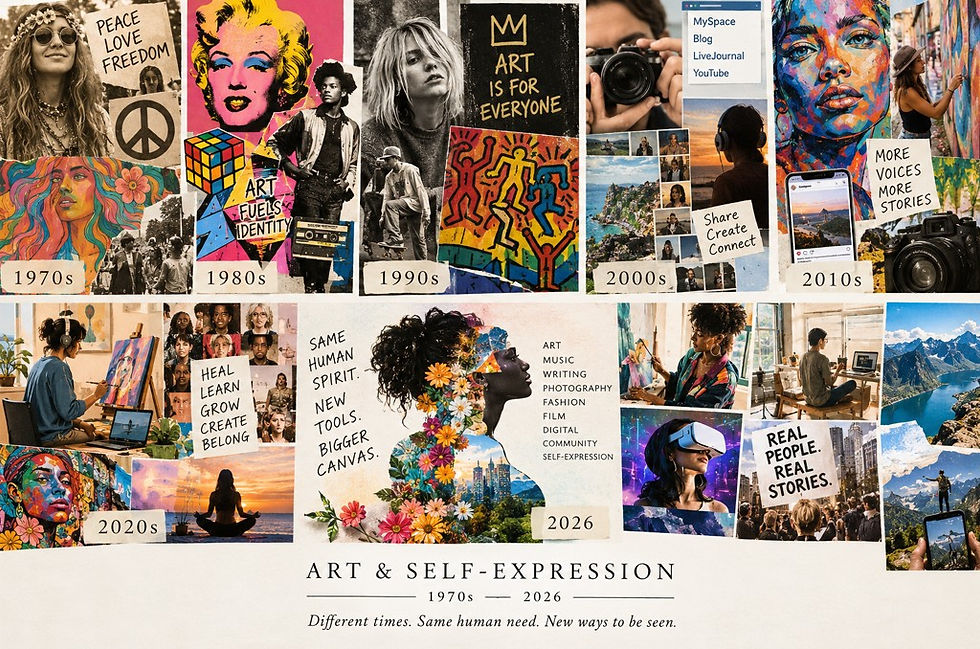
When I reflect on self-expression through my experiences as a trained ballerina with professional aspirations, a party girl and socialite, and an influential persona in professional and societal spaces, I recognize that expression exists on a spectrum. Each version of myself is authentic and serves a purpose depending on the role I occupy, the environment I enter, and the people with whom I interact.
My intention isn’t to determine what is right or wrong, true or false, acceptable or unacceptable. Instead, I want to share my observations of growing up in the United States as an intellectually curious person aware of societal pressures and the nuances of attractiveness, visibility, and influence.
Let’s explore the other side of self-expression: vulnerability and shame. What is it, and how does it shape the way we present ourselves? Vulnerability often involves revealing something about who we are, what we believe, or what we represent. Shame can emerge when we feel uncomfortable with what we’ve revealed or how others receive it. Sometimes, we question ourselves. Other times, we question the audience.
We have some control over how we express ourselves and how we interpret others’ responses, but we cannot control every reaction. Consider a comedian testing new material. Not every joke lands, and not every audience responds the same way. Does that make the expression wrong, or does it reveal something about timing, context, and connection?
Boundaries matter, too. But who determines where they begin and end? How much should we adjust ourselves to accommodate others without losing the freedom to be ourselves?
My experience as a therapist exposed me to the many ways shame can influence expression, confidence, and relationships. Yet we can continually establish new baselines for what feels comfortable and possible. Those baselines evolve with our goals, environments, experiences, and perceptions of what is normal.
I invite you to examine your own relationship with self-expression. It will ebb and flow throughout your life, and that evolution deserves room to breathe.
Even the idea of overexpression is subjective, shaped by the artist, the audience, and our individual capacity for comfort. I recognize that my perspective carries its own bias. I don’t naturally associate my expression with shame or guilt. Still, these emotions deserve consideration, particularly given their significance across many religious and cultural traditions.
Perhaps the question isn’t whether we express too much or too little, but whether we understand why we express ourselves, what we hope to communicate, and how much of ourselves we are willing to share without abandoning who we are.
Often, when we think about marketing and promotion, we begin with an idea, an expression of something that may or may not resonate. What determines its acceptability? Society, shared values, cultural norms, and the capital required to sustain it. Businesses and consumers shape trends, establish markers of desirability, and define perceived needs. But people determine the magnitude of their influence. Think about the stock market. Sentiment, speculation, fear, and confidence can be just as consequential as fundamentals.
Everyone talks about COVID-19, but surprise, we made it through. Was it anything like the Spanish flu? I wish I could ask my deceased relatives. Instead, let’s examine how we ebbed and flowed through an experience that legitimately affected the entire world. What a popular bitch.
Can we talk about social media during the pandemic and throughout the past seven years? More specifically, can we talk about emotional exploitation? Because my strings were pulled, for sure.
It seemed as though the boundaries of acceptability expanded beyond the United States into a much larger, interconnected arena, a global game in which everyone was kicking the same soccer ball, but not everyone had equal access to the field.
I won't lie. My alcohol consumption and career-related stress created a unique vortex of understanding, coping, and emotional distress tolerance. My own experiences shaped how I interpreted the world, just as everyone else's experiences shaped theirs.
But back to emotional exploitation. We all played a role, albeit at different levels. Under conditions of heightened uncertainty, isolation, and seemingly endless stakes, our capacity to socialize, connect, and cope depended heavily on privilege, including our health, geographic location, financial security, and degree of influence. Some had the resources to adapt. Others were simply trying to survive.
While we may have collectively moved on, or convinced ourselves that we have, this period also exposed the persistence of ableism. Who created it? Who reinforced it? If we're being honest, perhaps everyone who benefited from, participated in, or passively accepted systems that marginalized others played some part. Complicity doesn't always announce itself. Sometimes, it looks like business as usual.
Were emotions exploited, manipulated, and monetized? Of course. They always have been. Fear, outrage, grief, hope, and belonging have long influenced human behavior. What changed was the scale, speed, and intimacy with which these emotions could be accessed, amplified, and converted into attention, influence, and capital.
None of this is new. But perhaps the more important question is this. When will we acknowledge that emotional exploitation is woven into the systems we participate in and stop acting surprised when we discover that we've been manipulated?
Maybe awareness isn't about pretending we're immune. Maybe it's about recognizing the strings, questioning who holds them, and deciding whether we want to keep dancing.
We can always seek antidotes to the human experience, ways to make sense of our contradictions, channel our emotions, and transform the weight of existence into something meaningful. But perhaps, much like the Colosseum in its historical role and the enduring foundations of the arts, what we need most is a stage.
A space to witness and be witnessed. A place where the private becomes public, where individual experience finds collective resonance, and where emotion can be expressed without needing to be immediately explained or resolved.
To belt a ballad in front of tens of thousands of people must activate the body in a way that is difficult to replicate elsewhere. Imagine the adrenaline, the vulnerability, the vibration of thousands of voices sharing a single moment. There is something almost primal about it, the body responding to sound, the individual surrendering to the collective, and an emotion becoming an experience that transcends language. For a moment, performance becomes more than entertainment. It becomes a form of connection, release, and perhaps even survival.
The stage has always served this purpose. From ancient spectacle to contemporary concerts, theater, and digital platforms, we create spaces in which human experiences can be amplified, interpreted, and shared. Yet these spaces also raise important questions about authenticity, influence, and ownership.
This is where I want to focus: expression versus the categorization of imitation and originality. When does inspiration become imitation? At what point does borrowing from a shared cultural vocabulary diminish originality, and when does it become the very mechanism through which creativity evolves? Every artist inherits something: sounds, stories, gestures, traditions, and emotional languages shaped by those who came before. Perhaps originality is not the absence of influence, but the ability to transform influence into something distinctly personal.
Still, we are often quick to categorize what we see and hear. We label one expression authentic and another derivative, sometimes overlooking the context, intention, and lived experience behind the work. We celebrate innovation while demanding familiarity, asking artists to surprise us without straying too far from what we already understand.
Maybe the distinction is not simply between imitation and originality, but between reproducing an expression and meaningfully transforming it.
After all, art is rarely created in isolation. It emerges through exchange, observation, experimentation, and the desire to communicate something words alone cannot hold.
Perhaps the real question is not whether an expression has been done before, but what happens when someone makes it their own and whether we, as an audience, are willing to recognize the difference.
Read more from Millicent Sykes
Millicent Sykes, Founder of Mindset of an Athlete Consulting
As a trained ballerina since the age of 5, Millicent Sykes has had a focus on standards and performance. Due to two injuries, Millicent was encouraged to pivot toward a different phase of execution. Perspective, decision-making, and self-expression are the main components of Mindset of an Athlete Consulting, where Millicent attempts to help master complexity.
References:
Caliandro, A., Gandini, A., Bainotti, L., & Anselmi, G. (n.d.). The Platformization of Consumer Culture: A theoretical framework. Marketing Theory (Special Issue).







