

Resistance is Futile – How Meditation, Movement and Breathwork Can Support Mental Wellbeing
Updated: 17 hours ago
Written by Jade Taussig, Psychotherapist, Coach & CEO
Jade Taussig is an accredited psychotherapist, coach, and entrepreneur dedicated to helping people unlock lasting change, process their emotions, and find their voices. As co-founder of Integrated Wellness, creator of Mood Moved, and CEO of We Are The News, she combines psychological expertise with innovation, creativity, and personal growth.

There is no need to throw the baby out with the bathwater. Compassion-focused psychotherapy, positive psychology and mindfulness have all demonstrated benefits for mental wellbeing. The question is, "How can we build on these benefits and perhaps work with resistance in a different way?" More specifically, "What might we gain by working with the mind and body together?"
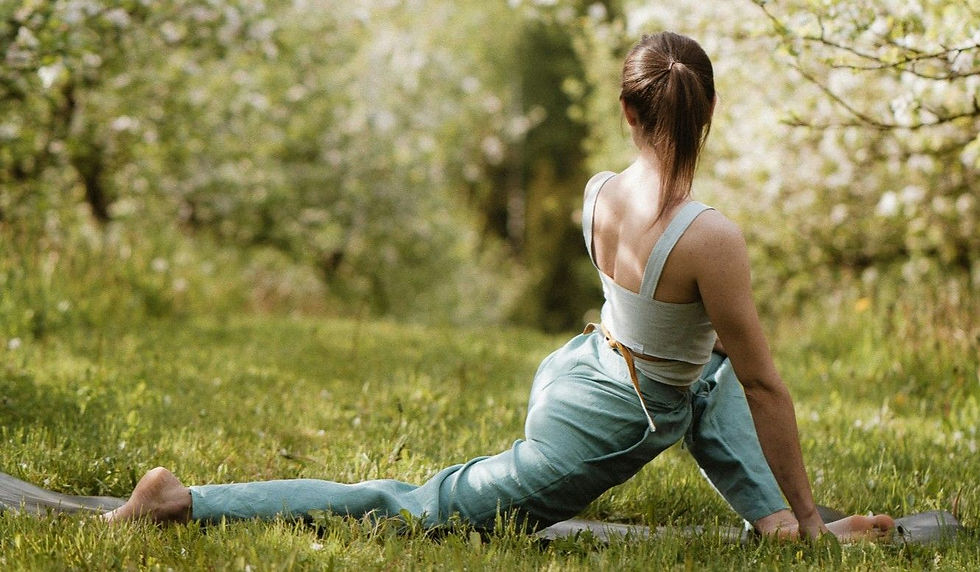
Physical exercise and meditation can complement psychological approaches. A 2026 review of 183 trials found that interventions combining physical activity with psychological practices showed the largest estimated improvements in wellbeing.
As a psychotherapist, the relationship between meditation, movement and mental wellbeing is particularly interesting, both personally and professionally.
Research suggests that meditation and movement-based practices may help reduce anxiety and stress, improve mood, support emotional regulation, and increase body awareness and self-compassion.
Meditation: Learning to quiet the mind
Many clients have informed me that meditation has been tremendously beneficial in managing anxiety, low mood and even some symptoms associated with obsessive-compulsive disorder (OCD), particularly intrusive thoughts.
Meditation can help us develop a different relationship with our thoughts. Rather than becoming caught up in repetitive thinking or rumination about painful memories, we can learn to notice thoughts without automatically engaging with them.
I recall a period when a friend and I worked together. We committed to meditating for 20 minutes during our lunch breaks and maintained this practice for several months.
I cannot deny that the benefits felt immense. I was calmer, more at peace and considerably more patient.
We stopped meditating together, but my friend continued the practice. Fast-forward 20 years, and he now reports being able to access a state of bliss almost at will. Despite experiencing the benefits myself, I struggled to maintain a regular meditation practice.
Meditation through movement: You don't have to sit still
I'm a busy person by nature, and sitting still, despite its paybacks, has always been difficult for me to sustain.
I was therefore delighted to discover that meditation doesn't necessarily have to involve sitting quietly.
This led me to explore meditative practices that incorporated one of my favourite therapeutic activities, movement.
Dance and martial arts have certainly served a meditative function for me. Both can encourage present moment awareness and a deeper connection with the body.
There is also growing scientific interest in the psychological benefits of movement-based interventions.
A recent meta-analysis of 19 randomised trials reported reductions in depressive symptoms following dance/movement therapy and other dance-based interventions.
More recently, I've taken up tai chi with occasional qigong.
The slower, calmer nature of these practices, with their emphasis on breathing, balance and focused attention, feels remarkably akin to meditation, and the experience is deeply mindful.
Research offers support for these benefits. A meta-analysis of 19 randomised controlled trials found significant reductions in anxiety and depressive symptoms among university students participating in yoga, tai chi and qigong interventions.
What particularly appeals to me is that movement can provide another route into mindfulness, especially for people who find traditional seated meditation difficult.
Rather than trying to still the body to quiet the mind, we can use movement itself as a way of becoming more present.
Breathwork: A powerful connection between mind and body
Breathing is something we do automatically, yet consciously working with the breath can be surprisingly challenging.
The breath is a powerful life force. If it’s cut off, most of us would be dead within minutes. Therefore, it’s no real surprise that it can help calm us down and ease anxiety. For most people, it can also assist in stopping a panic attack from occurring or halting one in its tracks.
When we begin paying attention to our breathing, we may notice patterns we were previously unaware of. Perhaps our breathing becomes shallow when we're anxious, or we unconsciously hold our breath during stressful moments.
Beyond immediate relaxation, there is growing evidence that structured breathwork can support mental wellbeing.
A 2023 meta-analysis published in Scientific Reports examined randomised controlled trials of breathwork and found statistically significant reductions in stress, anxiety and depressive symptoms.
However, the researchers also highlighted methodological limitations in some studies and emphasised the need for further research. Nonetheless, the findings are promising.
My clinical experience with clients has also been encouraging. I frequently recommend the 4-7-8 breathing technique to those who struggle with sleep. Most who have reported back to me have described positive results.
Of course, these individual experiences are not scientific proof, but they have reinforced my interest in the relationship between breathing, relaxation and wellbeing. Sleep is such a cornerstone of physical and mental health that even modest improvements can make a meaningful difference to how we feel and function.
Slow breathing and relaxation
It's important to recognise that not all breathwork practices are the same. Slow, controlled breathing can help some people manage negative emotions and encourage relaxation.
Research has also identified potential physiological benefits, including short-term improvements in cardiovascular functioning.
For people new to breathwork, gentle, comfortable breathing exercises may be a more accessible starting point. They can be practised without forcing the breath or attempting to achieve a particular emotional state.
Rapid breathwork and emotional exploration
Rapid, intense breathwork is a different experience. I've spoken with clients who describe powerful responses during these sessions, including feelings of emotional release, increased self-awareness and the emergence of memories or experiences which had been unconsciously buried for some time. Some have also reported improvements in mood and a greater sense of connection with themselves.
Although these experiences can feel transformative, the research into the longer-term psychological benefits of rapid breathwork remains preliminary.
There are also important safety considerations. Intense breathing practices can cause dizziness, tingling, light-headedness and, in some circumstances, fainting. Therefore, they may be unsuitable for people with certain respiratory, cardiovascular or neurological conditions.
Rapid breathwork can also induce altered states of consciousness. For some participants, this may be part of the intended experience. For others, however, it may feel overwhelming, destabilising or distressing, potentially triggering panic or dissociation.
There are concerns about the possibility of psychological symptoms worsening, particularly among people with a history of psychosis, bipolar disorder, severe dissociation or significant trauma-related difficulties.
For these reasons, intense breathwork should not be approached casually. Appropriate screening, informed consent and suitably trained facilitators are important.
The distinction between gentle breathing for relaxation and intense breathwork for emotional exploration is therefore essential.
A personal experience: Less is more
Recently, I had a session with Karema Fahkara, a yoga and breathwork specialist whose approach brought several of these ideas together.
I found that being guided through meditation and breathwork made a significant difference to my ability to sustain the practice, resist less and feel comfortable with stillness. We began by simply observing the natural breath.
At one point, Karema offered a piece of advice that particularly resonated with me: “Less is more. Don't try to relax.” He said this at precisely the moment I was intensely trying to relax.
Instead, he encouraged me to notice what was happening inside my body. What sensations could I feel? Where were they? What happened when I simply observed them without trying to change anything? Could I allow the experience to be there without fighting it? What might happen if I stopped resisting?
This small shift in perspective made a remarkable difference. Rather than trying to force myself into a state of relaxation, I began to allow myself to stop resisting and experience the present moment as it was.
We then moved through deep breathing, box breathing and a body scan. The meditation and breathwork exercises were interspersed with gentle yoga stretches and movement to music. By the end, I felt both relaxed and revitalised.
For me, the combination of stillness and movement was particularly powerful. The stillness helped me become more present and connected with my body. The movement helped me release a sense of physical tension, reconnect with my energy and feel more alive.
It reinforced something I have increasingly come to appreciate: we don't always need to choose between stillness and movement. They can complement one another beautifully.
Bringing mind and body together: Mood Moved
My interest in the relationship between mind and body, combined with my experience of movement and therapeutic approaches, helped inspire the creation of Mood Moved, a series of creative wellbeing workshops developed in collaboration with experienced practitioners. We bring together movement, creativity and psychologically informed reflection to offer opportunities for emotional exploration, self-expression, stress relief and connection.
The underlying idea is simple. Sometimes words alone aren't enough to express what we're feeling. Movement, breath, creativity and mindful awareness can offer additional ways of exploring our experiences and connecting with ourselves.
Join us at our next workshop
At our next Meditation & Movement: A Therapeutic Yoga Workshop, I'll be joined by Karema Fahkara, founder of Sujah Therapies. Karema brings over 13 years of experience in yoga, holistic wellbeing and indigenous healing practices, with a particular interest in the relationship between mind and body.
Together, we'll explore a combination of gentle yoga, mindful movement, meditation and breathwork in a welcoming, supportive environment.
Whether you're looking to slow down, reconnect with your body or explore a different approach to wellbeing, we'd love to welcome you.
Read more from Jade Taussig
Jade Taussig, Psychotherapist, Coach & CEO
Jade Taussig is a United Kingdom Council for Psychotherapy (UKCP) accredited psychotherapist, coach, and co-founder of Integrated Wellness, with over 17 years’ experience supporting mental health, emotional wellbeing, confidence, and personal growth. Her holistic approach draws on Psychodynamic Psychotherapy, Eye Movement Desensitization and Reprocessing (EMDR), Emotional Freedom Techniques (EFT), coaching, and movement-based practices. She is also the creator of Mood Moved, a workshop series combining psychotherapy, movement, creativity, and self-expression, and the CEO and co-founder of We Are The News, a community-driven social media platform focused on freedom of expression, transparency, and informed discussion.







