Who Teaches Children to Understand Themselves?
Francesca Kastelanides is a yoga and wellbeing expert, retreat leader and Co-founder and Head Trainer of BEAM ACADEMY. With over 20 years' experience, she works with children and adults across the UK and internationally, training practitioners in Early Years, SEN and children's yoga.

We spend years teaching children to read, write and make sense of the world around them. Yet many struggle to express what they are feeling, even when those feelings are clearly shaping their behaviour. Here is why emotional literacy and mindfulness matter, and six simple ways to support them.
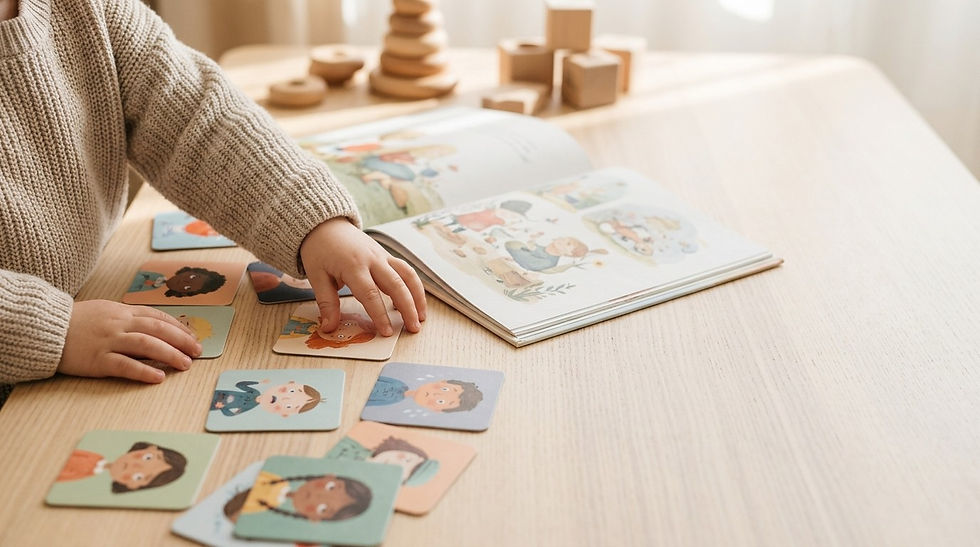
What is emotional literacy in children?
Emotional literacy helps children recognise, understand and express their feelings, rather than simply reacting to them.
In more than 20 years working in yoga and wellbeing, I have seen how often children struggle to express what they are feeling, even when those feelings are clearly influencing their behaviour.
As Co-founder and Head Trainer at BEAM ACADEMY, I have worked with thousands of children across schools and nurseries, including children with special educational needs and disabilities (SEND). My background in Special Education has also shaped the way I approach each child: looking beyond what I see on the surface and considering what they might be experiencing underneath.
One thing I have learnt is that before children can manage their emotions, they need opportunities to recognise, understand and communicate them.
How can we look beyond a child's behaviour?
A child might become restless during a quiet activity, withdraw from a group, struggle with a change in routine or become frustrated when something doesn't go as planned.
It is easy to focus on the behaviour itself. But what if we looked a little deeper?
Is the child feeling overwhelmed? Anxious? Disappointed? Are they struggling to communicate a need or finding their environment difficult to manage?
In my sessions, I have learnt that what appears to be disengagement or challenging behaviour can sometimes be a child's way of communicating something they don't yet have the words to express.
This is why emotional literacy matters.
How can we help children understand their inner world?
Children often experience emotions physically before they can describe them. Anxiety might feel like a tight tummy; frustration might show up as clenched fists; excitement might make it difficult to sit still.
Through movement, breathing and mindfulness activities, we can help children begin to notice these connections between their bodies and emotions.
We can also help them develop a richer emotional vocabulary. There is a difference between feeling disappointed, embarrassed, worried or overwhelmed. Being able to identify those differences gives children a better chance of communicating what they need.
I often find that a story, a movement activity or a simple question can open up a conversation that might otherwise never happen.
The aim isn't to make difficult feelings disappear. It is to help children understand that all feelings are part of being human, and that they can gradually learn ways to respond to them.
What does mindfulness really mean for children?
Mindfulness is often associated with sitting quietly, closing our eyes and taking deep breaths. But its value goes much further.
At its heart, mindfulness is about noticing what is happening in the present moment: our thoughts, feelings and physical sensations. It gives children an opportunity to pause and become curious about their experiences rather than automatically reacting.
Through my work with children of different ages and abilities, I have learnt that mindfulness doesn't need to look the same for everyone. With younger children, it might involve listening to sounds, exploring a sensory object, moving like an animal or noticing how their bodies feel after a game.
For some children, particularly those with additional needs, sitting still or focusing inward can feel uncomfortable. They may respond better to movement, music, visual prompts or sensory activities.
The important thing is to make mindfulness accessible, flexible and child-centred. It should be an invitation, not another expectation a child feels they are failing to meet.
Why does emotional regulation begin with connection?
One of the most important lessons from working with children is that emotional regulation doesn't develop in isolation.
Children learn through relationships. A supportive adult can help them feel safe enough to process a difficult experience. Through these repeated moments of connection, they gradually develop the skills to manage more independently.
We cannot simply tell a child to calm down or take a breath and expect them to know how. We need to understand what they are experiencing and offer the right support.
This is particularly important for children with SEND, where sensory differences, communication needs and difficulties with transitions can influence how a child responds.
There is no universal approach. What helps one child may not help another. Understanding the individual, offering choices and adapting our expectations are essential.
Why do adults need to model emotional awareness?
We also need to look at ourselves. Children observe how we respond to stress, frustration and uncertainty. They notice whether we pause before reacting and how we speak to others.
As adults, we cannot expect children to develop emotional awareness if we are unwilling to explore our own.
In my experience, some of the most meaningful learning happens when we model the very skills we hope children will develop: recognising our feelings, acknowledging when something is difficult and choosing how we respond.
6 simple ways to support a child's emotional wellbeing
Helping children develop emotional awareness doesn't need to involve complicated activities or formal mindfulness sessions. Small, consistent moments throughout the day can make a real difference.
Here are six simple ways parents, teachers and practitioners can begin.
Help them name their feelings
Rather than simply asking, "Are you okay?", try giving children words to describe what they might be experiencing. "Are you feeling disappointed, worried or frustrated?" Over time, this helps build their emotional vocabulary.
Encourage them to notice their bodies
Ask questions such as, "What can you feel in your tummy?" or "Are your shoulders feeling tense?" This helps children recognise the physical signals that can accompany emotions.
Make space for feelings without judgement
Avoid rushing to fix or dismiss an emotion. Let children know it is okay to feel angry, sad or worried, while helping them understand that feelings and behaviours are not the same thing.
Introduce simple mindfulness moments
Listen to the sounds around you, notice five things you can see, watch a leaf move in the wind or explore how your body feels after moving. Mindfulness can be playful and active.
Use movement and breathing
Stretching, gentle yoga, animal movements and age-appropriate breathing activities can offer children different ways to connect with their bodies and navigate moments of heightened emotion. Always adapt activities to the individual child and allow them to choose what feels comfortable.
Model emotional awareness yourself
Let children hear you say, "I'm feeling a little frustrated, so I'm going to pause before I respond." Showing children how we recognise and work with our own emotions can be just as valuable as anything we teach them.
Should emotional literacy sit alongside reading and writing?
Academic learning is important, but so is helping children understand their inner world. The Education Endowment Foundation's guidance on social and emotional learning in primary schools suggests that effective social and emotional learning can lead to learning gains of around four months over a year.
Emotional literacy gives children the language to recognise and communicate what they feel. Mindfulness helps them become more aware of their experiences. Supportive relationships give them the space to develop these skills over time.
Perhaps it is time we gave these abilities the same consideration as reading and writing.
Because teaching a child to understand the world is important. Teaching them to understand themselves may be one of the most valuable lessons they ever learn.
If you're a parent, teacher, school or practitioner looking to bring more emotional literacy, yoga and mindfulness into children's lives, I'd love to hear from you. Through BEAM Academy, I work with schools, educators and practitioners to make children's wellbeing an integral part of their learning and development. Together, we can help children develop the skills to understand themselves, build confidence and navigate the world around them. Get in touch with the BEAM Academy team to find out more.
Read more from Francesca Kastelanides
Francesca Kastelanides, Director, Founder & Senior Trainer
Francesca Kastelanides is a yoga and wellbeing expert, retreat leader and Co-founder and Head Trainer of BEAM ACADEMY, a specialist provider of yoga, mindfulness and wellbeing training. Over more than 20 years, she has worked with thousands of children across schools and nurseries, alongside training teachers and practitioners in Early Years, children's yoga, teen yoga and SEN wellbeing. She is also an experienced adult yoga teacher, delivering sessions, workshops and retreats for individuals and organisations in the UK and abroad. Francesca's work draws together movement, breathwork and mindfulness to support wellbeing at every stage of life, and she continues to lead retreats that bring philosophy and reflection together with practice.