From Trauma to Sanctuary and How Nature and Intentional Living Support Healing
Emily Ross, LMHC‑S, is a trauma specialist, clinical consultant, and speaker with 20 years in community mental health. She has presented trauma‑focused research at national symposiums and is a sought‑after speaker and facilitator on burnout, trauma recovery, and community mental health.

What if healing does not require escaping the place where trauma happened, but instead begins by creating new experiences of safety, connection, and belonging? In Part One of this series, I shared the deeply personal story of inheriting the Florida homestead where my mother died in 2012. After thirteen years of believing she had died by suicide, the discovery of a handwritten letter in 2025 fundamentally changed my understanding of her death. I found myself responsible for a property connected to profound grief, betrayal, and unanswered questions. I made a decision that the tragedy associated with this place would not be its final chapter. But making that decision and learning how to live it are two very different things.
As a trauma therapist, I understand that healing cannot simply be accomplished through positive thinking, redecorating a room, or deciding to move forward. Trauma can affect the way our nervous systems respond to the world around us. Sometimes, the body needs opportunities to experience safety long after the mind understands that the original danger has passed. Learn more here.
This is where my work on the homestead has become something much more meaningful than gardening. It has become a daily practice of embodied healing.
What is embodied healing, and why does it matter after trauma?
Embodied healing recognizes that trauma can affect more than thoughts and memories. Traumatic experiences may influence physiological arousal, muscle tension, breathing, emotional regulation, and our ability to experience safety within our own bodies. As a trauma therapist, I often explain that understanding trauma intellectually and experiencing safety physiologically are not necessarily the same thing. We can know that a threat has passed while our bodies continue responding as though danger remains.
This is why trauma recovery may benefit from approaches that incorporate bodily awareness, movement, grounding, emotional processing, and supportive relationships alongside evidence-based psychotherapy. On the homestead, these practices have become part of ordinary life. I place my hands in the soil. I walk beneath the trees. I notice the rhythm of my breathing while tending the garden. I listen to birds moving through the branches. Sometimes, I allow myself to experience stillness without demanding that it become some profound spiritual revelation.
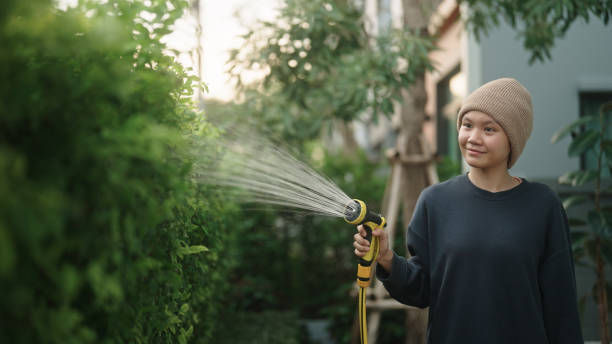
Learn to reset your nervous system. Sometimes healing looks remarkably ordinary. Sometimes it looks like watering tomatoes while your nervous system slowly discovers that this particular moment is safe enough to enjoy.
The goal is not to force my body into calmness. It is to develop a more flexible relationship with my physiological responses and recognize when I need movement, connection, rest, or additional support.
How can nature support trauma recovery and nervous system regulation?
Nature-based healing is not a replacement for psychotherapy, medical care, or trauma-specific treatment. However, research exploring green spaces, stress reduction, and psychological well-being suggests that contact with natural environments can support emotional restoration and general mental health.
For me, the connection is also deeply personal. The warmth of Florida sunshine, the texture of soil, the scent of herbs, and the sound of chickens wandering through the yard provide opportunities to orient toward my present surroundings. These experiences do not erase traumatic memories. They allow me to build new experiences alongside them.
Gardening also provides small, tangible opportunities to exercise personal agency. I decide what to plant. I prepare the soil. I nurture what is growing. I respond to changing conditions and accept that not everything will flourish simply because I want it to.
There is something psychologically meaningful about participating in a process that requires both intentional action and acceptance of uncertainty. A garden cannot be forced into blooming on command. Neither can a traumatized nervous system. Both require appropriate conditions, patience, and attention to what is actually needed.
At Root & Ramble®, growing herbs, tending flowers, caring for animals, and restoring the landscape have become expressions of this philosophy. Chickens roam. Gardens grow. Healing happens. Not perfectly. Not predictably. But intentionally. Ready to get started?
What does it mean to change the energy of a home?
When I talk about changing the energy of the homestead, I am describing both a personal spiritual practice and a psychological process. From a clinical perspective, our environments influence emotional experiences through sensory cues, learned associations, routines, relationships, and perceptions of safety. From a spiritual perspective, I experience the land as a place where intention, gratitude, remembrance, and connection carry meaning.
These perspectives do not have to compete. I can recognize the psychological importance of creating new associations while honoring the symbolic significance of lighting a candle, opening the windows, tending a meaningful tree, or offering a prayer over the place I call home.
I do not claim that spiritual rituals remove trauma from a building or replace clinical treatment. Rather, these practices help me express values and intentions that are central to my healing. I am deliberately creating opportunities for connection, creativity, honesty, and belonging in a place that has carried fear and grief. Perhaps most importantly, I am creating new memories without demanding that the old ones disappear.
How can you create a healing sanctuary after trauma?
You do not need to inherit a homestead, own acreage, or transform an entire house to begin reclaiming your environment. A healing sanctuary might be a bedroom, balcony, garden, favorite chair, or quiet corner of an apartment. What matters is creating an environment that supports your individual experience of safety, choice, and connection.
Here are nine trauma-informed ways to begin.
1. Begin with safety, not transformation
Before making changes to a space associated with trauma, consider whether it is physically and emotionally safe to spend time there. Notice your responses without judgment. If entering a particular room feels overwhelming, you do not have to force yourself to remain there. Healing should expand choice rather than reproduce experiences of helplessness.
2. Introduce gentle sensory grounding
Choose sensory experiences that feel supportive. Open a window. Listen to birds. Feel your feet against the floor. Notice the texture of a favorite blanket. If a grounding practice increases distress or dissociation, stop or modify it. There is no universally effective technique.
3. Reconnect with nature in accessible ways
Plant herbs on a windowsill. Spend time beneath a tree. Care for a houseplant or visit a nearby park. Nature connection does not require elaborate rituals or expensive equipment. The intention is to cultivate moments of attention, participation, and restoration.
4. Create rituals that reflect your values
A ritual can be spiritual, secular, cultural, or deeply personal. Light a candle in remembrance. Write a letter to someone you have lost. Offer a prayer. Create a small memorial garden. The purpose is not to erase the past, but to give your experiences a meaningful place within your present life.
5. Make small changes that restore agency
Rearrange furniture. Paint a room. Choose new bedding. Plant something that symbolizes a new beginning. Small decisions can help restore a sense of ownership over your surroundings. For individuals whose trauma involved a loss of autonomy, having genuine choices about their environment can be especially meaningful.
6. Respect the pace of your nervous system
Trauma recovery is not a race toward serenity. Some days, I feel deeply connected to the land and excited about what we are creating. Other days, the weight of my mother's death and the circumstances surrounding it feel much closer. Both experiences belong.
A sanctuary does not require us to feel peaceful every moment. It offers space to experience the full range of our humanity without demanding that we hide the difficult parts.
7. Allow connection to become part of healing
Trauma can isolate us, particularly when it involves family relationships, betrayal, or complicated grief. Invite safe people into the spaces you are reclaiming. Share meals. Tell stories. Work in the garden. Or simply spend time together. Supportive relationships can help reinforce experiences of connection and belonging. Connect with others healing.
8. Honor the person, not only their death
My mother was more than the circumstances of her death. She had a life, a personality, relationships, experiences, and a story that deserves to be remembered beyond its ending.
As I restore the homestead, I want to create spaces that honor her humanity rather than allowing the violence of her death to become her defining legacy. This is an important part of integrating grief: remembering the whole person.
9. Seek support and allow your sanctuary to evolve
Nature-based practices, grounding, and environmental changes may complement healing, but they are not substitutes for appropriate trauma treatment. If a space activates persistent panic, intrusive memories, dissociation, or significant functional impairment, working with a qualified trauma-informed mental health professional may provide additional support. Healing is not measured by how much distress you can endure alone.
The homestead I am creating today will not look exactly like the one I envision five years from now. Neither will I. We are allowed to change our minds about what peace looks like.
Healing does not require erasing the past
Perhaps the most important lesson this land is teaching me is that healing does not require a perfect beginning, a tidy ending, or a past that makes sense. Sometimes, healing begins when we decide that what happened to us will not be the only thing that grows from us.
I cannot change what happened to my mother. I cannot reclaim the thirteen years we spent believing a different story about her death. But I can decide what this land becomes. I can fill it with life, intention, laughter, growing things, and the kind of peace that does not require pretending the painful parts never existed.
I am not trying to turn tragedy into something beautiful. I am trying to make certain that tragedy does not prevent beauty from existing here again. I would love for you to be part of what grows here.
Your healing story is still being written: Come grow with me
Whether you are navigating traumatic grief, rebuilding after betrayal, learning to feel safer in your body, or longing to reconnect with the natural world, there is a place for you in the Root & Ramble® community.
Join me on Facebook. Follow the ongoing transformation of the homestead, where I share the beautifully messy intersection of trauma recovery, nervous system healing, nature, spirituality, and everyday life. Come for the healing conversations. Stay for the chickens, garden adventures, and occasional questionable decisions made with entirely too much enthusiasm.
Explore my self-paced healing classes. Discover trauma-informed education, embodied practices, nervous system awareness, and nature-connected approaches to well-being. Learn at your own pace and revisit what resonates.
Visit the Root & Ramble® online apothecary. Explore handcrafted botanical offerings and nature-inspired wellness products designed to bring a little of the homestead's connection with nature into your everyday rituals.
You do not need a homestead to begin healing. You do not need to have all the answers. You certainly do not need to have everything figured out before you begin. You just need somewhere to plant the first seed.
The land is changing. I am changing. Perhaps, somewhere along the way, something here will inspire you to reclaim a little piece of your own story. Come grow with me.
Root & Ramble® – Where chickens roam, gardens grow, and healing happens.
Read more from Emily Ross
Emily Ross, Certified Clinical Trauma Provider
Emily Ross, LPC‑S, is a trauma specialist and educator who embodies post‑traumatic growth by reclaiming the farm where her mother was murdered, transforming generational trauma into a regenerative homestead producing natural healing remedies and publishing self‑paced trauma recovery classes on embodied healing. She has presented trauma‑focused research at national symposiums and is a sought‑after speaker and facilitator on burnout, trauma recovery, and community mental health.