Pilates Gear for Home – The Practical Guide to Upgrading Your Mat Work
Mat Pilates is the foundation, it teaches breath, control, and clean alignment. But if you’ve been practicing consistently, you’ve probably felt the “mat plateau” moment, when familiar moves stop feeling as challenging as they used to. That doesn’t mean you need longer workouts or more complicated routines. It usually means you need a smarter stimulus.
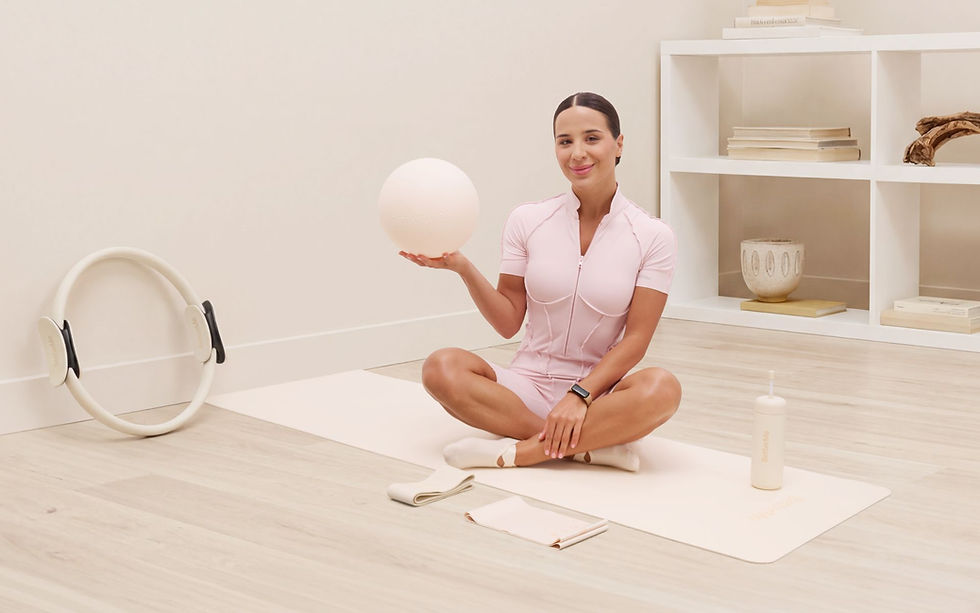
That’s where pilates gear comes in. The right props can make classic exercises feel brand-new: they add resistance when you’re ready to progress, and they add support when you’re refining technique. Even better, you don’t need a giant machine to upgrade your sessions. With a few strategic tools, your living room can start to feel like a studio, without losing the simplicity that makes Pilates sustainable.
Below is a practical breakdown of what to buy first, what each item actually does, and how to build a setup that matches your goals.
Why you need to upgrade your pilates gear
Pilates gear typically does two high-value jobs, assistance and resistance.
Assistance (support that improves form):
Helps you find the correct position, especially in core work and back articulation.
Makes difficult movements more accessible without “cheating.”
Offers tactile feedback so you can feel alignment (knees tracking, rib cage placement, pelvis stability).
This is why many pilates props for beginners aren’t only for beginners, they’re for anyone who wants cleaner movement.
Resistance (challenge that drives progress):
Adds load beyond bodyweight and gravity.
Improves strength endurance and control through the full range of motion.
Helps you upgrade home workout intensity without jumping into high-impact training.
The best part, many pieces of home pilates equipment can do both, depending on how you use them.
The must-have pilates gear breakdown
You don’t need ten gadgets. Start with the “workhorse” tools, small, versatile, and easy to store.
Resistance bands & loops
If you want one item that delivers the most variety per dollar, this is it. Bands can add challenge to glutes, legs, and upper-body work while keeping Pilates movements smooth and controlled.
Why they work
Portable resistance that mimics the idea of spring tension (without needing a machine).
Great for glutes and outer hips, especially if mat work has stopped feeling spicy.
Useful for gentle mobility work, too, bands can assist range of motion when you’re tightening up.
Best ways to use them
Glute bridges with a loop above the knees (forces hip stability).
Side-lying clamshells (targets glute medius).
Standing or seated rows (upper-back strength for posture support).
What to buy
One loop band set with multiple resistance levels.
One long band (with or without handles) for pulls, presses, and stretches.
The magic circle (pilates ring)
The ring is deceptively simple, and surprisingly effective. It turns “holding a shape” into active, focused work, especially for inner thighs, arms, and deep core engagement.
Why it works
Creates a clear “centerline” cue, squeeze inward or press outward and you instantly know if you’re engaging.
Excellent for adding challenge without increasing impact.
Strong choice if you want toning-focused sessions with precise control.
Best ways to use it
Bridge + gentle squeeze pulses between thighs (inner thighs + pelvic stability).
Overhead press in tabletop (arms + rib control).
Side-lying leg work pressing the ring (outer hip + inner thigh coordination).
What to buy
A ring with comfortable pads and enough tension to feel resistance (not so stiff you compensate with your neck/shoulders).
Mini stability ball
This is one of the most underrated props because it’s not about “making things harder”, it’s about making your body more honest. The ball improves control, balance, and core activation because it adds instability and feedback.
Why it works
Encourages deep core engagement to stabilize your pelvis and rib cage.
Helps you “find” neutral alignment in ab work.
Great for improving balance and coordination without jumping to complex choreography.
Best ways to use it
Ball between knees during core work (keeps legs aligned and active).
Ball behind the low back for supported abdominal curls (feedback without strain).
Ball under hips or between ankles for controlled leg-lowering variations.
What to buy
A mini ball with a grippy surface and a plug you can adjust, slightly under-inflated usually feels best.
How to build your perfect at-home setup
A smart home studio isn’t “buy everything.” It’s buy in layers, based on what you actually need right now.
Step 1: Choose your “first add-on” based on your goal
If you want stronger glutes/legs, start with bands & loops.
If you want more tone and control (inner thighs/arms/core integration), start with a magic circle.
If you want better core engagement and alignment feedback, start with a mini stability ball.
Step 2: Add one tool at a time (and master it)
The biggest mistake is buying five props and using none consistently. Your body adapts best when you:
Use one new prop for 2-3 weeks
Learn what “good tension” feels like
Then add the next tool when you feel ready for variety or a new challenge
Step 3: Prioritize quality for comfort
Quality materials matter more than people think. Bands that snap, rings that warp, or balls that constantly leak air are more than annoying, they can disrupt your practice and increase the risk of awkward movement.
When you’re ready to expand your setup, it can help to browse a curated Pilates gear collection instead of buying randomly. Choosing durable, well-made gear supports both comfort and long-term use, especially when you’re adding resistance.
Step 4: Keep it visible, not buried
If your gear lives in a closet you never open, it won’t become a routine. A simple approach:
One small basket for bands + ring
Ball slightly inflated and stored beside it
Mat rolled and reachable
This is how your space becomes an invitation instead of a decision.
The right pilates gear doesn’t replace mat Pilates, it expands it. Bands add resistance for strength progression, the magic circle sharpens tone and centerline control, and the mini stability ball improves deep core activation and balance. The best setup is the one that matches your current needs and grows with you.
Think of it as a practical upgrade, not more noise, not more clutter, just better tools for smarter movement. Start with one prop, use it consistently, and let your home practice evolve the way your body does, step by step, with control.