Our America, Liberty Still Demands Limited Government
William Davis is a leadership expert, speaker, and mentor dedicated to helping executives, managers, and aspiring leaders develop the skills to lead confidently and successfully.

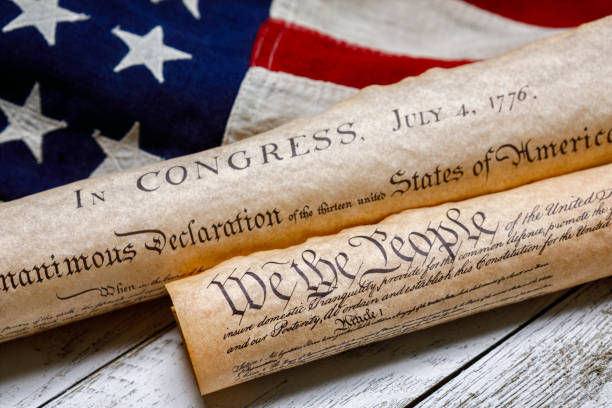
On July 4, 2026, America celebrated its 250th anniversary. Think about that for a moment. Empires have risen and fallen. Kingdoms have disappeared. Revolutions have consumed nations from within. Yet for a quarter of a millennium, the United States has endured, not because we are perfect, but because our Founders built a system that recognized a timeless truth: human nature never changes.
People are capable of extraordinary generosity, courage, innovation, and sacrifice. They are also capable of greed, corruption, manipulation, and the pursuit of power. The Founders understood both realities, which is why they did not write a Constitution for angels. They wrote one for imperfect people. That distinction matters.
Today, many debates center on capitalism versus socialism, free markets versus government planning, or individual liberty versus collective responsibility. I believe those debates often miss the larger point. The real question is not which system sounds more compassionate. The real question is this: Which system best protects freedom while recognizing the realities of human nature? My answer remains the same: the American experiment.
The Constitution was never about trusting government
The Constitution is often described as a blueprint for government. I see it differently. To me, it is also a document designed to limit government.
Every separation of powers, every check and balance, and every protected liberty reflects one fundamental belief: concentrated power is dangerous. This was not because the Founders distrusted one political party over another. Formal national political parties did not yet exist when the Constitution was written. They understood the risks of human nature and that power, once accumulated, rarely surrenders itself voluntarily.
That is why rights are not granted by government. They are recognized by government. Government exists to secure those rights, not to redefine them according to the political winds of each generation.
If we, as a nation, decide that the Constitution’s text no longer reflects who we are or where we want to go, there is a proper way to change it. Our Founders gave us that process. It is called a constitutional amendment.
They made the process difficult because they understood that the foundations of freedom should not be altered by the opinions of a few or the passions of the moment. If we are going to formally change the foundation of America, the American people, acting through the constitutional process, should make that decision. The rule of law works only when we agree that no individual, no court, and no political movement stands above it.
Capitalism is not built on greed
One of the greatest misconceptions about capitalism is that it rewards greed. Greed is not unique to capitalism. Greed is a human condition.
History is filled with greedy kings, dictators, bureaucrats, generals, clergy members, and politicians who never participated in a free market. The real question is not whether greed exists. It always will. The better question is this: Which system limits the damage that greed can cause?
A competitive market distributes economic decision-making across millions of people instead of concentrating it within a single authority. Every day, consumers signal what they value through their purchases. Entrepreneurs compete to earn their trust and business. In a competitive market, no single person possesses complete control.
Markets are imperfect. People fail. Businesses fail. Ideas fail. However, failure can be one of capitalism’s greatest strengths because it creates pressure to correct mistakes.
When government becomes the dominant decision maker in an economy, the incentives change. Success may be measured by political influence rather than customer satisfaction. When political and economic power begin to concentrate in the same places, resources do not always flow to where the most value is being created. They may flow toward influence, greed, and corruption.
History offers repeated examples of this pattern. Once these two forms of power merge, individual liberty can become harder to protect, not easier. That is why I believe leadership should be earned before authority is expanded.
One trend concerns me deeply. In my view, some of the strongest advocates for expanding the government’s role in our lives have spent little time experiencing the realities of creating value in the private sector.
This is not a criticism of intelligence. It is not a criticism of intentions. It is a question of experience. There is a profound difference between studying economics and carrying the responsibility of sustaining an enterprise.
Have you built a business? Have you risked your own capital? Have you signed the front of a paycheck, knowing that families depended on your decisions? Have you faced bankruptcy, inflation, regulation, lawsuits, market competition, or economic downturns?
Those experiences teach lessons that cannot be fully understood in a classroom or through political activism. Before someone asks the American people to entrust them with greater authority over our economy, I believe they should first demonstrate that they can create value without government authority.
Responsibility should precede power. That principle should guide public leadership as well.

Freedom carries risk
One of the most common criticisms of capitalism is the inequality of outcomes. That criticism is accurate. Outcomes are unequal. That is partly because people differ in talent, ambition, discipline, circumstances, and access to opportunity.
A free market system does not guarantee equal outcomes. The American ideal should be equal opportunity under equal law. Those are fundamentally different commitments.
Government efforts to equalize outcomes require someone to determine who has too much, who deserves more, and how resources should be distributed. That someone is ultimately the government.
Every expansion of governmental authority should prompt a simple question: What liberty must citizens surrender in exchange? Freedom always carries risk. However, history also demonstrates that concentrated government power carries risks of its own, risks that are often far more difficult to reverse.
America’s greatest strength
America’s greatest achievement is not that we eliminated injustice. We did not. It is not that we eliminated corruption. We have not.
Our greatest achievement is that our constitutional system contains mechanisms that allow us to correct our course without abandoning liberty itself. We have expanded civil rights. We have abolished slavery. We have strengthened equal protection under the law. We have amended the Constitution when necessary.
We did so not by abandoning our founding principles, but by striving to apply them more faithfully. That is the genius of the American experiment.
My hope for America’s next 250 years
As we reflect on America’s 250th anniversary, I do not ask whether our nation is perfect. No nation ever has been.
Instead, I ask whether we still believe what our Founders believed: that rights belong to people, not governments; that laws should restrain power; that liberty requires responsibility; that opportunity is worth protecting; that government by the people demands self-discipline; and that free people, despite their imperfections, are still better equipped to direct their own lives than any centralized authority.
Those principles helped sustain the world’s longest surviving written charter of government. They deserve more than our admiration. They deserve our defense.
The next 250 years will not be determined by whether America becomes wealthier or more technologically advanced. They will be determined by whether we remember the simple truth that gave birth to this nation: freedom survives only when power remains limited, responsibility remains personal, and the rule of law remains above every person, every party, and every government.
That is the American experiment, and I still believe it is the greatest one the world has ever known.
Read more from William Davis
William Davis, Leadership Blueprint Consultant
William Davis is an expert in the leadership arena with an impressive 38-year career in senior positions within corporate America. Throughout the decades, William has honed a multifaceted understanding of leadership dynamics, management, and organizational development. Bridging various industries, his tenure is marked by a consistent track record of loyalty, support, guidance, and empathy for his teams. This style allowed him and his teams to successfully deliver numerous large-scale projects that delivered significant stakeholder value. He advocates for ethical leadership practices and treatment of teammates, believing that these elements are pivotal to nurturing future leaders and staying ahead in a rapidly evolving business landscape.