Myth Archetypes and the Stories We Tell Ourselves Through Mythology and Creativity
Written by Catherine Gomersall, Artist Coach
Artist, scholar, and educator Dr Catherine Gomersall specializes in collapsing the divide between media participation and observation. Leveraging new media technology and creative communication strategies to create meaningful connections between ideas, institutions, and audiences, she is regarded as an innovator in digital communications strategy.

In the vast landscape of human consciousness, few elements have shaped our collective identity more profoundly than the stories we tell. From ancient cave paintings to blockbuster films, humans have always been storytellers, weaving narratives that help us make sense of our existence. At the heart of this universal impulse lie myths and archetypes, powerful symbolic frameworks that transcend time, culture, and geography to speak to something essential in the human experience.
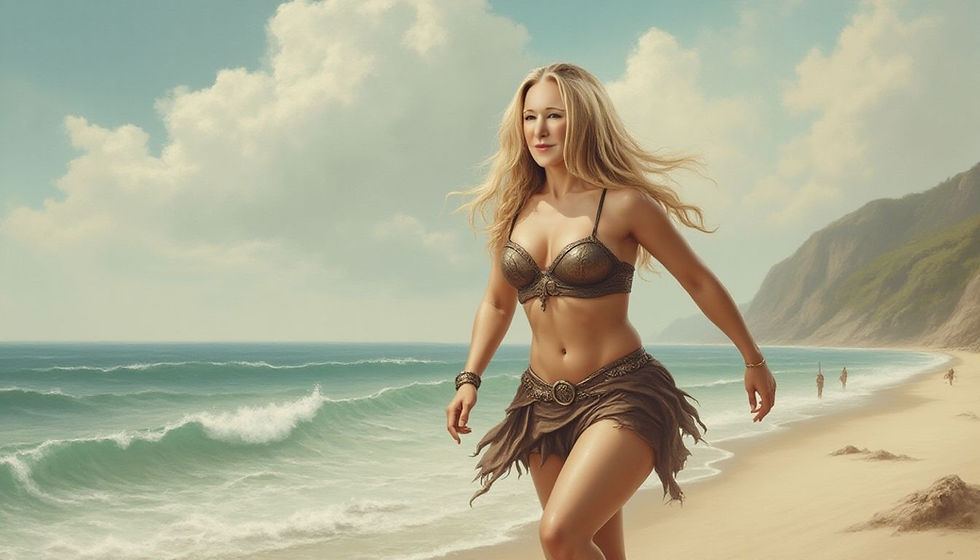
Image: Linda Morrison as a contemporary Viking goddess as part of my Selfie Studio
The eternal power of myth
Mythology represents our earliest attempts to understand the world and our place within it. These ancient narratives served multiple functions: explaining natural phenomena, codifying social norms, preserving historical memory, and providing spiritual guidance. Yet beyond these practical applications, myths continue to resonate with us because they address fundamental human concerns that remain remarkably consistent across millennia.
The Greek myth of Icarus, who flew too close to the sun with wax wings and then plummeted to his death, still serves as a potent metaphor for hubris and overambition. The Hindu epic Mahabharata, with its complex moral dilemmas and family conflicts, continues to offer insights into ethical decision-making and the nature of duty. Indigenous creation stories across continents reveal our deep connection to the natural world and our responsibility as stewards of the earth.
What makes these stories endure isn't simply their entertainment value but their psychological truth. As Joseph Campbell, the renowned mythologist, observed: "Myths are public dreams, dreams are private myths." Through symbolic language, myths externalize our internal psychological processes, making the invisible visible and the unconscious conscious.
Archetypes: The building blocks of narrative
Central to understanding the power of mythology are archetypes, universal symbolic patterns that appear consistently in stories across cultures. First popularized by psychologist Carl Jung, archetypes represent what Jung called the "collective unconscious," a shared psychological inheritance that transcends individual experience.
These archetypal patterns manifest as recurring character types, situations, and symbols that we intuitively recognize. The Hero's Journey, for instance, follows a protagonist who leaves the ordinary world, faces trials, and returns transformed, a pattern found everywhere from the Odyssey to Star Wars. Similarly, archetypal figures like the Wise Elder, the Trickster, the Shadow, or the Divine Child appear across vastly different mythological traditions, suggesting their roots in shared human psychology.
What makes archetypes so powerful is their adaptability. They aren't rigid templates but flexible patterns that can be reinvented while maintaining their essential psychological meaning. The Mentor archetype might appear as Merlin in Arthurian legend, Obi-Wan Kenobi in Star Wars, or Dumbledore in Harry Potter, different manifestations of the same fundamental symbolic pattern.
The stories we tell ourselves
Perhaps most fascinating is how these mythic patterns don't just exist in formal storytelling but shape our personal narratives, the stories we tell ourselves about who we are and why we do what we do. Our autobiographical memory isn't a perfect recording but a constructed narrative that borrows heavily from cultural archetypes.
Do you see yourself as the Underdog fighting against odds? The Caregiver sacrificing for others? The Explorer seeking new horizons? The Rebel challenging authority? These archetypal patterns provide ready-made templates for understanding our experiences and shaping our identity.
This process happens largely unconsciously. We naturally organize our memories into coherent narratives that emphasize certain themes while downplaying others. These personal myths create meaning from chaos and help us navigate life's complexities. They can be empowering, casting us as the hero of our own journey, or limiting when they trap us in negative patterns.
Psychotherapist James Hillman proposed what he called "soul-making," the idea that psychological healing involves becoming conscious of the mythic patterns governing our lives and actively engaging with them. By recognizing the archetypes at work in our personal narrative, we gain the power to reframe our story in more constructive ways.
Creative expression and mythic imagination
The intersection of mythology and creativity offers particularly rich territory. Artists, writers, musicians, and other creative individuals often serve as contemporary mythmakers, translating timeless archetypes into forms that speak to current concerns.
Author Neil Gaiman has described this process: "We owe it to each other to tell stories. It's as close to a human purpose as I can find." When writers like Toni Morrison reinterpret mythic patterns through the lens of African American experience, or filmmakers like Guillermo del Toro blend fairy tale elements with modern anxieties, they're participating in the ancient tradition of mythmaking while keeping it vitally relevant.
The creative process itself often follows mythic patterns. Many artists describe experiencing a "call to adventure" that initiates their creative journey, followed by periods of struggle and breakthrough that mirror the hero's ordeal. The finished work represents a "return with the elixir," bringing back something of value to the community.
Digital media has democratized this process, allowing unprecedented numbers of people to participate in collaborative mythmaking through platforms like social media, fan fiction communities, and participatory storytelling. The line between myth consumer and myth creator has never been more porous.
Living consciously with myth
Understanding the influence of myth and archetype in our lives offers several practical benefits:
Enhanced self-awareness as we recognize the narrative patterns shaping our self-concept
Greater cultural literacy that allows us to see connections across diverse storytelling traditions
Improved communication through understanding universal symbolic language
Access to collective wisdom embodied in mythic traditions
Creative inspiration tapping into archetypal resonance
The challenge lies in engaging with myth consciously rather than being unconsciously driven by it. When we recognize that we're living within stories, we gain the ability to choose which stories serve us best and even to author new narratives that better reflect our values and aspirations.
Conclusion: The continuing Relevance of mythic thinking
In our rational, technological age, it's tempting to dismiss mythology as primitive superstition. Yet the enduring power of mythic narratives suggests they fulfill essential psychological functions that rational analysis alone cannot satisfy. Modern storytelling, whether in literature, film, games, or other media, continues to draw from the well of myth because these ancient patterns still speak to our deepest human concerns.
By understanding myths as living psychological realities instead of mere historical artifacts, we can access their wisdom while adapting their insights to contemporary challenges. The stories we tell, both culturally and personally, don't just reflect who we are; they actively shape who we become.
In recognizing this truth, we reclaim our role as conscious participants in the ongoing process of mythmaking that has defined humanity since our earliest days. As we face unprecedented global challenges, perhaps this ancient wisdom, translated into new forms, offers resources for reimagining ourselves and our relationship to the world around us.
Read more from Catherine Gomersall
Catherine Gomersall, Artist Coach
Dr Catherine Gomersall is a leading artist and trainer at the intersection of technology, visual culture, and human connection. Her art practice and scholarly work are rooted in her experience of personal trauma recovery through a commitment to creativity and mindfulness. Her multifaceted career spans teaching in art colleges and universities, presenting exhibitions globally, publishing scholarly and creative works, and founding her consultancy specializing in digital strategy and creative collaboration.