Let It Be Easy – A Yoga-Informed Rebellion Against Hustle Culture
Written by Sam Dyllon, Yoga Teacher
Sam Dyllon is a passionate yoga teacher dedicated to helping individuals find comfort and balance in their bodies and minds. With expertise in various styles of yoga, including vinyāsa, nidrā, restorative, and chair yoga, Sam offers guidance and support for students of all levels.

We live in a world where struggle is worn like a badge of honour. We say things like “I’ve just been so busy” or “I haven’t had a proper day off in months,” as though they’re evidence of our worth. Somewhere along the way, we equated success with self-sacrifice and ease with laziness.
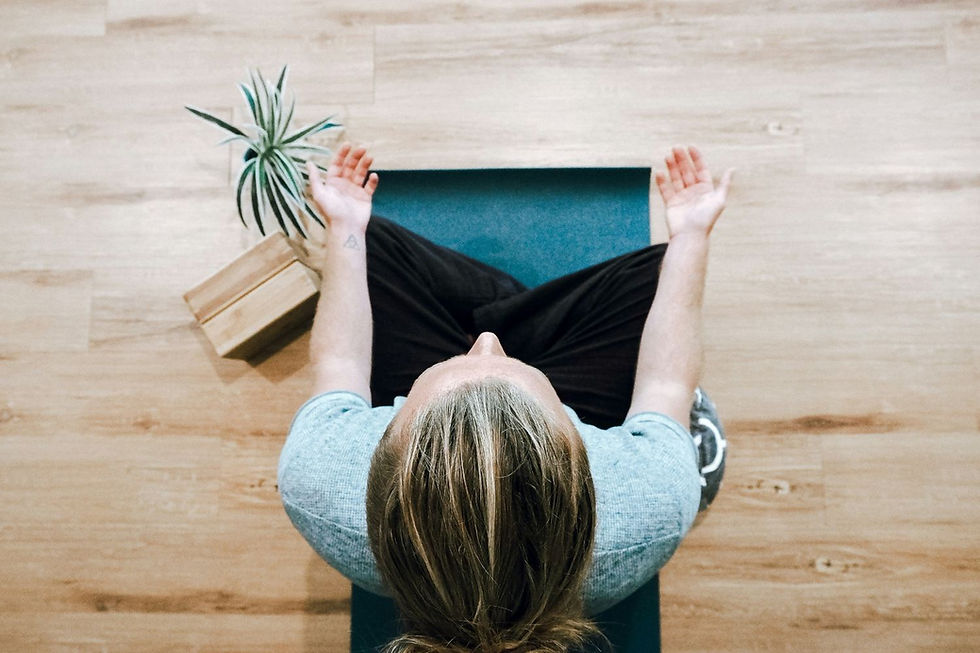
But yoga teaches us something radically different. In yoga, ease isn’t an afterthought, it’s a guidepost, and when we begin to honour our inner rhythms, our need for rest, breath, and pause, we unlock a kind of sustainable power that hustle culture could never teach us.
The cultural myth of “hard work equals worth”
From school grades to performance reviews, many of us have been conditioned to believe that only hard things are valuable, that we must push so that we can become deserving.
This belief doesn’t just exhaust our bodies, it frays our nervous systems. We begin to operate in a constant low-level state of survival, never fully switching off, even when we’re supposed to be “relaxing.”
Yoga offers a different paradigm, sthira sukha, steadiness and ease. The two are meant to coexist. We’re not meant to burn out in order to feel accomplished, we’re meant to feel grounded, present, and well, even when we’re being productive.
Why your nervous system can’t thrive in hustle mode
When you’re constantly “on,” your body interprets that as danger. Your sympathetic nervous system (the “fight-or-flight state”) becomes dominant, flooding your system with stress hormones like cortisol and adrenaline. Over time, this leads to fatigue, brain fog, emotional reactivity, and disconnection, both from yourself and others.
Ease isn’t indulgent, it’s what allows your body to shift into parasympathetic mode, the “rest-and-digest” state where healing, insight, and integration can occur. It’s in this state that creativity returns, clarity reappears, and capacity expands.
Your nervous system doesn’t lie. You cannot override your biology with ambition alone.
Yoga as a practice of enoughness
Yoga, especially when practised as a whole rather than just exercise, teaches us to slow down and listen.
In a culture of constant striving, that’s quietly revolutionary.
It invites us to meet ourselves where we are, rather than where we think we “should” be. It shows us that presence is more powerful than pressure, and that sometimes, resting is the most productive thing we can do.
This isn’t about giving up, it’s about tuning in.
What “let it be easy” looks like in real life
Letting it be easy doesn’t mean doing nothing. Rather, it means:
Choosing the path of less resistance, not no effort
Working with your energy, not against it
Resting when your body whispers, not waiting until it screams
In practice, that might look like:
Swapping one to-do list item for a walk or breath practice
Saying no without guilt
Starting your day with three minutes of stillness rather than scrolling
Allowing “good enough” to be enough, for now
These small acts of rebellion rewire your system to trust ease again.
The real success story
If success leaves you anxious, depleted, and disconnected from your body, is it truly success?
Yoga offers us a more sustainable story, one where rest isn’t earned, where clarity comes through softness, and where success includes nervous system regulation, not just revenue.
To live this way may be countercultural, but it’s also liberating.
So here’s your quiet rebellion. Let it be easy. Let it be enough. Let it feel good to be you.
You don’t have to push to prove you’re worthy, and you don’t have to earn your rest by burning out first. There’s a different way, one that honours your body, your breath, and your inner knowing.
If you’re ready to experiment with ease, you’re warmly invited to join Nidrā Club, my library of guided yoga nidrā sessions, plus optional group and one-to-one practices, to help you rest on purpose, soften the grip of hustle, and reconnect with your clarity.
As a Brainz Magazine reader, your first month is free, a quiet rebellion that starts with closing your eyes. Learn more on my website.
Sam Dyllon, Yoga Teacher
Sam Dyllon is a certified yoga teacher with a focus on holistic wellness; with over 700 hours of continued professional development, Sam combines yogic tools including āsana, prāṇāyāma, and dhyāna to empower students to cultivate physical flexibility, mental resilience, and overall wellbeing.
As a member of Yoga Alliance Professionals and Yoga Teachers Together, Sam is committed to sharing the transformative benefits of yoga with the community.