It’s Your Character, Stupid
Updated: Nov 22, 2022
Written by: Paul A. Raggio, Executive Contributor
Executive Contributors at Brainz Magazine are handpicked and invited to contribute because of their knowledge and valuable insight within their area of expertise.

James Carville, the animated pol, coined the phrase “It’s the economy, stupid” when managing President Clinton’s presidential campaign against incumbent President George H.W. Bush. Other pols and news commentators have repeated the term thousands of times, especially during election seasons. Carville meant using the pejorative word stupid to his staff to accentuate the importance of the economy above all other factors in determining the election outcome. Predictably, the economy is the forerunner for an incumbent’s successful reelection.
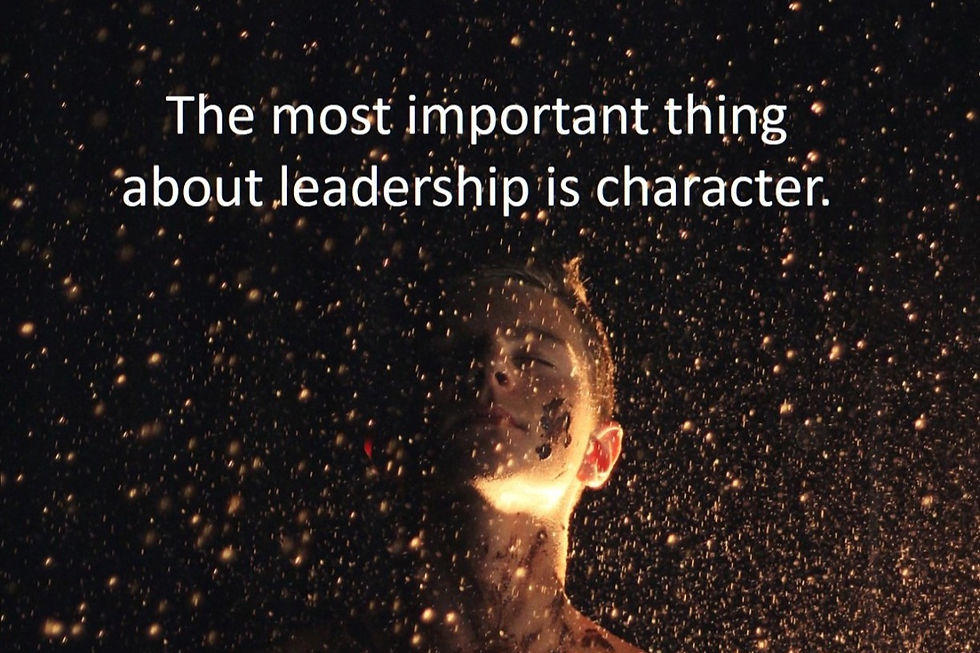
I wrote a column two years ago on how your choices define your character. It’s time to revisit character and its association with leadership. Character is the forerunner for a successful leader. Mimicking Carville’s phrase, “It’s your character, stupid,” that describes your leadership. I define character by the words you speak and the virtuous actions you take over time. Persons of good character seek and communicate truth and act in the best interest of others. Persons of questionable character obscure the truth and act in their best interest. Leaders are people of good character. Pseudo-leaders are people of dubious character.
Leaders appeal to the virtuous. Pseudo-leaders appeal to the aggrieved. Leaders build trust and unite diverse people. Pseudo-leaders sow distrust and promote tribalism. Leaders inspire people to achieve righteous results collectively. Pseudo-leaders frighten people and drive survivalist tendencies. Leaders think in terms of abundance; the glass is half full. Pseudo-leaders think in terms of scarcity; the glass is half empty. Leaders relinquish power when their time is up. Pseudo-leaders retain control at all costs. Leaders endure. Pseudo-leaders desist. We have a lot of pseudo-leaders.
Characterless leadership is a malignancy metastasizing in our society, most observable in our political leadership from national to local representatives. This malignancy has a prolific impact on our most impressionable. They choose to mirror how pseudo-leaders behave and normalize the voicing of mistruths, spreading conspiracy theories on the ever-prolific social media platforms. I don’t mean to imply all leaders are pseudo, but there are enough of them with followers that we should be concerned. They seek sanctuary in their tribe and have little to no tolerance for diversity of ideas or those who are different in class, race, ethnicity, religion, gender, or countless other attributes that don’t match theirs.
Companies aren’t immune from this disease either. Profits, compensation, and retention of power are prime motivators. Power-hungry executives climb the corporate ladder stepping on the backs of those less fortunate to the detriment of the organization’s culture. A new cohort of emerging leaders desiring success indoctrinate into pseudo-leadership roles by mirroring characterless behaviors, and the twisted cycle continues.
We triage this malignancy by rebuffing the characterless and lauding the virtuous. Leaders seek truth and diversity of people and ideas and inspire and demonstrate ethical behaviors. We should elect these people to represent us in our government and develop and promote them in our companies. We trust they will lead us in the right direction, and trust is foundational to an effective and productive team, writes Patrick Lencioni in his book, “The Five Dysfunctions of a Team.” Without trust in our society, tribalism flourishes, and community fissures grow. Without trust in the company, optimization ceases, and productivity wanes. Both represent failure.
Leaders have an incredible responsibility to influence the behaviors of others, inspiring them to act purposely, ethically, and productively. A leader’s character is enduring when built on virtuous actions. A pseudo-leader’s character desists when sewn on falsehoods and distrust. It’s your character that makes you a great leader with a legacy. As citizens of our great nation, we must perpetuate good character by electing leaders who speak the truth and inspire our virtuous behavior. As company leaders and business owners, we must advance those who demonstrate good character and laud them as an example to mirror.
Paul welcomes your comments and feedback and please contact him at praggio64@gmail.com.
Paul A. Raggio, Executive Contributor Brainz Magazine
Paul Raggio is co-owner, with his sister Lisa, of One True North Executive Development, a service-disabled, veteran-owned, family-operated leadership and management development firm in Los Angeles, California. He is an AddingZEROS executive facilitator and certified executive business coach and develops c-suite leaders, business owners, and their employees on leadership and management principles in achieving and sustaining their business growth and profitability goals. Paul and his sister were the 2020 Rookie of the Year for the ActionCOACH Southwest Region, the 2021 Rising Star Awardee for the Santa Clarita Valley Chamber of Commerce, and the best Business Consultant of 2021 by The Santa Clarita Valley Signal. He brings over forty years of leadership, business, and personal development experience to executives and business owners.