I Don’t See Color
Updated: Mar 13, 2025
Written by: Brian Wood, Executive Contributor
Executive Contributors at Brainz Magazine are handpicked and invited to contribute because of their knowledge and valuable insight within their area of expertise.

We all say and do dumb things and this reality applies through the lens of diversity, equity, inclusion and belonging.
“Only two things are infinite, the universe and human stupidity, and I’m not sure about the former.” ‒ Albert Einstein
Exhibit A
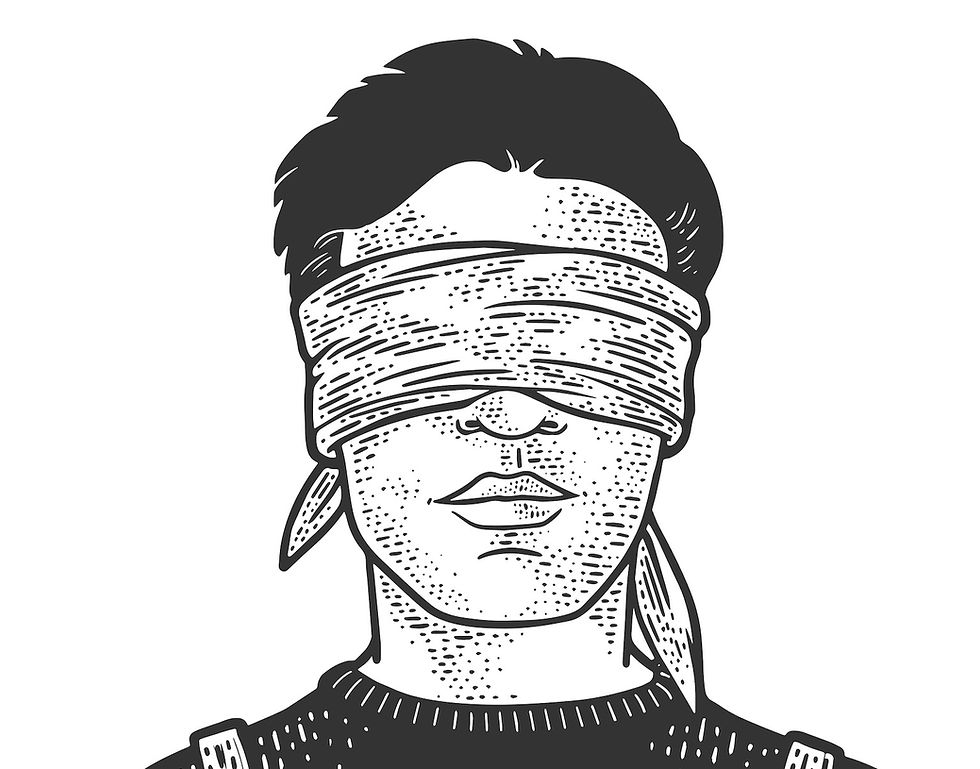
"I don't see color!"
If you've been blessed with the gift of sight, you do see color.
Exhibit B
“Pull yourself up by the bootstraps”
Yes…of course…the bootstraps! Why didn't I think of that?
A quote about the bootstrap philosophy:
“It is cruel jest to say to a bootless man that he ought to lift himself by his own bootstraps. It is even worse to tell a man to lift himself by his own bootstraps when somebody is standing on the boot.” ‒ Martin Luther King Jr
There aren't enough words to accurately capture the social justice challenges, opportunities, biases and overwhelm in our world. There's barely enough time to share a couple of brief thoughts concerning the ‘why’ behind absurd thoughts that are frequently verbalized. Although we might disagree about the amount of hatred that surrounds us, the existence of this emotion, attitude or sentiment is undeniable.
So, for the sake of brevity, let’s examine a couple of contributing factors (not necessarily related to hate) about why people say and do dumb things – fear and pain.
Fear can be manifested in several forms and is often generated through anxiety. Racial anxiety shows up when I’m afraid to do or say the wrong thing and be perceived as prejudiced. Although I might not have bad intentions, my nervousness impacts my behavior, which ironically can create the opposite of the desired outcome. An example of this could be an individual who is not sure how to act around a particular ethnic group. This person does not feel confident and doesn’t want to do or say something that is perceived as racist. Based on these emotions he/she might not make as much eye contact when communicating during a customer service interaction. The person receiving this treatment could feel disrespected based on a lack of eye contact. It doesn’t seem like it should be that complicated to treat people with respect and professionalism regardless of their background. But in this situation fear altered the behavior and created a self-fulfilling prophecy. It gets even worse if this same nervous individual decides to avoid anxiety by choosing to only connect with people that look like them. By neglecting to expand their circle and seek proximity, this behavior is perpetuated beyond a customer service interaction.
It’s much easier to point fingers than to acknowledge things on our side of the fence. In fact, looking in the mirror can often be painful. Case in point; a couple of years ago I enrolled in an exceptional program by Third Way Leadership “Embracing Anti-Racism and Anti-Oppression.” One of the sessions involved the topic of privilege and I was excited to explore this subject, which is real and continues to ripple throughout our society. The facilitators announced that we would be asked a series of questions concerning our life experiences. Again, I was thrilled with the idea of communicating my journey to my classmates.
The questions began:
“Do you have access to clean water?”
“Do you have access to health care?”
Wait. What? I thought this exercise was heading in a different direction!
My “uh-oh” reaction to realizing that this was about my privilege (most reading this article have some privilege) didn’t feel so good. In fact, my emotion was symbolic of how I suspect most non minorities feel when faced with the privilege accusation. It’s a scary thing to acknowledge privilege and terrifying to recognize that we can each do more to fight inequities. And by failing to fight, we are contributing to injustice. Out of fear people tend to focus on the “I’ve worked hard!” part of the equation. But they often underestimate the advantages received while declining to accept the responsibility to do more for humanity.
Fighting to be better, lead powerfully and serve humanity more effectively is not a one size fits all proposition. It requires action and the understanding that our only sure-fire loss is through inaction! Fighting is about overcoming fear and pain while showing up with curiosity and respect (and exploring the biases that exist within each of us). It includes reading and watching stories that depict other cultures demonstrating achievement, positivity, resiliency, greatness, and beauty. To overcome fear and pain we need to expose ourselves to thought leaders from other cultures – retraining our brains of preconceived notions, which may have been absorbed during formulative years.
And don’t miss the opportunity to courageously challenge ourselves and others when dumb stuff surfaces.
Brian Wood, Executive Contributor Brainz Magazine
Brian Wood combines 30 years of corporate experience with his background as an athlete, certified player agent (NBA, WNBA, and FIBA), and a certified professional success coach to provide clients with a unique perspective and guidance toward the next level of achievement. Wood is passionate about continuous personal and professional growth including organizational development, training, and gamification. He is enthusiastic about helping leaders leverage their gifts to drive impact and success. Wood supports major corporations, professional sports organizations, and municipalities. He provides confidential, professional, and executive coaching, speaking engagements, virtual and in-person facilitation.