How to Spring Clean Your Mind
Written by Matthew Donnachie, Founder of Inner Balance
Matthew is the go-to breathwork facilitator for CEO's and entrepreneurs. He is the founder of Inner Balance Life, offering trauma informed practices to support business owners leveraging the power of the breath.

Breathing does more than supply oxygen, it has a profound effect on your entire body, including your heart rate, stress levels, and even brain chemistry. With controlled breathing, you can reset your brain, manage anxiety, improve memory, and create lasting benefits for your overall health.
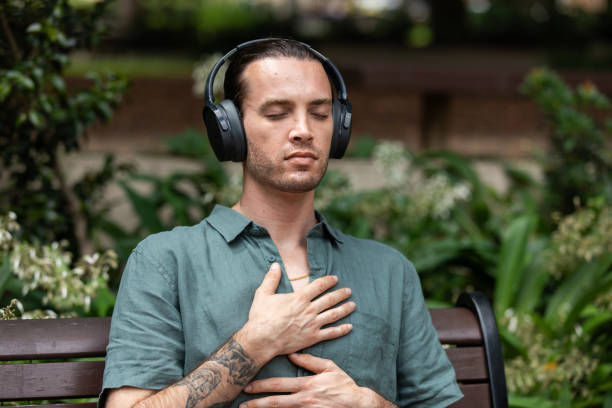
How you breathe affects almost every organ in our body
Breathing does far more than just supply oxygen to the brain and body. You can change the way you think and feel with the way you breathe. It can change your heart rate, lower your blood pressure, reduce your stress levels, combat anxiety, reduce feelings of pain, and even change your brain chemistry to make your mind sharper. It's no coincidence that breathing exercises form the basis of many ancient practices, from meditation to yogic breathing.
Ctrl, alt, delete: The brain reset
When you're stressed, the levels of a chemical called noradrenaline in your brain get too high, and your brain's attention networks are disrupted, which leads to a distracted type of thinking. (Some people then start to hold their breath, which further exacerbates the problem.) The carbon dioxide levels in your blood begin to rise, which activates the locus coeruleus, a specific part of your brain that starts producing even more noradrenaline. As noradrenaline levels rise higher and your attention networks start working out of synchrony, it becomes very difficult to focus on just one thing.
When you take a deep breath, it puts a break on this whole system. It is your brain's reset button. If you stop and breathe in for the count of 4 and out for the count of 6, it targets the locus coeruleus, and your noradrenaline levels are brought back down, allowing your attention networks to work again in synchrony.
Practicing controlling your breath (like Conscious Connected Breath) can help you regain confidence that you are in control.
So next time you're feeling under pressure, remember you have the power to change your brain chemistry with a couple of deep breaths, whenever and wherever you like!
Five things that breathwork could do for you and your mind
Reduce your stress levels and combat anxiety: Calm down the thoughts racing through your head by lowering your heart rate and reducing your fight or flight response. It will break the vicious cycle of panicked thinking and make you feel in greater control of your mind and body.
Improve your memory and decision-making: Controlling the way you breathe has been shown to improve memory and enhance problem-solving ability. If you need to think more clearly in the moment, try slowing your breathing. Your thoughts should then become clearer. You can also use slow breathing to help you make better spur-of-the-moment decisions. One study involving a group of students at a French business school found that performing deep breathing exercises improved their results in a task involving decision-making by nearly 50%, after just two minutes of doing the exercise!
Help reduce feelings of chronic pain: Chronic pain and chronic stress are closely linked. The more stressed you are, the more your body will be in a state of arousal. You'll be more sensitive to pain signals arising from your body, and one way to break this cycle is to focus on your breathing and lower your resting stress response.
Help you get back to sleep: If you find yourself waking up in the middle of the night and struggling to get back to sleep, slow breathing might be something you can try to help calm your brain, reduce the firing of your locus coeruleus, lower your alertness, and help you get back on the journey to sleep.
Bring long-term benefits: Whether it's through breath-focused meditation, breathing exercises, or even breathwork as part of singing lessons, paying attention to your breath can have long-lasting benefits. Aside from making you better at controlling your response to stress, over time it will put your body into a calmer resting state, with a profound impact on your overall health – from improving your heart health to reducing chronic inflammation.
Visit my website for more info!
Read more from Matthew Donnachie
Matthew Donnachie, Founder of Inner Balance
Matthew Donnachie runs Inner Balance Life, which offers bespoke action therapy and coaching, which includes a combination of trauma informed breathwork, cold water therapy and shamanic/energetic guidance. Matthew has built up client practices in North and South Wales, London and Surrey, UK. Fully trained in Breath4Life Breathwork, NLP, Reiki and energetic medicines, Matthew now helps men come back from the brink, and women process underlying sexual trauma through leveraging the power of their breath.