How to Grow Your Business from Investment Opportunity to Investment Readiness
Written by: Olga Glasson
Dr. Mikhail Urinson, investor and quantitative professional with over two decades across investment banking, M&A, asset management, and entrepreneurship, on the structural misalignment between deployable capital and investor-ready business opportunities.
In 2025, global venture capital reached its second-highest annual total on record – $512 billion in deal value, according to the PitchBook-NVCA Venture Monitor. Yet in the same period, nearly half of small business loan applicants in the United States were denied or received less than they requested, according to the Federal Reserve's 2025 Small Business Credit Survey. The paradox is not a shortage of capital. It is that capital and the businesses that need it are operating in entirely separate ecosystems – and the mechanisms designed to connect them are not working as well as the headline numbers suggest.
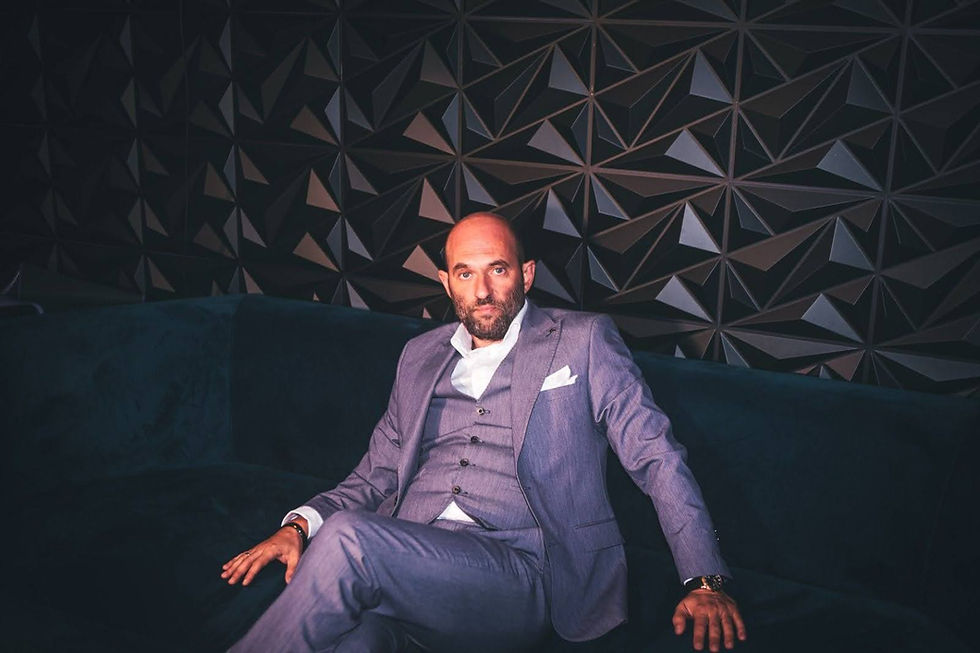
Dr. Mikhail Urinson is an investor and quantitative professional with over two decades of experience across investment banking, mergers and acquisitions, asset management, and entrepreneurship. His work sits at the intersection of capital markets, advanced quantitative modeling, and artificial intelligence – a combination he applies across the full capital lifecycle, from opportunity selection and company preparation through to investment structuring and execution.
He is currently leading a Miami-based structured initiative aimed at preparing growth-stage businesses for institutional investment across sectors, including artificial intelligence, financial technology, digital infrastructure, advanced manufacturing, energy and industrial independence, strategic resources access, and dual-use technologies. He describes the core problem driving that work as the disconnect between capital availability and investment-ready opportunity.
Dr. Urinson's perspective on this problem is not formed in isolation. He is actively engaged across global financial centers – New York, Miami, Paris, Frankfurt, Istanbul, Dubai, etc. – participating in hundreds of investor and founder interactions and maintaining ongoing engagement with a network exceeding tens of thousands of market participants. His background in capital formation includes participation in transactions exceeding $1 billion across debt, equity, and structured instruments across multiple jurisdictions and market environments.
A capital problem that isn't about capital
Despite unprecedented levels of global liquidity, a significant portion of small and mid-sized businesses remain unable to access growth capital. The issue is not the scarcity of capital but its misalignment. Businesses at critical growth stages frequently lack the structure, operational discipline, and strategic positioning required by institutional investors, while capital providers face the inverse problem: an overwhelming volume of opportunities, but limited access to those that meet execution, scalability, and risk-adjusted return expectations.
This inefficiency is particularly visible among companies generating between $100,000 and $1 million in annual revenue. They often demonstrate real traction yet remain unprepared to meet institutional investment standards – not because their businesses are weak, but because the criteria by which institutional capital evaluates opportunity are rarely communicated clearly to the founders seeking it. The gap, in other words, is as much informational as it is operational.
The concentration visible in the 2025 venture data makes the picture even clearer. Half of all venture dollars last year flowed into just 0.05% of deals, with activity dominated by AI mega-rounds and a narrow set of favored sectors. Meanwhile, across the economy for many strategic sectors where genuine capital demand and operational traction both exist, funding remains inaccessible.
Why events and introductions are not enough
Traditional venture ecosystems are largely built around fragmented interactions – introductions, pitch events, and opportunistic networking. While these mechanisms have genuine value, they are not designed to produce consistent capital deployment.
“An introduction gets you in the room,” as Dr. Urinson puts it. “What happens after that depends almost entirely on how prepared the company is – not on who made the introduction.”
The passive nature of most professional networks compounds this problem. Connections exist across the ecosystem in abundance, but they are rarely structured into actionable capital pathways. Access to a network and the ability to deploy capital through one are two fundamentally different capabilities – a distinction that matters most for founders who invest heavily in relationship-building only to find that those efforts do not translate into results. What they typically lack is not access, but the preparation that makes access productive.
Emerging innovation ecosystems illustrate this particularly clearly. Miami is one market Dr. Urinson references frequently: capital is present, and ambition is in abundance, yet the distance between available opportunity and investor-ready businesses remains wider than it should be.
“Rather than representing a limitation,” he notes, “this highlights a structural gap – the need for systems that improve preparation, positioning, and investor readiness at scale.”
The same pattern, in his experience, repeats across markets at different stages of maturity – from the more established hubs of New York and Frankfurt to the rapidly developing ecosystems of Istanbul and Dubai.
What investment readiness actually requires
The businesses that successfully raise capital are rarely those with the most connections. They are the ones with the most preparation – and the two are less correlated than the venture ecosystem's event-driven culture tends to suggest.
“Most founders treat investment readiness as a destination,” Dr. Urinson observes. “It is actually a process – and most of them start it too late, with the wrong expectations of what a first conversation is supposed to accomplish.”
Across his experience with growth-stage companies, Dr. Urinson has found that the most consequential interventions happen well before any investor meeting. First and foremost is how the companies are valued by the Founders – single biggest point of failure and rejection by investors. Be very careful with your valuation expectations. You can lose investors forever in case they feel that your valuation are not reasonable.
Second, investors must see a clear growth and acceleration strategy, proven by Team’s ability to execute the plan, and previous track record of success. Thirdly, finances must be accurate, structured, and transparent. All documents must be organized in access ready due-diligence data-rooms.
Lastly the investment opportunity must be properly positioned and curated to specific investor mandates. In practical terms, investment readiness means founders need to understand investor mandates not in the abstract but in the specific terms – what a particular type of capital provider requires at a particular stage, in a particular sector, based on current competitive and economic landscape. It means ongoing growth and acceleration through advanced operational capabilities, continuously meeting or exceeding expectations, and clearly conveyed vision of financial outcomes.
And it means engaging with capital at the right moment, rather than as early and as often as possible. The real work, as Dr. Urinson sees it happen behind closed doors, in the offices, factories, construction sites, labs, in between events – through ongoing implementation of growth and acceleration strategy. Most Founders, at most growth stages, still lack the infrastructure to support that reliably. Closing that gap – not by adding more events to the calendar, but by building more rigorous pathways between capital and the businesses prepared to use it – is where the real opportunity in modern venture ecosystems lies. It is also where Dr. Urinson has focused his current work: developing the structured, process-driven infrastructure that most venture ecosystems still lack for founders outside the top tier of deal flow.