How One Photographer Captures the Soul of New York and Beyond
Updated: May 31
Michael Klein is best known for his work and achievements in the field of contemporary art. As both a dealer and curator, he has had a long and distinguished career as a New York gallery owner and director, representing an international roster of emerging and mid-career artists. He became the first in-house curator for Microsoft Corp.

Today anyone and everyone can take a picture, capture a moment, have a phone and there it is, a picture to email or post on a website. But a photographer is rare, a talented eye that explores the world, focuses on themes and frames them. She was recognized in a 2019 book, Masters of Street Photography.
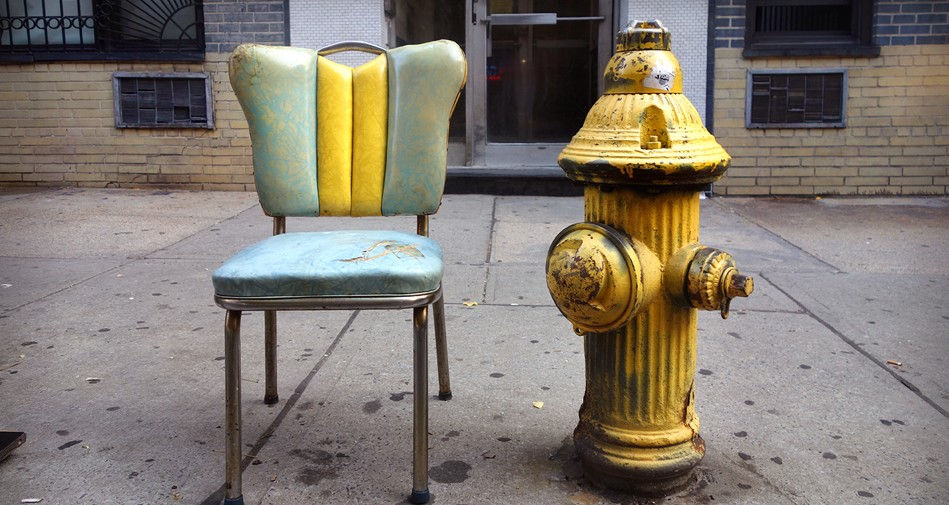
Such is the case with photographer Sally Davies who has photographed New York City for 43 years. Her portfolio includes studies of the Lower East Side neighborhood in Manhattan as well as a series of portraits of New Yorkers in their homes and studios, like the portrait of the late sculptor Jackie Ferrara in the neatly organized kitchen of her Soho loft. Another series of portraits made in California includes couples and families and this Pop art inspired living room owned by Sheila Silber in Malibu. Both of these series were published as monographs by Ammonite Press UK in 2021, New Yorkers and California Dreamers.
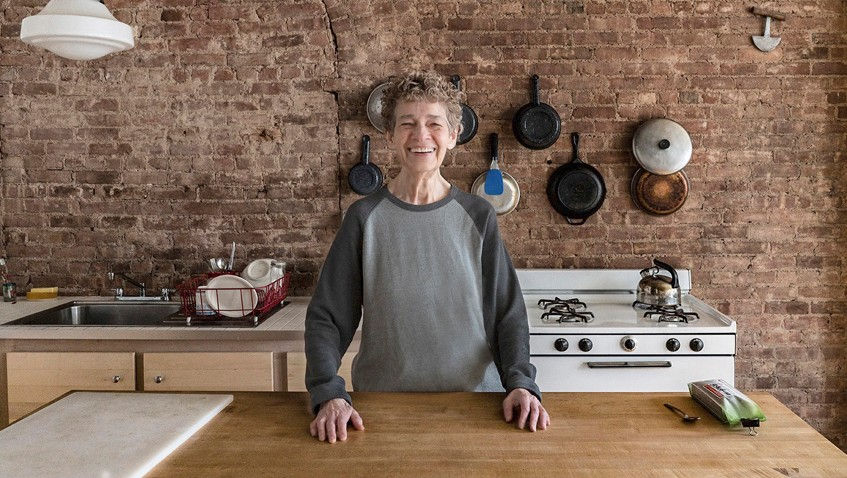
In her New York City neighborhood of the Lower East Side, she turns her attention to life on the street. Her pictures focus on the facades of buildings and storefronts, or as in this 2014 picture, an incongruous juxtaposition of a kitchen chair and a fire hydrant on the sidewalk, matched by their color and scale and their shared purpose on the street.
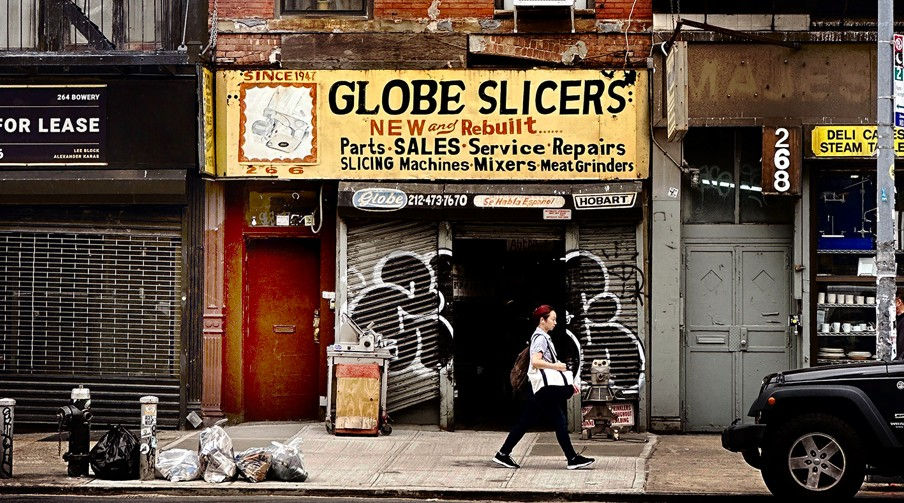
She sees the various and often incongruous character of the street as beauty, weathered facades, faded signs, boarded up windows, all the nature of her neighborhood. At the same time she explores intense color as a key factor in both the dramatic and picturesque spirit in the physical appearance of her imagery. She employs great formal compositions, staging her image so that the various parts seem to stand together, framed by the horizontal lines of street or sidewalk and the verticals of walls, doorways and windows. She will grab a single figure both as the protagonist of the scene but also as a measure of scale, yet this seemingly staged figure is truly happenstance, which is what gives her pictures life. Ironically, the same streets, the same graffiti, the same signs that fill the painterly canvases of the very popular paintings by Neo Expressionist Jean-Michel Basquiat are here portrayed in a more formal and finally refined way. Davies’ pictures document a neighborhood, a neighborhood that is changing year by year. It’s not the life of the streets she is after but the physical environment of this unique part of Manhattan.
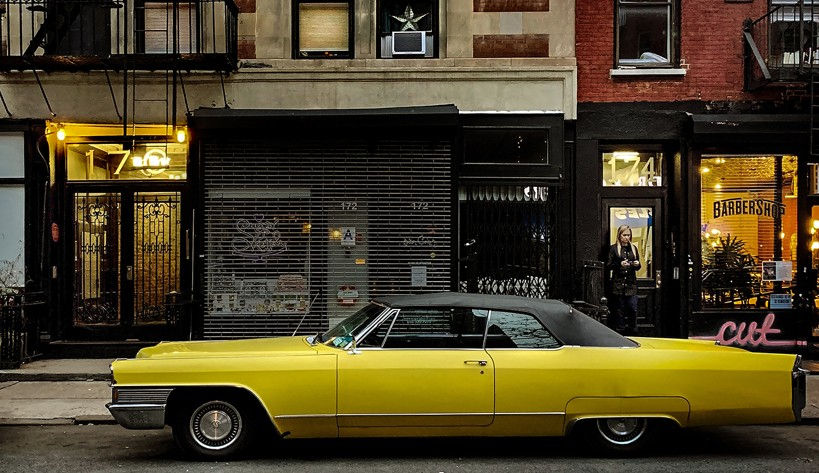
One of her other obsessions and curiosities are automobiles. These are cars photographed on both coasts, some in color, others in black and white, but all with the haunting quality of an opening scene of an Alfred Hitchcock mystery. The photographic atmosphere is quiet, with an uncanny sense of place and unknown time, a scene before the drama or action takes place. Luxury sedans or pickup trucks, each sits unattended on the street or in an unspecified driveway, yet noted because of their distinctive color, style and locale. But also these images are very much symbolic of American culture, the true icon of our treasured freedom and mobility.
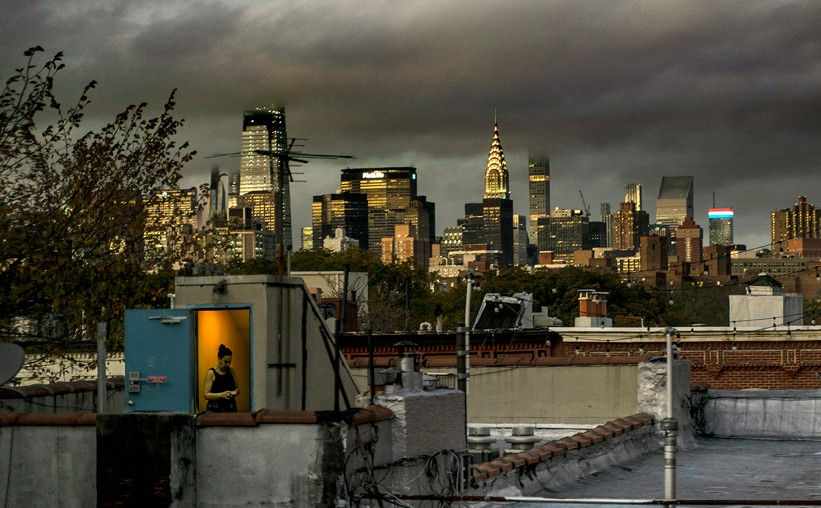
Part of photography’s function is the narrative it presents. Pictures tell a story whether a portrait or a shiny car in a driveway or the open window of an apartment block. For Davies, the stories are all a personal account, knowing people, traveling and her keen eye for the city she called home.
Read more from Michael Klein
Michael Klein, Owner & Director at Michael Klein Arts, LLC
Michael Klein's expertise lies in his role as a private art dealer and freelance, independent curator for individuals, institutions, and arts organizations. Today, Michael Klein Arts works with a diverse group of artists, estates, galleries, and non-profit institutions, providing management, curatorial, and other consulting services. At the same time, the company serves institutional as well as private collectors, focusing on developing collections of emerging, mid-career, and established artists. The company also organizes traveling exhibitions both in the United States and abroad.