

How Long-Term Couples Rebuild Intimacy – An Interview with Relationship Coach Joanna Kristensen
Updated: Apr 17
Joanna Kristensen is a certified sex coach helping long-term couples navigate the changes in their sex life and intimacy, and reconnect when passion and closeness have faded. She works with couples who have fallen into patterns of avoidance, pressure, or silent resentment around sex. This includes relationships where sex has become infrequent or stopped altogether, where mismatched desire or physical challenges are affecting confidence and connection, or where trust has been broken. She also supports couples navigating life transitions that can reshape both sex and intimacy. Rather than one-size-fits-all solutions, she builds individualized pathways that honor each couple's unique history and goals, within an environment built on trust, discretion, and genuine openness.
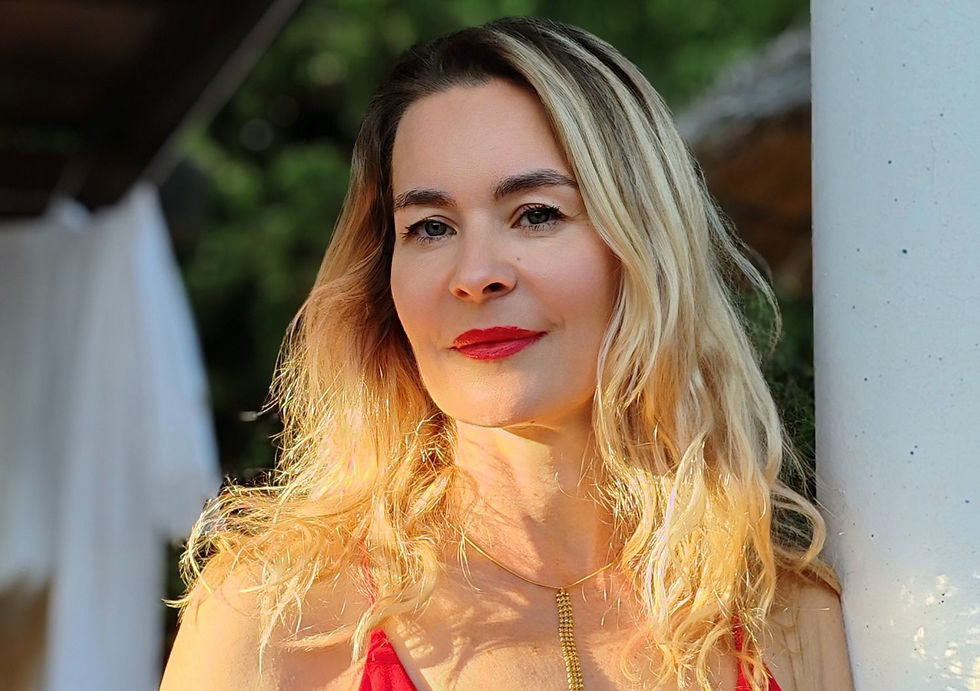
Joanna Kristensen, Sex & Relationship Coach
What inspired you to specialize in intimacy coaching for long-term couples?
One Saturday morning, coffee in bed, scrolling through magazine headlines, I came across an interview that made me put my phone down and almost scream inside, that's it!
But that moment didn't come out of nowhere. Growing up in Catholic Poland, sex meant guilt and shame, I still remember sneaking looks at my dad's erotic magazines and then rushing to confession. Nine years in ballet school taught me something different though, bodies in contact, nakedness in locker rooms, movement as expression. Natural, free. Two very different worlds, both living inside me.
It took nearly 20 years of corporate and NGO work to find my calling. And life was throwing everything at me along the way, losing my mum, becoming a stepmum, desperately wanting a child of my own, IVF, and somewhere in all of that, infidelity crept into my marriage. I was having sex to keep him, not for pleasure or connection. We were emotionally miles apart.
Therapy helped us understand the why. But physical intimacy was still missing. That Saturday morning interview was about Poland's first sex coach. I checked her credentials immediately, and it felt like a sign, just a month later, enrollment was opening. I applied. After two years of certification and applying what I learned to our sex life, my husband and I rebuilt our relationship from the ground up. We were a long-term couple who had lost each other. That's exactly who I wanted to help.
Helping long-term couples find their way back to each other, emotionally and physically. That became my calling.
What's the biggest misconception couples have about keeping passion alive?
The word "keeping" already tells you something.
Think about any passion in your life, painting, running, photography, music. You know it's a passion because time flies when you do it, it energises you, you want to get better at it. And you cultivate it, you make time for it, you prioritise it, you invest in it. Nobody questions whether they should have to work at something they love.
So why do we expect erotic passion in a relationship to be any different?
Somehow, we apply a completely different logic to it, we expect it to be self-sustaining, automatic, requiring no feeding. And when it starts fading, instead of asking "what have I stopped doing?" we ask "what went wrong?"
That's the misconception. Not that passion fades. But that couples nurture every other passion in their lives, and expect this one to take care of itself.
And that's what needs to change.
How do you help couples reconnect emotionally and physically when they feel stuck?
That depends, because disconnection doesn't look the same for every couple. Some have been arguing for years. Some have quietly drifted into a roommate dynamic. Some haven't had sex in months, or even years, not out of resentment, just because it gradually stopped, and neither knew how to restart.
The first thing I need to do is understand their dynamic. I meet with the couple first, then with each partner separately, people often say things individually they wouldn't say in front of their partner. From there I understand where they are now, and together we define where they want to be.
What I know for certain is that emotional safety is the foundation for both partners. You can't say the vulnerable, uncomfortable things, "I miss you," "I feel invisible," "I don't know how to want you anymore", unless you feel safe enough to say them. And sometimes what's blocking that safety isn't just distance, it's unresolved conflict. In those cases I might refer a couple to a therapist first. I'm a coach, not a therapist, and that distinction matters.
Once we start rebuilding that safety, there's something worth understanding. Some people need to feel emotionally connected to have sex, and others need to have sex to feel emotionally connected. And because life likes to play tricks on us, we usually end up with a partner who is the opposite type. As if that weren't enough, we also tend to pair up with someone whose desire level doesn't quite match ours. Which means the work is often about helping two people, starting from very different places, find each other somewhere in the middle.
Which is why physical reconnection needs to happen slowly and without pressure. I might suggest they spend a few evenings in bed together, close, touching, but with no expectation of sex. No agenda. No performance. Just being physical with each other again, without the weight of what it's supposed to lead to.
What makes your approach to coaching unique compared to other relationship experts?
Honestly, it's probably the combination of things rather than any one thing.
I'm a certified sex coach, trained through Sex Coach U, the world's first and leading certification program for sex coaches. That means sex isn't a side topic in my work, it's the core. I use the MEBES model, a holistic framework that looks at each person across five dimensions, mind, emotions, body and behaviour, energy and sense of self, because what each individual carries into the relationship directly affects what happens between them as a couple.
And I work specifically with long-term couples, couples who have built a life together and somewhere along the way lost their sexual and emotional connection. That focus is deliberate. It's where my heart is. And it's where my own experience lives.
Because my husband and I have been through almost every major concern couples bring to me, and we rebuilt our sex life and our marriage from the ground up. That changes how you listen, how you ask questions, and how you sit with someone in a difficult moment. It's not just professional knowledge. It's empathy and deep understanding.
And finally, in a world obsessed with perfect sex, with techniques and toys and content promising the best sex of your life, I keep coming back to one thing, sex is foremost about connection and pleasure. That's what I build my work around.
Can you share one practical tip couples can use today to reignite intimacy?
I could say start with scheduling your next sexual encounter, because it's one of the core ingredients that keep intimacy alive long-term, along with novelty, anticipation, fantasy, and playfulness. But I can already see many of you rolling your eyes.
So instead, let's talk about fantasy. Specifically, try the Yes/No/Maybe game. It's a playful, low-pressure way to explore desire together, perfect for couples who feel stuck in a rut or simply want to spice things up.
Here's how, choose a relaxed moment, maybe over a glass of wine, not in the middle of an intimate moment, that's too much pressure. Each of you goes through a list of fantasies and marks them yes, no, or maybe. Then you compare and focus on the matches.
Be curious, don't judge, it's a playful game but you might surprise yourself with what comes up, and you want your partner to feel safe enough to be honest.
Most couples are surprised by what they discover, about their partner and about themselves. That conversation alone can shift something.
If you want a ready-made list to play with, download my free guide "Stuck in a Sexual Routine?" here. And if something in this interview resonated with you and you'd like to talk, book a free discovery call with me.
Read more from Joanna Kristensen





