How Clarity, Accountability, and Execution Drive Peak Performance – An Interview with Shogo Oyeniyi
Dr. Shogo Oyeniyi is a globally recognized peak performance coach, leadership strategist, and business consultant dedicated to helping individuals and organizations unlock higher levels of productivity, effectiveness, and results. With a strong track record across Africa and beyond, he has worked with CEOs, founders, and leadership teams to build high-performance cultures, strengthen leadership capacity, and drive measurable organizational growth.
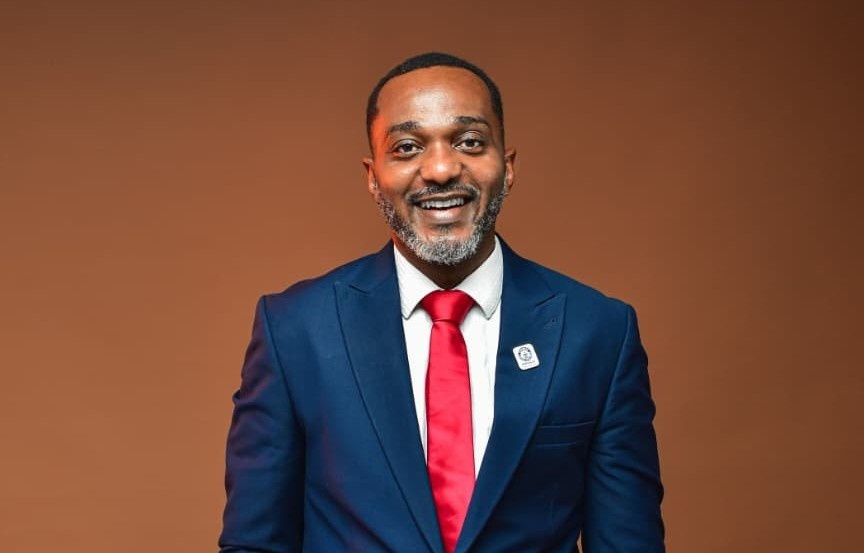
Shogo Oyeniyi, Peak Performance Coach / Corporate Trainer
What first drew you to focus on peak performance at both the individual and organizational level?
My journey into peak performance started with a simple but powerful observation: organizations don’t fail because of lack of strategy; they fail because people don’t perform at the level the strategy demands. I saw brilliant ideas collapse under average execution. That gap fascinated me.
As I began working with professionals and organizations across sectors, I realized that performance is not accidental, it is engineered. At the individual level, it is driven by mindset, discipline, and clarity of purpose. At the organizational level, it is sustained by systems, culture, and leadership alignment.
What drew me deeper was the ripple effect. When one leader elevates their performance, it influences teams, reshapes culture, and ultimately transforms results. Peak performance is not just about doing more; it is about becoming more, more aware, more intentional, and more effective.
That realization has shaped my work: helping people and organizations close the gap between potential and actual results in a structured, measurable, and sustainable way.
What patterns have you consistently seen across the 500+ businesses you’ve worked with that separate high-performing teams from the rest?
Across the 500+ businesses I’ve worked with, high-performing teams consistently exhibit three defining patterns.
First is clarity. High-performing teams are not confused about priorities. Everyone knows what matters most, what success looks like, and how their role contributes to it. Low-performing teams, on the other hand, are busy but misaligned.
Second is accountability culture. In top teams, accountability is not enforced; it is owned. People take responsibility without excuses, and leaders model that behavior consistently.
Third is execution discipline. Strategy is common; disciplined execution is rare. High-performing teams follow through, measure progress, and adjust quickly. They don’t wait for perfect conditions; they act, learn, and improve.
What’s interesting is that these patterns are not dependent on industry or geography. Whether in banking, government, or private enterprise, the differentiator is always the same: aligned people executing with clarity and accountability.
That’s where transformation truly begins.
How do you turn leadership development into something measurable inside an organization?
Leadership development must move from inspiration to implementation. Many organizations invest in training, but fail to connect it to measurable outcomes. That is where the gap lies.
I approach this by tying leadership development directly to business metrics. Before any engagement, we define what success looks like and this could be improved team productivity, reduced attrition, faster decision-making, or increased revenue performance.
From there, we translate leadership behaviors into observable actions. For example, instead of saying “be a better communicator,” we define specific practices like structured feedback sessions, clarity in delegation, and frequency of team alignment meetings.
We then track progress using performance indicators, employee feedback, and execution consistency. Leadership becomes measurable when behavior changes are linked to business results.
Ultimately, leadership is not about what is taught; it is about what is practiced and what improves as a result. When organizations make that shift, leadership development stops being a cost and becomes a strategic investment with visible returns.
What are leaders in emerging markets still getting wrong about building high-performance cultures?
One of the biggest misconceptions is the belief that high-performance culture is built through pressure rather than alignment. Many leaders equate performance with urgency, targets, and constant demands, but that often leads to burnout, not excellence.
High-performance cultures are built on clarity, consistency, and trust. Without clear expectations and aligned systems, pressure only creates confusion and fatigue.
Another challenge is the over-reliance on authority instead of influence. In many emerging markets, leadership is still seen as positional. However, sustainable performance comes from leaders who can inspire ownership, not just enforce compliance.
There is also a tendency to overlook systems. Culture is not built by motivation alone; it is reinforced by structures, processes, and incentives that reward the right behaviors consistently. Leaders who get it right understand that culture is not what you say, it is what you consistently allow, reward, and measure. That shift is critical for any organization seeking long-term performance.
How did your experience addressing the Ugandan Parliament shape your perspective on leadership at a national level?
Addressing the Ugandan Parliament was a defining moment that expanded my perspective on leadership beyond organizations into national impact. It reinforced the idea that leadership at that level is not just about decision-making, it is about legacy.
What stood out to me was the scale of influence. Decisions made in that room do not affect a team or a company; they shape policies, economies, and the everyday lives of millions of people. That level of responsibility requires a different depth of thinking.
It also highlighted the importance of alignment. At a national level, misalignment between vision, policy, and execution can slow down progress significantly. Leadership must be intentional, collaborative, and forward-thinking.
That experience strengthened my belief that the principles of peak performance are universal. Whether at an organizational or national level, clarity, accountability, and execution remain the pillars of results.
It also deepened my commitment to contributing to leadership conversations that influence not just businesses, but entire systems.
What is one behavioral shift that immediately improves performance inside a team?
One of the most powerful shifts is moving from assumption to clarity.
Many performance issues are not caused by incompetence, but by unclear expectations. Teams often operate on assumptions; about roles, priorities, and outcomes and that creates misalignment.
When leaders begin to communicate with clarity, that is clearly defining goals, responsibilities, and success metrics, performance improves almost immediately. People cannot deliver what they do not fully understand.
Clarity also reduces friction. It eliminates unnecessary back-and-forth, minimizes errors, and increases confidence within the team.
I often say that confusion is expensive. It costs time, energy, and results. Clarity, on the other hand, accelerates execution.
When a leader masters the discipline of clear communication, they unlock a level of performance that many teams struggle to reach not because the team lacked capability, but because they lacked direction.
When you step into a struggling organization, where do you start first: mindset, systems, or structure?
While all three are important, I start with clarity, which sits at the intersection of mindset, systems, and structure.
Before changing anything, I seek to understand what is actually happening versus what leadership thinks is happening. Many organizations attempt to fix problems without diagnosing them correctly.
Once there is clarity, I typically address mindset and systems in parallel. Mindset drives behavior, but systems sustain it. If you change mindset without adjusting systems, people revert. If you change systems without addressing mindset, people resist.
Structure comes next, ensuring that roles, responsibilities, and reporting lines support the desired performance.
The key is alignment. A struggling organization is often not broken; it is misaligned. When mindset, systems, and structure begin to work together, performance improves significantly and sustainably.
That is where real transformation happens.
How do you personally define “thinking differently” in a way that actually leads to exceptional performance?
Thinking differently is not about being unconventional for the sake of it; it is about seeing what others overlook and acting on it.
For me, it involves three things: questioning assumptions, connecting patterns, and executing insights. Many people think differently at the level of ideas, but very few translate that into action.
Exceptional performance comes from applied thinking. It is the ability to challenge the status quo, identify better approaches, and implement them consistently.
It also requires courage. Thinking differently often means going against norms and making decisions that are not immediately popular but are strategically sound.
Ultimately, thinking differently is valuable only when it produces better results. It is not about creativity alone; it is about effective execution of better ideas.
That is the difference between interesting thinkers and impactful leaders.
If a leader wants to unlock the next level of results this year, what should they focus on first?
The first focus should be alignment.
Before setting bigger goals or pushing for more output, leaders need to ensure that their team is aligned around priorities, expectations, and execution strategy. Misalignment is one of the biggest hidden barriers to performance.
This means getting clear on what truly matters, eliminating distractions, and ensuring that everyone understands their role in achieving the desired outcomes.
Leaders should also pay attention to consistency. Results are not driven by occasional effort, but by disciplined execution over time. Small, consistent actions compound into significant outcomes.
Finally, they must model the standard. Teams rarely outperform the example set by their leaders.
When alignment, consistency, and leadership example come together, performance is no longer forced, it becomes a natural outcome.
That is how leaders unlock the next level of results in a sustainable way.
Read more from Dr. Shogo Oyeniyi