How a Daughter of a Holocaust Survivor Found Her Way Home Through the Body
Body Dialogue, founded by Janice Stieber-Rous and expanded with Madelyn Ilana and Mandie Jones, evolves the work of F.M. Alexander, Carl Stough, and C.G. Jung into a living somatic practice, blending movement, breath, and awareness to support embodied growth, creativity, and deeper connection to inner guidance.

We never met his parents. The only idea we had of who my father was before came from his cousin who lived in our town. Fragments. A few photographs. A language he rarely spoke in front of us. As a child of the 1950s, there were images that visited me and still visit me now. Brown shirts marching into Vienna. Flags with swastikas. These were not history lessons. They were my inheritance.
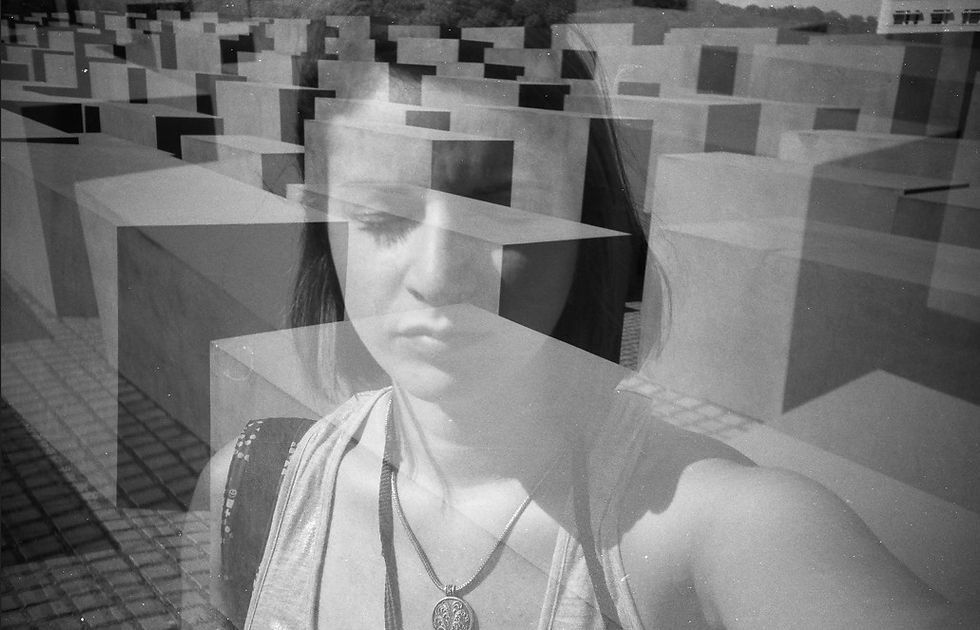
My healing journey has not been the kind they sell on the Internet, where if you just do this, all will be well. Mine was more like putting out breadcrumbs in the forest and finding them as I made my way home. The healers I encountered were like elves and angels coming out of nowhere, offering me a different picture. Not the picture of the concentration camp. The picture of what might be possible if I left those images behind.
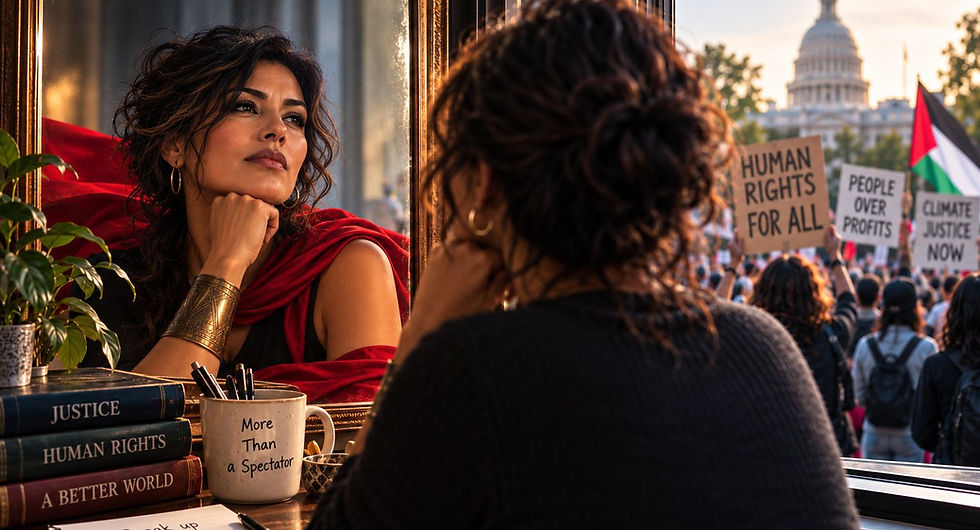
I found that my healing came from learning how to listen to what my body was telling me. When my father died, I looked in the mirror and said, "I'm so sorry, Daddy."
I was 36 years old. I had no idea what I was apologizing for. I thought it had something to do with failing to be who he wanted me to be. But now, 40 years later, I understand. I broke a contract with him. An unconscious contract I made as a child, that I could heal him from his trauma.
For my father, his identity was that he survived. He had no idea why or how. It haunted him from the day he left Czechoslovakia until the day he died. We, his children, spent our entire lives alongside his unending battle with his demons. When I was very young, I would hear stories of his experiences in the camps. I didn't know then that I was making a decision. That I was signing up to carry what he could not put down. His language of love expressed itself in giving us a warm home. A safe Long Island suburban sanctuary that probably never felt like home to him. His home was the streets of Vienna. The beer gardens. The coffee houses. The pastry shops. The life between the two wars. The life that was stolen.
How do you put down something you inherited before you had words? Pain shows up in the body as a placeholder for something unconscious. Something we are trying to access but that keeps finding a way around. Our patterns are protective mechanisms. They made sense once. They kept us alive or kept us connected to the people we needed to survive. When we were young, we had to accommodate. Our emotional needs shaped themselves around what was possible in our families. Many children figured out early that their needs were not important at all. But pain shows up anyway.
I see pain as an emotional conflict somatizing in the tissue. We feel tightness in our neck or jaw. We want to release it. We stretch, we massage, we try to get at what's going on. Very often, what's going on is not in the muscle. It's in the memory. It's in the contract we made before we knew we were making it. The symptom in the body is a call to attention. A placeholder for the unconscious to invite us into a deeper conversation. The body is not malfunctioning. The body is trying to speak. The jaw holds words we never said. The neck holds weight we carried for others. The shoulders hold responsibilities we took on before we could choose. The belly holds grief. The pelvis holds power we were taught to suppress. The breath holds everything.
Body Dialogue is a practice I created out of my need to understand my own pain. Not to fix it. To understand it. To finally have the conversation I'd been avoiding my whole life.
I stood in front of that mirror at 36 and apologized to my father without knowing why. Now I understand. I was apologizing for failing a contract no child should ever sign. A contract to heal his trauma by carrying it.
The healing wasn't in fulfilling the contract. The healing was in breaking it. My father gave us everything he had to give: safety, warmth, a relentless drive to succeed. What he couldn't give us was permission to feel what he couldn't feel himself. What he couldn't model was how to put down the weight. That part I had to learn on my own. Through the breadcrumbs. Through the listening. Through decades of asking my body what it knew and being willing to hear the answer.
Your pain is talking to you. It has been talking to you for years. Maybe for generations. The question is not how to silence it. The question is what it's trying to say.
Janice Stieber Rous is the founder of Body Dialogue. The daughter of a Holocaust survivor, she has spent four decades learning to understand her pain and teaching others to understand theirs.
Learn more here.
Read more from Janice Stieber-Rous
Janice Stieber-Rous, Somatic Healing & Holistic Wellness Educator
Body Dialogue is a somatic healing practice founded by Janice Stieber-Rous and developed with Madelyn Ilana and Mandie Jones. Rooted in the Alexander Technique, Breathing Coordination, and mindful movement, the practices taught in Body Dialogue help release stress, tension, and heal habitual patterns. Using practical tools for body, mind, and breath, they guide participants to reconnect with the body’s innate intelligence and inner guidance.