Gen Z is Not Asking for Less Accountability, but Better Leadership – Interview with Dr. Unnatti Jain
After 25 years at the World Bank, Dr. Unnatti Jain, founder of Bridging Generations, saw how assumptions about age could quietly undermine communication across families, workplaces, and leadership teams. Her doctoral research and coaching work now focus on helping people replace generational stereotypes with curiosity, stronger relationships, and practical leadership habits.
In this interview, Dr. Unnatti Jain explores what leaders misunderstand about Generation Z, how organizations can prepare for Generation Alpha, and why communication, storytelling, mindfulness, and psychological safety are essential to building workplaces where every generation can contribute.
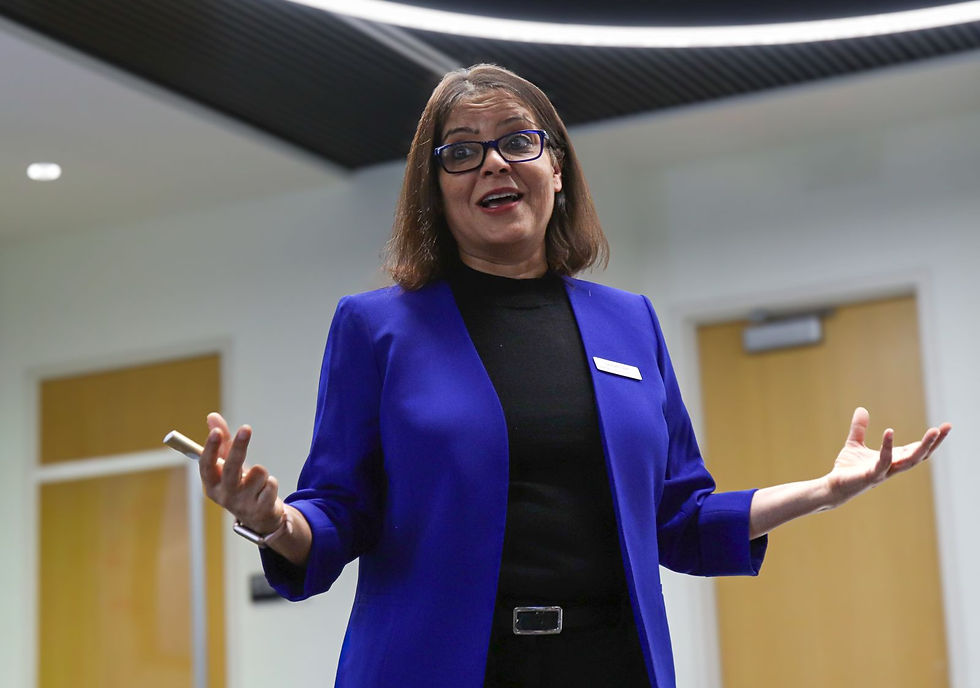
Dr. Unnatti Jain, Motivational Keynote Speaker
What first inspired you to dedicate your career to helping different generations understand and work better with one another?
During my twenty-five years at the World Bank, I collaborated with people across generations, cultures, and backgrounds. What struck me most was not the differences themselves, but how often they led to avoidable misunderstandings. Later, as a leadership coach for parents, teenagers, executives, educators, and organizations, I saw the same pattern everywhere: parents struggling to understand their teens, managers trying to engage younger employees, experienced professionals feeling overlooked, and younger professionals feeling unheard.
That realization led me to pursue doctoral research in leadership and generational dynamics. I discovered that most conflict is not caused by age; it is caused by assumptions. Every generation is shaped by different historical events, technologies, educational systems, and workplace experiences. Once people understand the reasons behind those perspectives, communication changes dramatically.
That is why I founded Bridging Generations. My mission is not simply to raise awareness about generations. It is to help them build stronger relationships, create workplaces where everyone feels valued, and turn differences into a competitive advantage.
Based on your research, what is the biggest misconception leaders have about Generation Z in today's workplace?
The biggest misconception is that Generation Z lacks work ethic. They do not lack commitment; they define work differently.
Many leaders measure Gen Z’s commitment by outdated standards. Younger employees want meaningful work, regular feedback, opportunities to gain experience, psychological safety, and leaders who genuinely care about their development. They are not looking for shortcuts; they are looking for purpose.
My research shows that when organizations dismiss these expectations as entitlement, they lose talented employees who are eager to contribute. By contrast, organizations that invest in coaching, mentoring, transparency, and career development see higher engagement, stronger retention, and better collaboration.
Generation Z is not asking for less accountability. They are asking for better leadership. Organizations that recognize this create workplaces where every generation can thrive, not just the newest one.
Your work connects generational understanding with business outcomes like retention and engagement. What changes have the greatest impact?
A common mistake organizations make is assuming generational challenges need complex solutions. The greatest progress often comes from small leadership behaviors practiced consistently.
Organizations achieving the strongest results focus on three areas: communication, recognition, and career conversations.
Communication means adapting to your style without changing your standards. Recognition means understanding that different generations feel valued in diverse ways. Career conversations are especially important because employees want to know they have a future within the organization.
Another powerful shift is replacing assumptions with curiosity. Instead of asking, “Why are they like this?” leaders begin asking, “What experiences shaped their perspective?” That single mindset shift can transform conflict into collaboration.
When employees feel understood, trusted, and included, engagement increases naturally. Better communication leads to stronger teams, a healthier culture, improved retention, and better business performance.
How can organizations prepare now for Generation Alpha before they begin entering the workforce?
Generation Alpha is growing up in a world shaped by artificial intelligence, constant connectivity, personalization, and rapid technological change, so their expectations may differ even more from those of Generation Z.
Organizations should not wait until Generation Alpha enters the workforce. Preparation begins now by building adaptable leadership rather than generation-specific policies.
Leaders need to strengthen their coaching skills, embrace continuous learning, encourage curiosity, and become comfortable leading people whose experiences may differ significantly from their own.
Technology will continue to change how we work, but human skills such as empathy, communication, collaboration, emotional intelligence, and critical thinking will become even more valuable.
The organizations that succeed will not be those that predict every generational trend. They will be the ones that create cultures flexible enough to evolve with each new generation entering the workforce.
You often combine storytelling with leadership development. Why does that approach create stronger learning than simply presenting data?
Data informs people, but stories can transform them. Research provides credibility, and I rely heavily on evidence-based findings. However, people rarely change because of statistics alone. They change when they see themselves in a story.
When I share experiences from coaching families, executives, educators, or organizations, audiences recognize their own challenges. Suddenly, generational differences stop feeling theoretical and become personal. That is when learning becomes meaningful.
Stories also create emotional connection, and neuroscience shows that emotion strengthens memory and learning. People may forget percentages and charts, but they will remember the story that made them rethink a conversation with a colleague, employee, teenager, or parent.
My goal is always to combine rigorous research with practical applications. I want people to leave inspired and, more importantly, equipped to communicate differently the very next day.
What is one practical shift managers can make this week to build more trust with younger employees?
Schedule a fifteen-minute conversation with each team member and ask one simple question: “What can I do to support your success?”
Then listen without interrupting or trying to solve the problem immediately. Trust is not built through grand leadership speeches. It is built through consistent moments when employees feel heard, respected, and understood.
Many younger employees want feedback more frequently than previous generations did. They also appreciate transparency and want to understand why decisions are made. Small conversations create psychological safety, and psychological safety supports stronger performance.
Managers often believe they need more authority to lead effectively. They need more curiosity. When people feel safe sharing ideas, asking questions, and admitting mistakes, engagement rises naturally. One meaningful conversation can change the entire relationship between a manager and an employee.
You also bring mindfulness into your keynotes and coaching. How does that help leaders communicate more effectively across generations?
Mindfulness is not about meditation in the workplace. It is about awareness. Most communication challenges happen because we react instead of responding. We interpret someone’s behavior through our own experiences, make assumptions, and miss what is happening.
Mindfulness helps leaders pause long enough to become curious rather than judgmental. Instead of labeling someone as difficult, entitled, resistant, or disengaged, they begin asking questions that uncover the real issue.
That pause changes everything. Across generations, people share many of the same needs: respect, purpose, belonging, and opportunities to contribute. Mindfulness helps leaders recognize these shared human needs instead of focusing on surface-level differences.
When leaders become more intentional in how they listen, ask questions, and respond, communication improves naturally. Better communication creates stronger relationships, healthier teams, and cultures where every generation can succeed together.
What belief has guided your work as a researcher, speaker, and founder of Bridging Generations?
The belief that guides everything I do is simple: everything begins with you. We spend so much time trying to change other people, yet our greatest influence is over ourselves.
Whether I am coaching a parent, collaborating with an executive team, speaking to educators, or helping organizations navigate generational diversity, I remind people that leadership starts with self-awareness. When we change how we communicate, listen, and lead, the people around us often respond differently.
Generational understanding is not about convincing one generation to become another. It is about appreciating different perspectives while creating shared understanding.
I have seen families reconnect, teams rebuild trust, and organizations transform simply because someone chose curiosity over judgment.
Real leadership is not about having all the answers. It is about creating environments where everyone feels respected enough to contribute their best.
If every leader could adopt one mindset about generational diversity, what would you hope it would be?
I would hope every leader replaces stereotypes with curiosity. Every time we describe a generation with a single label – lazy, entitled, resistant, loyal, or hardworking – we overlook the unique experiences of the individuals in front of us.
Generational diversity is not a problem to solve. It is a strength to leverage. Each generation brings valuable perspectives shaped by different life experiences, technologies, economic realities, and cultural influences. Organizations become stronger when they intentionally create opportunities for those perspectives to learn from one another rather than compete against one another.
The future of leadership is not about managing generations differently. It is about leading people well. When leaders choose curiosity over assumptions, empathy over judgment, and connection over control, they build workplaces where innovation, collaboration, and trust flourish. That is the heart of Bridging Generations, and it is the future of leadership.
Read more from Dr. Unnatti Jain