

From One Room to the Whole Midwest – The Leadership Story Behind Nicolet Law
There's a moment most entrepreneurs know well. It's the one where you're sitting in a space that's too small, with resources that feel too thin, and a vision that seems too big. For Russell Nicolet, that moment happened in 2007 in a single-room office in Hudson, Wisconsin. No large staff. No regional footprint. Just a lawyer, a desk, and a deep conviction that injured people in the Midwest deserved better representation than they were getting.
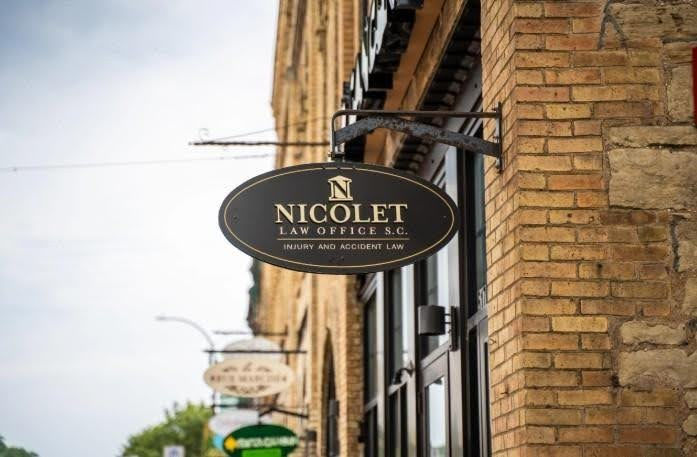
Nearly two decades later, Nicolet Law Accident & Injury Lawyers has grown into one of the most recognized personal injury firms in the region, with offices spanning Wisconsin, Minnesota, North Dakota, and Iowa, a bilingual practice serving Spanish-speaking communities, and a reputation built on something that doesn't scale as easily as office square footage: genuine care for clients.
The story of how they got there is less about legal strategy and more about leadership, community, and what it really means to build something that lasts.
Starting small, thinking big
Before Russell Nicolet ever hung his own shingle, he was doing the unglamorous work that builds real expertise. He interned at a public defender's office, clerked for a Minnesota judge, and spent hours in the Washington County Law Library doing research by hand, not because he had to, but because he wanted to give clients every possible edge without passing on the cost of expensive legal research programs.
That mindset, find every advantage, absorb the cost yourself, show up for the people who need you, became the DNA of Nicolet Law from day one.
When the firm opened in 2007, it wasn't a splashy launch. It was one attorney, one office, and a commitment to helping everyday people through some of the most difficult moments of their lives: serious injuries, accidents, and the financial chaos that follows. Russell's early clients were his neighbors. People who had been hurt through no fault of their own and had no idea how to fight back against insurance companies.
That's the part of the story that often gets lost in narratives about business growth. The real foundation wasn't a growth strategy. It was a moral stance: injured people deserve a fair fight.
Growing without losing the plot
By 2014, the demand for what Nicolet Law was doing had grown far beyond Hudson. The firm expanded, adding attorneys, opening offices in Eau Claire, Superior, and other Wisconsin cities, then crossing into eastern Minnesota. With each new location came a deliberate choice: keep the caseload limited enough that every client still receives the kind of personal attention you'd expect from a local attorney.
That's a harder business decision than it sounds. Growth creates pressure to take on more cases, hire faster, and chase volume. Many firms do exactly that. Nicolet Law made the opposite call: quality over quantity, always.
The firm focused its practice exclusively on personal injury, primarily serious injuries caused by someone else's negligence. Car accidents. Truck crashes. Motorcycle collisions. Wrongful death cases. These aren't abstract legal problems. They're moments that shatter families. And the Nicolet team decided early on that if they were going to do this work, they were going to do it fully present, not spread thin.
Russell's motto "Injured? Get Nicolet." became more than a tagline. It became a cultural commitment that filtered every hiring decision, every case acceptance, and every client interaction.
What regional expansion actually requires
By 2023, Nicolet Law had become a truly regional firm, adding offices in North Dakota and continuing to invest in existing communities. In 2024, Iowa joined the map. The Milwaukee and Minneapolis offices were renovated to support growing teams. A bilingual practice was launched to remove barriers for Spanish-speaking clients, a move that speaks directly to the firm's understanding that access to legal help shouldn't depend on the language you grew up speaking.
Most businesses talk about community. Nicolet Law built systems around it. The attorneys don't just practice in these cities, they live there. They coach youth sports, sponsor local events, and invest in the places where their clients raise families. That's not a PR strategy. It's a structural choice about what kind of organization you want to be.
This kind of expansion is hard to pull off without losing your culture. Many firms that grow from one location to twenty end up looking like entirely different companies by the time they're done. The leadership challenge, the one that Russell Nicolet and partners like Adam Nicolet, Jessica Swain, John Spiten, Drew Epperly, and William Waltenberger have had to navigate, is keeping the founding values intact while building the infrastructure of a regional powerhouse.
The answer, it seems, has been ruthless consistency. Limited caseloads. Deep client communication. Local roots in every market. And attorneys who are known in their communities by name, not just by firm affiliation. (Jessica Swain is "Milwaukee's Injury Lawyer™." John Spiten is "Minnesota's Injury Lawyer™." Drew Epperly is "The Midwest's Motorcycle Lawyer™." These aren't just titles. They're accountability statements.)
The leadership lessons embedded in the Nicolet story
For entrepreneurs and leaders reading this, there are a few things worth sitting with from the Nicolet Law journey.
Niche down before you scale up: Nicolet Law didn't try to be everything to everyone. It focused on personal injury, and within that, on serious cases where the stakes are highest and clients most need a fierce advocate. That focus is what gave the firm the credibility to expand confidently.
Reputation is built in the moments no one's watching: Russell Nicolet spent hours in a law library doing research that his clients never saw and never paid for. That kind of invisible effort is what creates the results that people do see. The firm's track record of life-changing settlements didn't come from marketing. It came from work.
Scaling with values requires active maintenance: Growing from one office to dozens means constantly asking: are we still doing this the way we said we would? The limited caseload policy, the bilingual practice, the community investment, these aren't features added on for show. They're the mechanisms that keep the culture from drifting.
Access is a leadership issue: The decision to launch a bilingual practice wasn't just a business expansion. It was a recognition that the legal system has access gaps, and that a firm committed to helping injured people has to actually make itself accessible to all of them. That's a values-driven leadership call.
What comes next
Nicolet Law has been direct about its future: growth will continue, and the founding principles will come with it. More communities. More attorneys who live where they practice. More clients who get the personal attention that changes outcomes.
The firm that started in a single room in Hudson, Wisconsin is now one of the most recognized personal injury practices in the Midwest, decorated with Super Lawyers recognition, Better Business Bureau accreditation, and a long list of awards that confirm what clients already knew. But if you ask Russell Nicolet what he's proudest of, it probably isn't the awards. It's the phone calls that come in at 2 a.m., answered. The families who didn't know where to turn, who found somewhere to turn. The cases where someone who was told they didn't have a claim walked away with a settlement that rebuilt their life.
That's the Nicolet Law story. And by every indication, they're just getting started.



