Finding Balance Between Digital and Real-Life Connection
Updated: Feb 24, 2025
Joanna is a Clinical Psychologist with over 25 years of experience working in the NHS and privately, and now runs a thriving private practice, Key Psychology Services, online and in-person. She is passionate about helping people make changes to both their physical and mental well-being using evidence-based approaches.

Sweden ranks highly in the world for good mental health. It advocates the daily ritual of Fika involving coffee and chats in person, usually accompanied by a cake. It was good to observe some coffee shops during my recent visit to research seasonal affective disorder and the importance of connection.
Despite some face-to-face interactions, there was still an abundance of people connected to laptops and headphones. Look around a train, bus, or coffee shop globally, and most people are plugged into some device and headphones, and few are chatting to each other. They are connected virtually, but is this enough for our mental health and well-being?
Working in mental health, I’ve observed a trend in students describing a pattern of symptoms, including feeling disconnected, socially anxious, depressed, and overwhelmed, with a common theme of spending a lot of time online and alone. Home workers are also presenting with similar symptoms, as do many others lacking in social interaction with more time spent online than offline.
Interconnectivity is high while personal connection is less so. How do we find a balance between the benefits of being connected online, versus offline? During lockdown we connected online, but some of us are struggling to disconnect and re-connect again. Drawing on the Swedish concept of Lagom, not too little or too much, or the balance of the Chinese concept of Yin and Yang, maybe we can help the populations presenting with anxiety, fear and panic to tip the scale towards more in-person connection in 2025.
1. The importance of connection
We hear a lot about the benefits of connection, but what actually is it, and why is it so good for mental health? Connection to other social beings produces the feelgood hormone Oxytocin. This is evident in new mothers when they give birth. An important aspect of Postnatal depression is the lack of connection to the baby and production of Oxytocin, a factor well worth noting and often overlooked.
The production of Oxytocin has also been well-documented in social interactions. The flip side is that a lack of social connection reduces Oxytocin production. This can be a factor in depression, and in fact, in blue zones, social connection is cited as one of the factors in longevity. Johann Hari talks a lot about this in his book, Lost Connections, and the impact on depression and mood.
The biology of connection states that humans are biologically wired for connection, empathy, cooperation, and generosity. This biological wiring starts at birth and underlies all relationships. Humans are born with a biological need for connection, which is especially important in the early years of life, and babies are programmed to seek physical and emotional contact with others.
Specifically, the nucleus accumbens is the brain’s circuit supporting empathy, as well as the medial orbitofrontal cortex. Activating the circuit can lead to acts of compassion and selflessness. Social connection can improve mental and emotional well-being, as well as physical health. The opposite is evident in disconnected and fragmented populations globally.
2. Social anxiety linked to lack of connection
We know that when we are not exposed to something often, or we avoid it, it can become more anxiety-provoking. This seems to be the trend for a lot of young people who came out of homeschooling and back to school or university. This is also the case with hybrid or ongoing home working. Social interaction has become fearful for many.
A pattern of symptoms started to emerge following lockdowns. School, work, people, and social gatherings became the feared stimuli, even though there were no tigers or lions waiting in the office by the photocopier or at school gates waiting to attack. The unfamiliarity and irregularity led to the nervous systems being triggered and symptoms of anxiety and panic increasing. Suddenly, the familiar became unfamiliar, with bedrooms and kitchen tables becoming the safe spaces.
During lockdowns, when social connection was not permitted, it was helpful to connect online, but it cannot replace offline connection, also known as in-person or face-to-face! Interestingly in Finland, rated highly in the global happiness ranks, mental health improved with remote villages connecting and creating online communities. However, a balance between the two is the best for mental health and well-being.
3. Disconnecting and connecting to your body and mind
The starting point is helping with disconnecting online and reconnecting to the breath and the body. Often, people describe physical sensations in their body such as butterflies in the stomach or headaches when feeling anxious or fearful. Begin with reconnecting to your breath. It’s important to overcome the fears, particularly the fear of having a panic attack in a public space. Using breathing techniques and cognitive behavioural techniques to address irrational thoughts and replace them with more rational and balanced thoughts.
This should help to combat those fears and re-wire the brain to end the association between the feared place (stimulus) and the response (anxious symptoms and worry) which lead to a panic attack.
4. Re-connecting
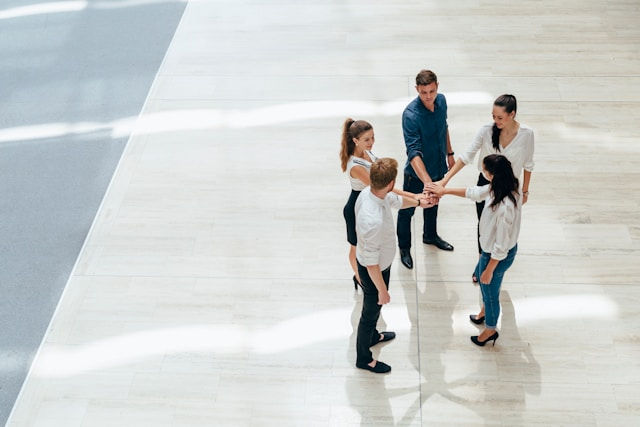
The issue is often that even when people disconnect from being online, they also struggle with knowing what to connect to. Finding your community through sports, music, dance, yoga, art, or faith is very important. It provides the social interaction that may be missing from working at home and being online.
For decades, large sporting events and following a football team have provided connection. Without even knowing each other, identities are formed from a common interest. Dance also provides a connection between people when there may be language barriers. Park runs were set up in 2004 by a doctor who recognised that his own mental health was affected, and bringing people together for a common purpose helped his mood with connection and exercise. Bringing groups together for a common purpose has helped many people over the years. Candlelit concerts were a music initiative set up during lockdown times and continue to be a success.
These are all good, but it’s also important to have a daily face-to-face connection if possible. This can even be achieved by going to the shops or a walk, and trying to increase time spent offline.
5. The balance between connecting, disconnecting and re-connecting
The question here is, can we start to shift behaviours and attitudes with the suggestions above to develop more offline connections involving contact with other human beings? Less time online and more offline is the best approach to tip the balance towards a healthy human connection and better mental health.
6. Seeking professional help
If you are struggling with feeling disconnected, then perhaps it is time to seek professional help to really connect with who and what is good for you. With hybrid working and spending time online, it is easy for people to become socially disconnected, although maybe not virtually.
You can also find professional help if you are struggling with low mood, anxiety, or panic. Psychological sessions, including a focus on thoughts and behaviours using cognitive behavioural therapy, can help. Compassion-focused therapy includes behavioral activation, thought challenging, mindfulness, and mindful movement techniques (Wellbeing In Motion) online and in-person. Click here and here.
Visit my website for more info!
Read more from Dr. Joanna Livingstone
Dr. Joanna Livingstone, Clinical Psychologist
Joanna is a Clinical Psychologist, Coach and NIA Wellbeing Movement Practitioner. Her interest and passion for helping people make lasting changes both to their physical and mental well-being is at the heart of her work. With her 25 years of experience working in the field, she has assessed and treated individuals with a range of conditions. Her particular interests are in workplace wellbeing, ADHD coaching, maternal wellbeing, boosting brain chemistry through psychological techniques, and trauma-based medico-legal work. She has also combined her passions for psychology and wellbeing dance to provide Wellbeing in Motion workshops and retreats, which she offers locally and internationally.