

From Replacement To Regeneration — Professor Paul Lee On What May Still Be Possible Before Joint Replacement
Brainz Magazine Exclusive Interview
Professor Paul Lee is a Harley Street Regenerative Orthopaedic Surgeon, specialising in cartilage and joint preservation. His work in helping patients understand what may still be possible before joint replacement has also shaped a broader systems-based approach to regeneration.
Professor Paul Lee is a Harley Street Regenerative Orthopaedic Surgeon, Cartilage & Joint Preservation Specialist, and founder of the London Cartilage Clinic. He has been recognised as an ICRS Teaching Centre of Excellence for cartilage and joint preservation surgery for over 10 years. His work focuses on what may still be preserved, repaired, or regenerated before joint replacement becomes the default, and this clinical philosophy has also shaped his wider regeneration platform, Regen PhD. He is an Honorary Professor of Sports Medicine at the University of Lincoln, editor of Springer’s Musculoskeletal Regeneration Medicine, and author of the international Amazon #1 bestsellers Regeneration by Design and Practical Regeneration. He has published over 100 peer-reviewed papers, secured more than £1.3 million in research funding, and was recently recognised with a 20-year NHS long service award.
In a field often defined by endpoints, Professor Paul Lee is reshaping how clinicians and patients think about the journey itself. His work challenges the assumption that joint replacement is inevitable, instead opening a broader conversation around timing, preservation, and the untapped potential of regeneration.
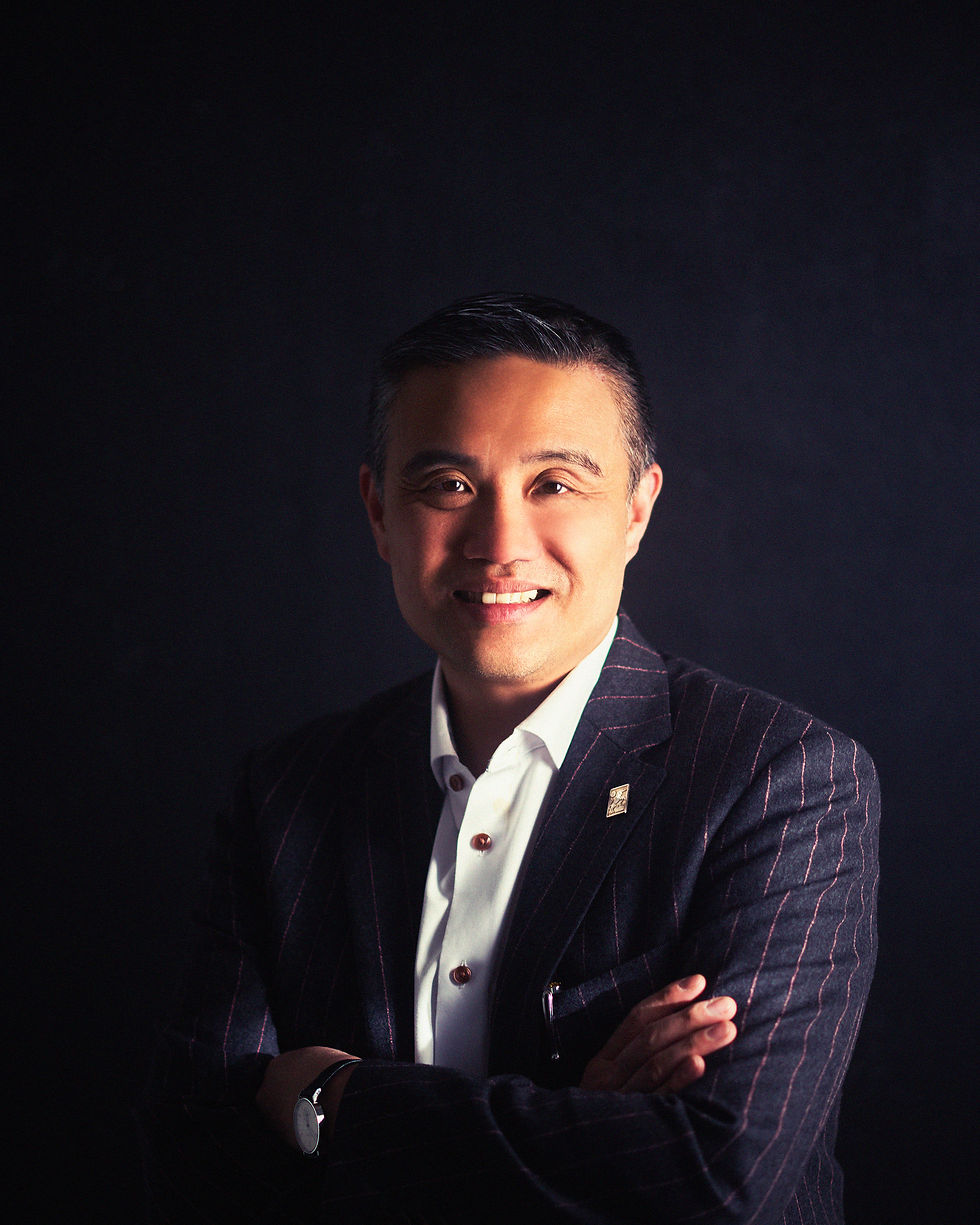
“So the real question is not simply: can the joint be saved? The real question is: have the full range of possibilities been considered?"
You specialise in cartilage and joint preservation - what is still possible today before joint replacement becomes the default?
More than most people realise.
In many cases, the limitation is not the joint itself, but how the problem is framed. When joint replacement becomes the most visible solution, it can quickly feel like the only option.
Today, we can often intervene earlier and more precisely - preserving what remains, supporting areas of damage, and influencing how the joint behaves over time. But what is possible is not defined purely by biology. It is shaped by experience, exposure, and the environment in which decisions are made.
So the real question is not simply: can the joint be saved? The real question is: have the full range of possibilities been considered?
Why do you think joint replacement has become the default solution in so many cases, and what might be overlooked before reaching that stage?
Joint replacement is one of the most successful operations in modern medicine, so it is entirely understandable that it has become a default endpoint. Because it works well, it often becomes the most immediate solution people see.
What can be overlooked is timing.
A joint rarely progresses from normal to replacement overnight. There is usually a long phase in between where the joint is adapting, compensating, and gradually changing. Within that phase, there may be opportunities to influence its trajectory.
This is not about avoiding surgery, but about recognising that there may be a window before that decision where other options can still be explored.
You’ve been a strong advocate for “before replacement” thinking - how would you define that approach in practice?
For me, it is about stepping back from the endpoint and understanding the journey.
Instead of asking what operation is needed, the question becomes where is this joint in its lifecycle, and what options exist at this stage?
In practice, that means considering:
What can be preserved
What can be repaired
What may be regenerated
And only then, what needs to be replaced.
I often describe this as a “preserve, repair, regenerate, replace” framework - not as a fixed pathway, but as a way of ensuring that each stage is properly considered before moving forward.
It shifts the focus from a single decision to a sequence of decisions over time.
What are some of the most important developments in cartilage and joint preservation that patients and even clinicians may not yet be fully aware of?
The most important development is not a single technique, but a shift in understanding. Cartilage is a very specific tissue. It does not respond well to generic healing approaches. The focus now is on creating a targeted environment - in the right place and at the right time - that allows the joint to respond.
We are now more precise in how we define damage, how we support it structurally, and how we integrate that with how the joint functions afterwards.
What is often underappreciated is that these interventions are not standalone. Their success depends on timing, mechanics, and the wider system around the joint.
So the real progress is not just better tools - it is a more refined way of thinking.

How did your work in joint preservation lead you to explore a broader approach to regeneration?
Joint preservation naturally leads to a broader question - why do some joints recover, while others continue to deteriorate? That question cannot be answered by looking at the joint alone.
Over time, it became clear that structure, movement, biology, and recovery are interconnected. Treating one element in isolation often leads to limited or temporary results.
This is what led me to explore regeneration more broadly - not just as a treatment, but as a system.
You often speak about systems-based regeneration - what does that mean in a practical, clinical sense?
In practical terms, it means the joint is not treated in isolation. A joint is influenced by how a person moves, how they load their body, and their biological capacity to recover. If one of these elements is misaligned, it can affect the outcome.
Systems-based regeneration is about bringing these elements together in a structured way.
In clinic, that means combining:
Targeted structural intervention
Optimisation of movement and load
Support for recovery over time
It is less about a single treatment and more about aligning conditions so that recovery becomes possible.
How did Regen PhD grow out of your clinical work, and what gap were you aiming to address through it?
Regen PhD developed from a very practical gap in clinical practice.
I was seeing patients at different stages of the same journey, but without a clear way to structure or measure that progression. Decisions were being made, but the pathway itself was often unclear. The aim was to bring structure to that process - to move from isolated interventions to a system of optimisation.
It is built on the idea that recovery can be guided, measured, and improved over time, rather than treated as a one-off event.
With over two decades of clinical and research experience, how has your perspective on recovery and long-term joint health evolved?
Earlier in my career, the focus was more on treating the problem in front of me.
Over time, that perspective has shifted towards understanding progression - how problems develop, how they evolve, and how they might be influenced earlier.
This thinking has also been shaped by my academic work on recovery and decision-making, including research that was recognised by the Robert Jones Medal.
Recovery is no longer something I see as happening after treatment. It is part of the treatment itself.
Your clinic has been recognised as a teaching centre of excellence for many years — how important is education in advancing joint preservation and regeneration?
Education is fundamental.
Advancement in medicine depends not only on innovation but on how that knowledge is shared, understood, and applied. If new approaches are not taught effectively, they remain isolated rather than becoming part of standard practice.
Education allows us to refine thinking, challenge assumptions, and improve consistency in how care is delivered.
In that sense, it is just as important as the treatments themselves.
Through your books, Regeneration by Design and Practical Regeneration, what core shift in thinking are you hoping to bring to both clinicians and patients?
The core shift is from isolated treatment to structured thinking.
Traditionally, medicine has focused on fixing individual problems. What I am trying to communicate is that recovery is part of a system - influenced by multiple factors that need to be considered together.
For clinicians, that means thinking beyond individual interventions. For patients, it means understanding that outcomes are shaped over time, not by a single treatment.
You’ve recently been selected as a TEDx speaker - congratulations! What does this opportunity mean to you personally and professionally, and what message are you most excited to share with the audience?
Thank you — it is a real privilege. What matters most to me about this opportunity is the chance to speak to a wider audience about healthy ageing, recovery, and prevention in a practical way.
A large part of my work is about making regeneration simpler to understand. Too often, people only start asking questions when pain, injury, or degeneration has already progressed. The message I most want to share is that, with better understanding and earlier action, we can often do more to preserve function, support recovery, and help people make better-informed decisions before more invasive treatment becomes the default.
How do you see regeneration shaping the future of medicine over the next 10–15 years?
Regeneration will become less about individual therapies and more about integrated systems.
We are moving towards a model where decisions are supported by better data, a better understanding of function, and more personalised approaches.
Over time, we will see:
Earlier intervention
More precise targeting
Greater focus on preserving function rather than replacing structure
The biggest shift will be in mindset - from fixing problems to optimising systems over time.
At the core of your work, what does optimising recovery truly mean to you?
Optimising recovery means creating the right conditions for the body to do what it is already capable of doing.
It is about timing, environment, and alignment - ensuring that structure, function, and biology are working together rather than against each other. It is not about forcing recovery, but enabling it.
If you could change one thing about how medicine approaches joint health today, what would it be?
I would shift the focus from endpoints to timing.
Much of medicine is built around defining when something needs to be done. I think the more important question is when something could have been done earlier to change the trajectory.
If we focus more on that earlier phase, we can often achieve better long-term outcomes.
“The biggest shift will be in mindset — from fixing problems to optimising systems over time.”
Professor Paul Lee’s work represents a significant shift in how joint health is understood and managed. By moving away from endpoint-driven thinking and toward a systems-based approach, he highlights the importance of timing, structure, and long-term strategy in achieving meaningful outcomes. His philosophy challenges both clinicians and patients to reconsider what is possible before replacement becomes the default — ultimately redefining recovery as a guided, continuous process rather than a single intervention.






