

They Watched Institutions Get Rich and Decided to Change the Game — Exclusive Interview with Marc Esrig and Ron Schinik
Brainz Magazine Exclusive Interview
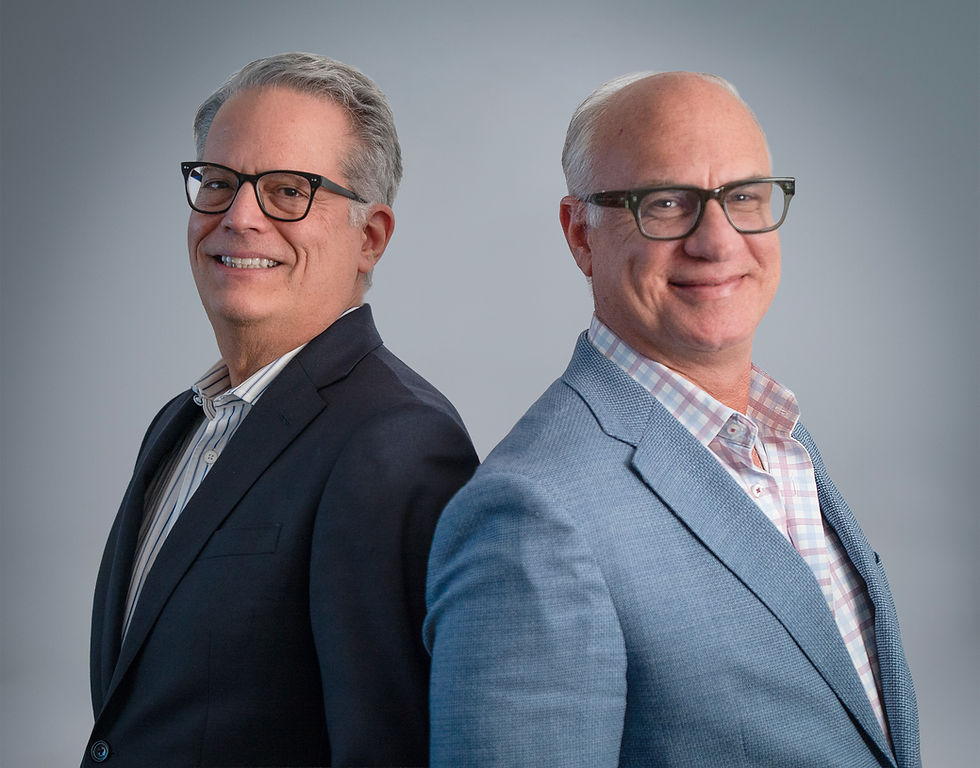
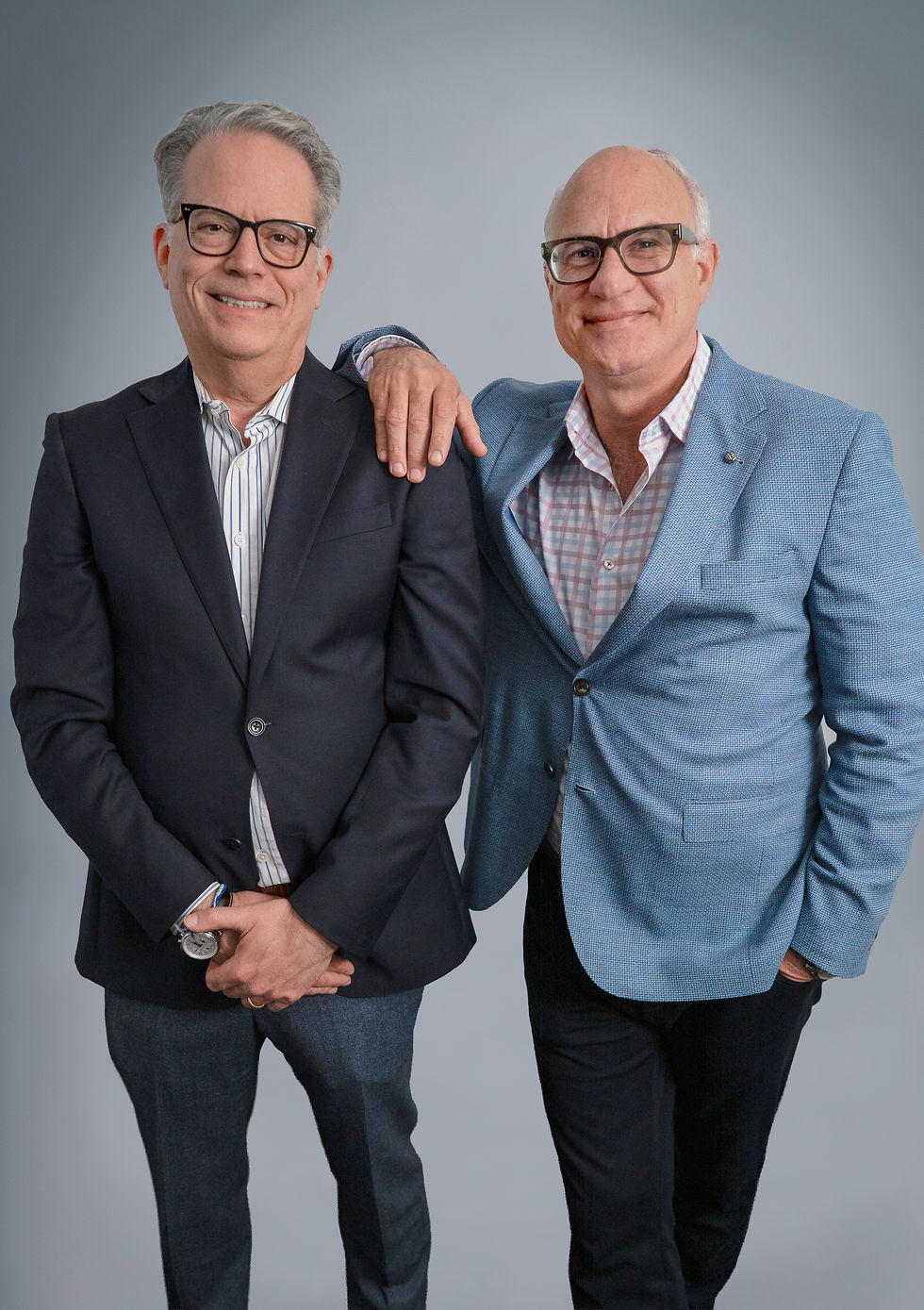
Marc Esrig and Ron Schinik are the founders and co-managing members of New Blueprint Partners LLC, where they together oversee real estate acquisitions, dispositions, strategy, asset management, and go-to-market execution. Prior to founding New Blueprint, Marc served as Director of a Real Estate and Ron served as Chief Financial Officer - experiences that cemented both their working relationship and their shared conviction in industrial real estate as an asset class.
Marc's background spans decades of hands-on real estate experience. He was a founding partner of Vista Realty Partners, where he led acquisitions, development, leasing, financing, and management of retail and commercial properties throughout the New York metropolitan area. Earlier in his career, he co-managed a distressed commercial real estate portfolio with a face value of more than $350 million at Greenthal/Harlan Realty Services, and began his career at Charles Klatskin Company, a New Jersey-based industrial developer and brokerage firm. He holds a B.A. in Biology from Tulane University and an M.B.A. in Finance from Pace University.
Ron brings a complementary background in finance, capital markets, and corporate strategy. He previously co-founded CrownBrook Capital LLC, a New York-based investment group focused on privately held micro-cap and lower middle market companies, and served as CFO of Quick International Courier, where he structured and integrated acquisitions across Europe, Canada, the United States, and the Far East - helping grow the company's revenue to more than $250 million. Earlier in his career, he was Vice President of Investment Banking at Rodman & Renshaw. Ron holds a B.A. in Accounting from Queens College, City University of New York, an M.B.A. from NYU's Stern School of Business, and is a Certified Public Accountant (New York State).
For those discovering New Blueprint Partners for the first time, how would you describe what you do and the impact you aim to create?
We see industrial real estate as one of the most compelling and fastest-growing components of a modern investor's portfolio, and that conviction sits at the center of everything we do. Other asset classes — multifamily, retail, office — have each had their day in the sun, but industrial has quietly delivered strong, consistent performance for more than a decade. Institutional capital has taken notice in a big way, and the momentum hasn't slowed.
What's missing, in our view, is access. The industrial thesis has been well-understood at the institutional level for years, but smaller investors — who could benefit just as much — have largely been left on the sidelines. That's the gap we set out to fill. New Blueprint Partners exists to give high-net-worth individuals, family offices, and smaller institutional investors meaningful, professionally managed exposure to an asset class they've historically had a hard time reaching.
The impact we're aiming for is twofold. First, we want to deliver the risk-adjusted returns industrial real estate is known for — underwritten with the same rigor and transparency a large institution would demand. And second, we want to democratize access to a category that's been too gated for too long. If we can build long-term partnerships with investors who might not otherwise have a seat at this table, we'll have done something that matters.
What brought you together, and what made you decide to build something jointly?
Aside from being best friends, Marc and I came at this from two different but complementary vantage points within the same industry. Marc spent years as Director of Real Estate, immersed in the sourcing, underwriting, and operational side of the business — the deals, the assets, the day-to-day of putting real estate to work. I was the CFO of a company in the same industry, which put me on the capital, financial structuring, and governance side of the table.
When we stepped back and looked at our combined skill sets, the picture was pretty clear. Marc brought the deal instincts, the operator's eye, and the real estate fluency. I brought the financial discipline, the capital markets perspective, and the investor-facing experience. Together, we had the full toolkit we'd need to build something on our own — and more importantly, to build it in a way that holds up under institutional scrutiny while still being accessible to individual investors.
The bigger idea that pulled us across the line was democratizing industrial real estate investing. We had both watched institutions quietly compound wealth in this asset class for years while smaller investors had no real way in. We believed we could change that — and that we were uniquely equipped to do it together. That conviction, combined with the trust we'd built over a lifetime of friendship, made the decision to go out and build New Blueprint feel less like a leap and more like a logical next step.
When you evaluate a new opportunity, what tends to guide your decision-making most?
Our diligence touches dozens of points, but they tend to cluster around a few core questions. We start with the financial condition of the underlying tenant — credit quality, operating health, and the durability of the income stream. From there, we look at the physical asset itself: the shape, structure, and bones of the building, and how readily it could be repositioned or re-tenanted if circumstances change. Optionality matters to us more than almost anything else.
We then widen the lens to the locale — vacancy trends, new construction in the pipeline, population growth, and the broader economic trajectory of the market. We pay close attention to climate exposure as well, because we believe it's increasingly material to long-term value in ways the market hasn't fully priced. And finally, we look for the upside others miss: release potential, excess land, entitlement opportunities, and any value-add angle that gives us a second way to win.
Put simply, we're looking for assets where the income is solid today, the building is flexible enough to adapt tomorrow, the market has wind at its back, and there's a credible path to creating additional value over time. When those conditions line up, we move with conviction. When they don't, we pass — even on deals that screen well on paper.
"The best structures are the ones where both sides feel good about what they got, and we've protected ourselves on the downside at the same time."
What do you look for when assessing potential in assets others might pass on?
A lot of what we do comes down to creativity and a willingness to think outside the box. The deals that look straightforward at first glance rarely offer the best returns — those are priced efficiently, and everyone's bidding on them. The real opportunities tend to live in situations that require a little more imagination: an unusual asset, a complicated seller, a structure that doesn't fit into a standard template. Those are the situations where we can create value that others simply won't see.
Experience is the other half of the equation. Because we've been around the block, we know how to construct a deal that works for everyone at the table. Our approach is to shape the structure itself — not just the price — in a way that creates a genuine win-win while meaningfully mitigating our downside as the buyer. That might mean a creative earn-out, a staged closing, seller financing, a carve-out on excess land, or a structure that aligns the seller's incentives with ours during a transition period. The specifics are always deal-dependent, but the philosophy is the same: the best structures are the ones where both sides feel good about what they got, and we've protected ourselves on the downside at the same time.
When we walk into an opportunity that others have passed on, we're not looking for reasons the deal is cheap — we're looking for reasons the deal has been misunderstood. That reframing, combined with the ability to structure creatively around real issues, is where most of our best outcomes have come from.
How would you describe your dynamic as partners today?
We started as best friends, and we remained best friends, but there was absolutely an adjustment period. Being close personally doesn't automatically translate into working well together, and early on, we had to learn each other's strengths, weaknesses, and work styles in a very different context. Some of that took time, and a few conversations that weren't always comfortable.
What we've arrived at is an unspoken set of working rules — the kind of shorthand you can only build through reps. We know when to lean in, when to give each other room, and when to push back. Disagreements are rare, but when they happen, we talk them through directly and move on. No scorekeeping, no lingering tension. That combination — a deep personal foundation plus a tested professional rhythm — is something we don't take for granted, and it's a big part of why the firm works the way it does.
What does trust with investors look like to you in practice?
There's nothing more important to us than the trust our investors place in us, and we work hard to earn it every day. In practical terms, that means we're always available — to take a call, answer a question, or walk through a situation in detail. We commit to full transparency from the initial investment through final closure, and we don't wait for investors to ask before sharing what they need to know.
We back that up with infrastructure. We use institutional-grade portfolio software that gives every investor real-time access to their documents, distributions, tax items, and reporting — so the information they need is always at their fingertips, not gated behind an email request.
But the most important piece isn't technology or the process. Our own families and closest friends invest alongside us in every deal we do. That shapes how we treat every dollar of outside capital. We don't have two standards — one for insiders and one for everyone else. Every investor is treated like family, because in the most literal sense, many of them are.
How do you stay grounded while navigating shifting market conditions?
Our anchor is the work itself. We believe that if we do rigorous, disciplined due diligence on the front end — and build our underwriting on sound, stress-tested assumptions rather than optimistic ones — the assets we acquire will hold up through weaker economic environments. That's not a hope; it's the standard we hold ourselves to on every deal.
That discipline is what keeps us grounded when the market shifts. Rates move, narratives change, capital flows in and out of sectors — but the fundamentals of an asset don't change as quickly as the sentiment around it. If we've underwritten a property honestly, with realistic assumptions about vacancy, re-tenanting, capital needs, and downside scenarios, then short-term volatility in the market doesn't change our conviction in what we own.
It also helps that we've built the firm to be selective rather than scaled. We don't have to deploy capital on a schedule, which means we're never forced to lower the bar to stay busy. When conditions get noisy, we can simply do less — and that freedom to be patient is itself a grounding force.
Can you share a moment that challenged you — and how it shaped the way you operate today?
The VIC deal was one of the most defining moments in our firm's history. It was a $55 million acquisition, and the uniqueness of the asset meant most investors shied away from it — the profile didn't fit neatly into any standard box, and that made people hesitant. We were raising into headwinds on a deal we knew, deep down, was going to be a blockbuster.
And it was. The asset performed exactly as we believed it would, and then some. But the real lesson wasn't in the outcome — it was in what the process taught us about conviction. We had done the work. The facts were there, the data were there, and the thesis was sound. What we needed to develop was the discipline to stand behind that analysis even when the room was telling us otherwise.
That experience shaped how we operate today in a very concrete way. We don't chase consensus. When we've done the diligence and the numbers support it, we're willing to be the only hand raised in the room. The flip side, of course, is that conviction has to be earned — it's not a substitute for rigor, it's the result of it. The VIC deal taught us the difference between stubbornness and conviction, and it's a line we think about on every deal we look at now.
"Conviction has to be earned - it's not a substitute for rigor, it's the result of it."
As you look ahead, what kind of future are you building toward?
Our north star is simple: we want every investor — regardless of the size of their commitment — to feel the same level of confidence that their capital is being actively, carefully overseen. The hundred-thousand-dollar investor should get the same attention, transparency, and rigor as the largest check in the fund. If we can hold that standard as we grow, we'll have built something worth being part of.
Beyond that, we want to keep spreading the gospel of industrial real estate. It's a terrific asset class — one of the most compelling risk-reward profiles we've seen across a full cycle, with real tangibility, real cash flow, and real optionality. A lot of investors still under-allocate to it, or don't fully understand what makes it work. Part of our job, and honestly one of the more enjoyable parts, is helping more people see what we see in it.
If we can do both of those things well — deliver for every investor, and bring more of them into an asset class we believe in — the rest of what we're building takes care of itself.
What comes through most clearly in conversation with Marc Esrig and Ron Schinik is that New Blueprint Partners isn't built on hype — it's built on homework. Every deal, every structure, every investor relationship reflects the same underlying discipline: do the work, be honest about the assumptions, and let the results speak for themselves.
Their vision for the firm is, in many ways, as straightforward as their investment philosophy. They want to deliver institutional-quality returns to investors who've historically been left out of the conversation, and they want to do it without cutting corners on transparency, rigor, or trust. In a market full of noise, that kind of clarity is rare — and increasingly valuable.
For investors looking for a partner who treats every dollar with the same seriousness, New Blueprint Partners is worth paying attention to.



