Diversity Fatigue? Let’s Talk Psychological Safety
Updated: Mar 16, 2025
Written by: Caroline Brewin, Executive Contributor
Executive Contributors at Brainz Magazine are handpicked and invited to contribute because of their knowledge and valuable insight within their area of expertise.

It’s a sunny Tuesday morning. Excitement flutters through the room. Today is a celebration of diversity and inclusion, with a panel discussion of 5 inspirational leaders. The audience is 95% white women, and the panel has 1 white man. Everyone claps the men in the room who are acknowledged for being ‘enlightened.
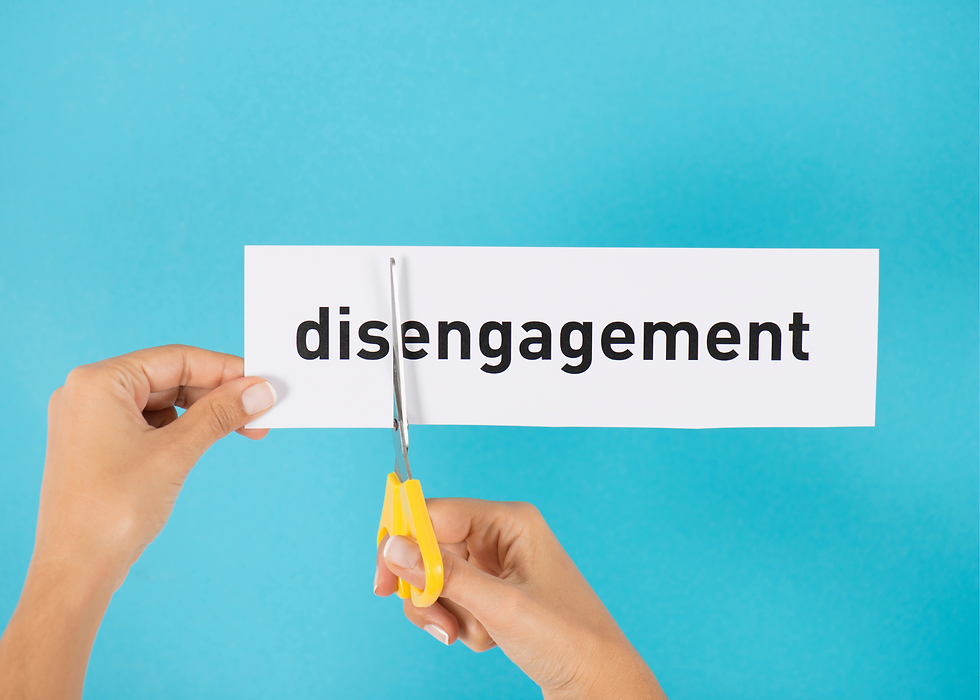
How many times have you seen that happen? Through many years in finance, I saw it time and time again – the problem with Diversity and Inclusion (D&I) is that the majority of those it’s trying to educate don’t actively participate! Is it apathy? Perhaps. Maybe they have “proper work to do.” Some are even pushing back against it or uttering the unspeakable ‘What about me? I’m the one being discriminated against now because I’m a man!” Sadly, the MeToo backlash has pushed some in totally the opposite direction, with fear of any female colleague interaction at all. This produces dangers at many levels, with the reality of moving backward in some cases.
Yes, happily, there are more of the majority now recognizing the benefits of D&I, but how can we make the agenda itself inclusive to engage (or reengage) the populous who have diversity and inclusion fatigue?
I believe we have a new opportunity here to rethink our approach. Here’s how:
What is the outcome we are all trying to get to within an organization? It’s high performance and delighted clients, driven by a motivated, happy workforce. This is more than positive motivational talk — Shawn Achor’s decades of research shows happiness raises nearly every business and educational outcome: raising sales by 37%, productivity by 31%, and accuracy on tasks by 19%, as well as a myriad of health and quality of life improvements.
So what makes people happy at work? I could insert thousands of pieces of research here, but I believe we can boil it down to some simple points about human behavior:
They feel valued
They feel challenged
They see growth
They feel safe to be themselves. Psychologically safe.
Is this not exactly what we are looking for from our diversity and inclusion agenda?
Being specific, organizational behavioral scientist Amy Edmonson from Harvard defined Psychological Safety as “a shared belief held by members of a team that the team is safe for interpersonal risk-taking.” Google’s research in Project Aristotle found it was the number 1 determinant of a successful team.
The key characteristics of it mirror the target outcomes of our D&I agendas, including people accepted for being themselves and how each person’s unique talents and strengths are valued and used. Download a summary page of these here.
I believe, therefore, we can use this frame to have a conversation with everyone about creating the best possible working environment for all. Whether you are at the top, middle, or bottom of the organization, feeling included is about being valued. Google now talks about new recruits being a “Cultural Add” rather than “Cultural Fit” — they know the diversity of thought is paramount. How is each of us adding our own brilliance and accepting that of others in the workplace?
In a recent survey, McKinsey noted:
“Psychological safety is a precursor to adaptive, innovative performance—which is needed in today’s rapidly changing environment—at the individual, team, and organization levels.” — McKinsey 2021
So how do we approach it?
Firstly, with leadership. Start with the education of the Leadership team around Psychological Safety – what creates it, nurtures it, and helps it disseminate through the organization.
By starting here in a neutral way, you are avoiding the fatigued narrative and defensiveness that has started to creep in.
Neurologically, the brains in the organization will feel under less threat, therefore ensuring the prefrontal cortex — the ‘executive functioning part of the brain — stays active and engaged. Why is that important? Because you have limited energy in your brain, which can’t be used for creativity and problem solving if it perceives there is a threat. You will be having a discussion engaging all the brains, male and female, to the best of their creative ability, as well as with a joint goal of achieving high performance together.
“When we are feeling upbeat and happy, we perform better on cognitively demanding tasks and we are more inclusive of others” — Brown 2015
Leadership needs to model strong values (the talk and the walk), openness, good communication, and a supportive environment for staff. McKinsey also found there needs to be a shift in leadership training, to focus on skills that promote Psychological Safety, like open dialogue or how to create high-quality social relationships in teams. Connecting at a deeper level was also significant - investing in leadership-development experiences that are “emotional, sensory, and create aha moments.”
“Fostering psychological safety at scale begins with companies’ most senior leaders developing and embodying the leadership behaviors they want to see across the organization. Many of the same skills that promote positive team-leader behaviors can also be developed among senior leaders to promote inclusiveness” — McKinsey 2021
Secondly, with Teams: Help them see what Psychological safety looks like in the Workplace.
It’s where team members value each other’s contributions, care about each other’s well-being and have input into how the team carries out their overall work. Practically this means:
Active, innovative, challenging discussions
Regular questions and feedback
Listening and equal contributions
Positive interpersonal relationships and communication
Mistakes are discussed constructively with a focus on learning.
McKinsey’s research noted,
“Positive team climate is the most important driver of psychological safety and most likely to occur when leaders demonstrate supportive, consultative behaviors, then begin to challenge their teams.”
Don’t know where to start?
Brain Powered Coaching is working with a number of organizations, using this change in perspective to reinvigorate their Diversity and Inclusion Agenda and accelerate their organizational performance.
Please reach out to caroline@brainpoweredcoaching.com!
Caroline Brewin, Executive Contributor Brainz Magazine Caroline Brewin is a professionally trained Executive and Confidence Coach, complemented by over 18 years of Global Investment Banking experience. From Chief of Staff to complex Regional & Global roles, she’s seen it first-hand: the long-term success and profitability of organizations are inextricably linked to the trust, motivation & diversity of their people. She is the founder of Brain Powered Coaching, which uses a neuroscience-based approach to improving Confidence and Leadership, enabling lasting, exceptional results. Through Executive Coaching and her unique Authentic Confidence program, she is committed to empowering individuals and corporates to achieve their personal and professional potential.
References:
Shawn Achor, The Happiness Advantage: The Seven Principles of Positive Psychology that Fuel Success and Performance at Work, (2010)
Edmondson, Psychological Safety and Learning Behavior in Work Teams, (1999)
Shawn Achor, Harvard Business Review, The Happiness Dividend, (2011)
Google’s Project Aristotle
Dr. Paul Brown, The Fear-Free Organization (2015)
Edmondson et al., Harvard Case Study: Children's Hospital and Clinics (2001)
McKinsey, Psychological safety and the critical role of leadership development, (2021)
Frazier, Psychological Safety: A Meta‐Analytic Review and Extension, (2017)