Breaking the Cycle of Constant Stimulation
Written by Lisa Decker, Owner of Aligned Fitness
Lisa Decker has been in the field of posture alignment and biomechanics for more than 20 years and has helped thousands of people free themselves from chronic pain. She is the owner of Aligned Fitness Posture Therapy & Qigong in San Jose, California, where she specializes in many areas of holistic wellness.

In today’s world, the pursuit of constant stimulation has become commonplace, yet it's rarely sustainable and often leaves us feeling restless and dissatisfied. What if your happiness wasn’t dependent on scrolling, shopping, video games, gambling, social media, alcohol or emotional eating? Over time, the desire we experience for reward can become so deeply ingrained that we feel anxiety and unease when our next source of pleasure feels out of reach. We begin to crave the familiar surge of dopamine, mistaking temporary satisfaction for lasting fulfillment.
Relationships and constant stimulation
Even our relationships can become habitual, as we seek out the emotional satisfaction we feel or once felt with a certain person. Over time, we become conditioned to the biochemical rewards associated with positive emotions, while instinctively avoiding experiences that trigger discomfort or pain. Transforming these patterns and cultivating healthier responses requires patience and consistent effort, but the ultimate reward is well worth the investment.
What is dopamine?
Dopamine is a neurotransmitter that is associated with the brain’s reward and motivation systems. It’s released in response to pleasurable experiences and plays an important role in directing behavior toward goals. Activities such as playing video games, gambling, using social media, smoking, and drinking alcohol, to name a few, can stimulate dopamine pathways and reinforce addictive behaviors. Dopamine lets the brain know what’s rewarding and pushes us to seek it out again.
Although dopamine is essential for motivation and survival, it can also be destructive when left unrestrained. The continual pursuit of pleasure and external validation can foster obsessive and compulsive behaviors. True freedom begins when we become aware of the constant stimulation we may be seeking, as well as the emotions we may be subconsciously avoiding.
Observation
We all seek novelty, satisfaction, and social acceptance. This is a normal part of the human experience. The goal is not to eliminate the dopamine pathways but rather to become less dependent on constant stimulation as the source of our happiness. By observing our habitual reactions with curiosity and objectivity, we can gradually loosen the grip of responses marked by restlessness, obsession, and anxiety that emerge when the pursuit of dopamine dominates our behavior.
The research
In a fascinating experiment, researchers placed participants alone in an empty room for 15 minutes with nothing to do except press a button that delivered a mild electric shock. Surprisingly, two-thirds of the men and one-quarter of the women chose to shock themselves at least once. It seems that, for many of us, experiencing pain is preferable to being still!
The point is not to obsess over how to spend less time engaging in a particular behavior, but to ask the question, "What are we trying to avoid?" Often, our habits are not the problem themselves, but an attempt to escape feelings of restlessness, discomfort, overthinking or unease. Every one of us struggles with this. It's a natural part of being human. The goal is not to eliminate discomfort but to become curious about it, allowing us to understand what lies beneath our impulses rather than automatically reacting to them.
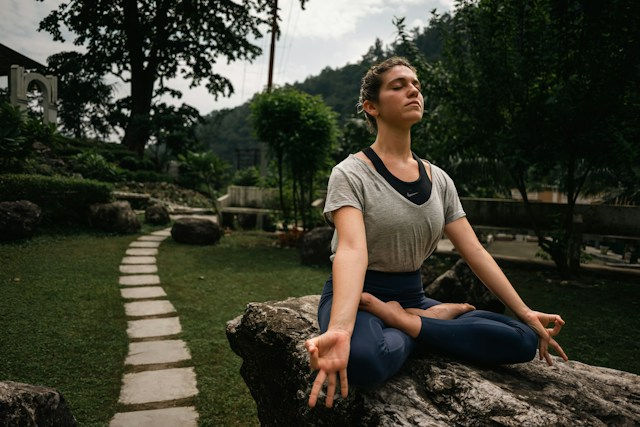
Practice stillness
Subsequent research found that when people intentionally practice silence and stillness, they often enjoy the downtime more than they predicted. We are what we think, say and do, and both our bodies and minds are highly adaptable. The more we practice a behavior, the more we reinforce a new habitual response.
Perhaps boredom is not something to be feared or avoided, but an opportunity to reconnect with ourselves. When we stop immediately escaping discomfort through distraction, we create space for greater awareness, presence and choice. Rather than automatically reacting to every urge, we can notice the somatic response to the emotions that arise and respond intentionally. Here are four steps you can take to break a dopamine cycle:
Step 1: Identify a behavior that has become compulsive
Examples include:
Checking your phone or email
Drinking alcohol
Smoking
Gaming
Gambling
Sex or pornography use
Social media scrolling
Shopping
Emotional eating
Step 2: Become aware of what you feel with the initial urge
The moment you feel the desire to reach for the video game, check your phone or grab that beer, cigarette or candy bar, notice the urge. Observe the sensations you feel in your body. Become aware of how your brain associates the action with a pleasurable outcome or reward. Notice the anticipation of the emotional shift you expect to feel.
Step 3: Practice moments of presence and stillness
For a brief period, don’t act when you feel the initial impulse. This can be as short as five minutes. Create space between the urge and your response and gently ask yourself, “What am I expecting to feel? Bored, restless, anxious?” “What am I avoiding?” “What will happen if I am still and present?” “What am I afraid of?” Remember, the goal is not to create resistance, but to retrain your nervous system to recognize that you are in control of your actions. By cultivating a pause between the urge and your response, you strengthen your capacity for conscious choice. Over time, this awareness helps reduce the fear of what you may be avoiding.
“To the mind that is still, the whole universe surrenders.” – Lao Tzu
Step 4: Replace your source of reward
It's difficult to remove constant stimulation without replacing it with a source of pleasure and gratification of higher quality. The goal isn't to deprive yourself, but to find something more sustainable. One of the most powerful alternatives is doing something kind and productive for yourself or someone else. Clean your room, tend to your garden, prepare a healthy meal, go for a walk in nature, play with your pet, listen to a friend, reach out to a family member, or volunteer in your community. Rather than constantly seeking external reward, discover that doing good deeds is itself fulfilling!
“For it is in giving that we receive.” – Saint Francis of Assisi
Another wonderful way to become more comfortable with moments of stillness is to engage in a discipline that cultivates presence and awareness. For me, that practice is qigong. With years of consistent practice, restlessness and anxiety gradually melted away, replaced by a deeper sense of peace, stability and serenity. For others, yoga, meditation or various spiritual traditions serve a similar purpose, shifting attention away from the ego and toward greater selflessness, embodiment, and a deeper sense of purpose.
True freedom
True freedom lies in the pause and stillness! The goal is not to avoid pleasure, but to stop needing it to be content. Our intention is not sensory deprivation, but to teach our nervous system to become less dependent on external circumstances to determine our internal well-being.
When we no longer need the world to constantly provide us with stimulation, validation, and comfort, we become free to contribute something meaningful in return. In that shift from seeking pleasure to serving, we discover a deeper source of contentment. It is here that lasting peace, fulfillment and genuine happiness are found.
Learn tools to cultivate inner stillness. Join me for a qigong class today! For a listing of qigong classes, visit here.
Read more from Lisa Decker
Lisa Decker, Owner of Aligned Fitness
Lisa Decker began her work 25 years ago as a personal trainer but quickly realized the importance of addressing dysfunctional alignment and muscular compensations before strengthening. She has a master's degree in human movement, a certification in medical qigong earned over three years, and multiple certifications in biomechanics, spinal decompression, posture therapy, breathwork, and corrective exercise. She is the owner of Aligned Fitness Posture Therapy & Qigong in San Jose, California, where she specializes in helping others restore functional alignment and movement patterns to reduce chronic pain symptoms. Her goal is to educate and empower people to understand the root cause of their pain so they can return to enjoying the activities they love safely and without pain.