

Antaun C.L. Barnett Built Systems That Scale
Most people build careers by chasing titles. Antaun C.L. Barnett, MBA, built his business by learning how systems work. That difference shaped everything that followed.
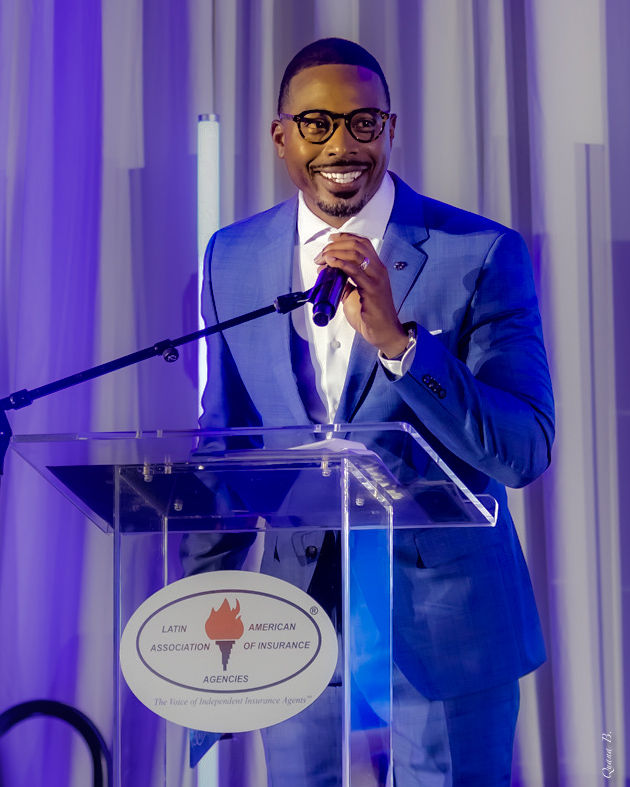
Today, Barnett leads distribution strategy and operations at Atlanta Life Insurance Company, where he focuses on building shared services infrastructure, sales enablement systems, and operational frameworks that help organizations scale in a structured, repeatable way.
His work sits at the intersection of distribution architecture, execution, and performance. The focus is not just growth. It is about creating systems that continue to work under pressure.
“For me, success is the durability of what gets built,” he says. “It is whether the system continues to work after the excitement is gone.”
How growing up in the bronx shaped antaun Barnett’s mindset
Barnett grew up in the Bronx, New York, where structure and discipline were not abstract ideas. They were necessary.
“I chose to focus on my education as my guiding light,” he says.
Sports also became a major influence early in life. Baseball, in particular, shaped how he thought about preparation, accountability, and consistency.
That relationship with the game stayed with him long after his playing career. Barnett played college baseball at Fairfield University and later professionally in the St. Louis Cardinals organization. Years later, he returned to the sport in a different role through Harlem Little League Baseball.
What started as support for the program eventually evolved into sponsorship and later service as a board advisor.
“For me, Harlem Little League was never just about baseball,” he says. “It was about structure, mentorship, and creating environments where young people could see consistency around them.”
That idea – building systems that support development – would later define much of his professional career.
From production to distribution architecture
Barnett’s early years in financial services were rooted in production and revenue generation. At New York Life, he generated more than $300 million in annual production and earned multiple national recognitions.
But over time, he became less interested in individual performance and more interested in operational consistency.
Why did certain teams scale while others stalled? Why did some organizations depend heavily on a few strong producers while others created repeatable performance across entire systems?
One moment shifted his perspective completely.
“I realized I had been preparing to perform the role,” he says. “I had not yet demonstrated that I could architect one.”
That insight pushed him beyond sales into systems design, operational infrastructure, and enterprise execution.
Building shared services and sales enablement systems
Today, Barnett’s work focuses heavily on operational architecture.
At Atlanta Life Insurance Company, he leads initiatives connected to:
distribution strategy
sales enablement
onboarding systems
shared services infrastructure
compensation frameworks
performance optimization
operational alignment across channels
His role extends far beyond recruiting or production management.
He designs systems that help organizations standardize execution while still allowing teams to scale efficiently.
“The work does not stop at strategy,” he says. “You have to own implementation, execution, and performance.”
That full lifecycle approach – production, design, implementation, execution, and continuous refinement – has become central to how he operates.
Why operational consistency matters
Antaun Barnett believes many organizations struggle because they confuse activity with infrastructure.
Companies hire aggressively. Launch initiatives. Expand markets.
But underneath that activity, systems are often fragmented.
“You can usually tell within minutes whether an organization has operational clarity,” he says. “If every manager explains the process differently, the system is already creating inconsistency.”
That is where shared services and enablement matter most.
Rather than relying on individual personalities or isolated success stories, Barnett focuses on creating environments in which performance becomes repeatable.
“Strong systems reduce randomness,” he says.
Industry conversations around infrastructure and execution
As his work has evolved, Barnett has become increasingly involved in larger conversations around operational performance and institutional systems.
He recently participated in Insurtech NYC and is scheduled to speak at Insurance Innovators 2026, where discussions on infrastructure, execution, and performance continue to shape the future of the industry.
His perspective remains consistent across those platforms.
“Most organizations do not have an effort problem,” he says. “They have an operating structure problem.”
That operator mindset has also shaped his broader work around institutional frameworks, including recent participation in HBCU endowment strategy discussions focused on sustainability and long-term infrastructure.
Using visibility to support access
Barnett has also participated in initiatives that connect operational systems with broader community engagement.
In 2025, he represented Atlanta Life through the NASCAR HBCU Development Program during the Daytona race featuring driver Rajah Caruth.
But he sees those moments differently than most.
“The visibility only matters if there is infrastructure behind it,” he says. “Otherwise, it becomes temporary attention.”
For him, access is not created by a single event or campaign. It comes from building systems that continue functioning after the moment passes.
That belief connects much of his work across business, education, and community development.
The leadership philosophy behind the work
One theme runs consistently through Barnett’s career: durability.
He believes strong leadership is measured less by visibility and more by whether systems continue functioning without constant intervention.
“The executives who win long-term understand how to balance patience with execution,” he says.
That balance has shaped how he approaches organizations, partnerships, and leadership itself.
Building systems that last
Barnett’s work continues evolving across industries and platforms. The environments may change. The scale may grow. But the focus remains consistent.
Build systems that create clarity.Build systems that scale.Build systems that hold under pressure.
“Success, ultimately, is building something worth inheriting,” he says.
And increasingly, that philosophy is becoming the foundation of everything he builds.



