

A Reflection on a Modern Society Where Truth Has to Compete
Updated: Jun 18
Written by Shardia O’Connor, Cultural Consultant
Shardia O’Connor explores identity, power, leadership, and social conditioning through a values-led, critical lens.

There was a time when truth did not need to fight for attention. It did not need to be packaged, refined, or strategically delivered. It existed with a quiet authority, recognised not because it was loud, but because it was real.
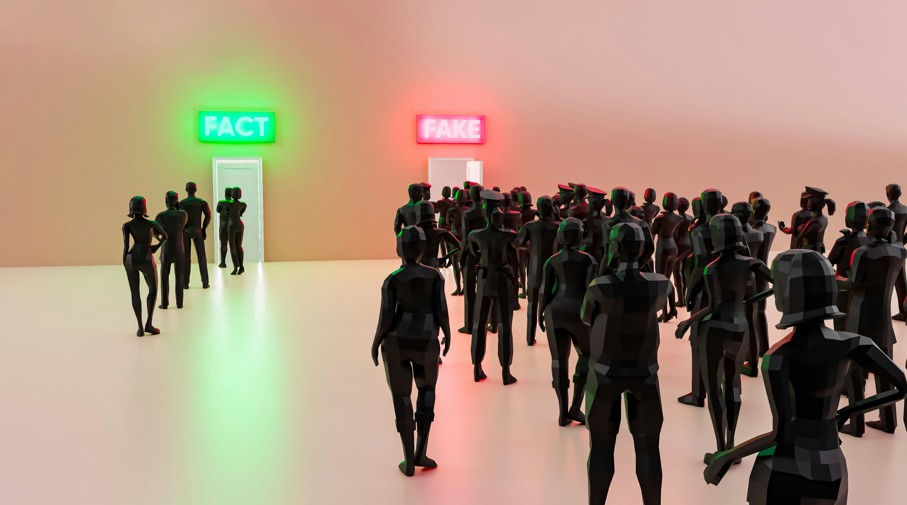
Today, that has changed. We now find ourselves in a world where truth is no longer the foundation of conversation but a participant within it. One voice among many, competing with performance, persuasion, and perception. In that competition, something subtle yet significant has been lost.
Recently, I found myself reflecting on the work of Caribbean writer Dudley McLean II, whose exploration of truth and persuasion revisits an ancient tension that feels strikingly present today. His writing does not simply look back, it holds a mirror up to where we are now. Because the reality is, we are no longer just engaging with truth. We are navigating through layers of interpretation, presentation, and influence, where how something is said often carries more weight than what is actually being said.
This is not entirely new. Human beings have always used language to persuade, to influence, to connect. From early philosophy to modern institutions, rhetoric has played a central role in shaping understanding. But what feels different now is the scale and speed at which persuasion operates.
We are living in a time where visibility can be manufactured, narratives can be curated, and influence can be built without necessarily being rooted in truth. Over time, this begins to shape not only what we believe but how we decide what is worth believing.
What concerns me most is not simply the presence of misinformation. It is the quiet shift in what we are becoming comfortable with. We are learning, consciously or not, to prioritise what feels convincing over what is actually true. To engage more readily with what is polished, immediate, and emotionally resonant rather than what is grounded, reflective, and sometimes uncomfortable.
Truth, in its nature, often asks something of us. It requires a pause. It invites accountability. At times, it challenges our existing perspectives.
Performance, on the other hand, asks very little. It is designed to be received, not necessarily examined. When a society leans too far into performance, truth does not disappear. It simply becomes harder to recognise.
There are philosophical traditions that have long understood this balance in a way that feels deeply relevant now. In many African and diasporic frameworks, truth is not seen as something abstract or detached from everyday life. It is lived. It is relational. It carries a sense of responsibility, not just to the individual but to the wider community.
Truth, in this sense, is not only about being correct. It is about being aligned, with integrity, with humanity, and with the impact our words have on others. This perspective offers a quiet but necessary correction to the world we are currently navigating. What we are seeing today is not just an increase in voices but a decrease in accountability. Words are shared more freely but not always more thoughtfully. Influence is built more quickly but not always more responsibly. When speech becomes detached from responsibility, it begins to lose its grounding.
So perhaps the issue is not that persuasion exists. It is that persuasion is increasingly operating without an anchor. Persuasion, when rooted in truth, can be powerful in the best sense. It can educate, connect, and inspire. But when it is disconnected from truth, it becomes something else entirely.
It becomes distorted. This is why truth now feels as though it has to compete. Not because it has lost its value but because it is being surrounded by voices that are louder, faster, and often more appealing.
In a world shaped by digital platforms, curated identities, and constant visibility, truth does not always present itself in a way that captures immediate attention. But that does not make it any less real. It simply means we have to be more intentional in how we engage with it. This is where responsibility becomes personal.
For those of us who write, speak, lead, or create in any capacity, the question is no longer just about expression. It is about alignment.
Are we contributing to clarity or adding to the noise? Are we speaking with intention or to be seen? Are we grounded in truth or guided by perception?
These are not questions of perfection but of awareness. Because in a world where truth must compete, how we show up matters.
What I appreciate most about McLean's reflection is that it does not ask us to reject persuasion altogether. Instead, it invites us to reconsider its purpose. To use it not as a tool for dominance but as a means of communicating something deeper, something meaningful, something true.
Because truth does not need to disappear in the presence of persuasion. But it does need to be protected within it. So perhaps the real question is not whether truth still exists.
It does. The question is whether we are still willing to recognise it, especially when it is not the loudest voice in the room. Whether, in our own way, we are willing to create space for it to be heard again.
Read more from Shardia O’Connor
Shardia O’Connor, Cultural Consultant
Shardia O'Connor is an expert in her field of mental well-being. Her passion for creative expression was influenced by her early childhood. Born and raised in Birmingham, West Midlands, and coming from a disadvantaged background, Shardia's early life experiences built her character by teaching her empathy and compassion, which led her to a career in the social sciences. She is an award-winning columnist and the founder and host of her online media platform, Shades Of Reality. Shardia is on a global mission to empower, encourage, and educate the masses!
Credit note: This article is inspired by the work of Caribbean writer Dudley McLean II, whose reflections on truth, persuasion, and philosophical tradition informed this perspective.



