5 Better Ways To Support And Care For Disabled Persons
Updated: Mar 8, 2025
Written by: Dr. Raman K Attri, Executive Contributor
Executive Contributors at Brainz Magazine are handpicked and invited to contribute because of their knowledge and valuable insight within their area of expertise.

I contracted the poliovirus when I was six months old. It left me paralyzed in one leg, and I lost the ability to walk even before reaching the age to walk. Growing up with this disability, doing my best to get through school, college, and my career, I have received poor treatment as a student, friend, employee, or peer.
Later, when I stood up as a teacher, advisor, manager, and parent, I realized that people did not know well enough to support a disabled person around them.
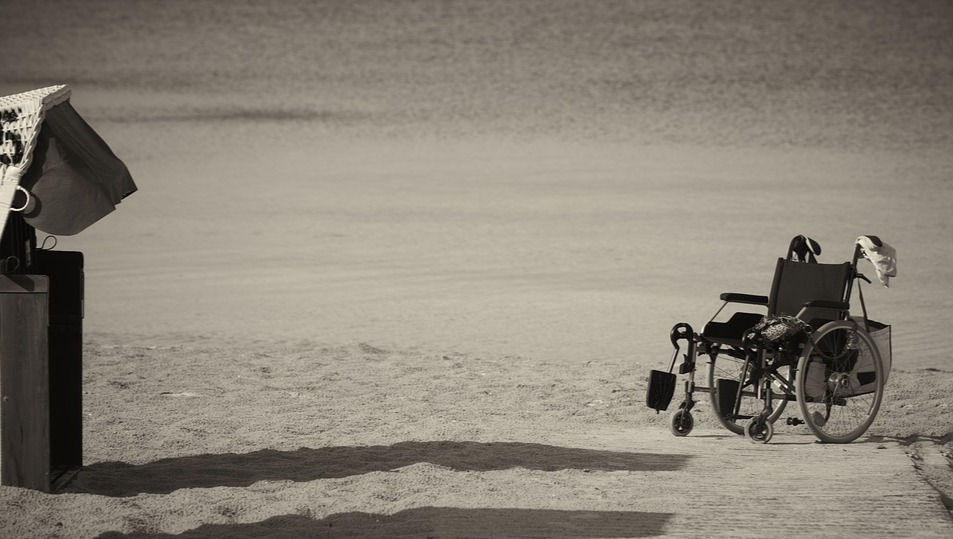
If you happen to have a role where you need to interact, support, advice, or work with a person with disabilities (PWDs) who could be a child, student, friend, or colleague, these five tips will help you understand them better and support them better:
1. Stop politicizing the word “disabled”
I come from an electronic engineering discipline in which if we turn off a function of a gadget; we call it technically disabled. It conveys the message accurately that it is no longer working. My leg does not work that’s the hardcore reality. It is disabled. No other word can describe what “disabled” means. It cannot be described with fancy words like differently-abled or specially-abled.
Tip: Calling us “specials” does not make us feel special. My appeal to those surrounding any disabled person would be that if you don’t accept their disability realistically by calling it what it is, there is a good possibility that they would find it hard to accept it too.
2. Reserve your counseling or encouragement talks for acceptance
For several years, somewhere deep inside me, I had not dealt with my disability completely, despite all my remarkable achievements. That’s perhaps why I never posted my picture with my walking crutch. But when I actually came to terms with it, it opened up a whole new world for me.
Tip: if you happen to be around a disabled person, just know that acceptance will come to them eventually, just that it comes a bit slower. So reserve your motivational talks to make them accept themselves sooner. While you might think of it as helping them, it is not a help. When acceptance comes to them, you might find yourself sitting in the audience, listening to them.
3. Curb your idealistic expectations and be realistic
If you are in an unfortunate situation where your kid or friend is disabled, don’t force or try to teach them the ways to live and do things like normal kids. That will kill them from inside. Curb your tendency to pick quotes to encourage your kids, like “You are enough,” “You are strong,” and “You can do anything.”
Tip: Teach them the art of slow acceptance and be realistic. Tell them they might have some leverages over and above others that they can use. Perhaps they have an uncanny sense of observation. Perhaps, they have superb skills in calculating something quickly. Or maybe they have developed any of their other senses by overusing that part. Point that out to them.
4. The effects of most physical disabilities are not just physical
The visible physical limitations or disabilities are usually just the tip of the iceberg. There is a vast underwater iceberg of perceived limitations. Many physically disabled people have an inherent feeling of being less than others or emotion of not being good enough or feeling left behind or a feeling of not belonging, or a feeling of not being valued enough.
Tip: Be sensitive to the fact that their biggest struggle could be with the invisible limitations. The positivity from disabled people comes with a lot of effort. Therefore, leverage their positivity because it is a hard-earned asset. When you go to talk about their disability, be aware of what might be behind the surface.
5. Don’t make them objects of motivation or inspiration
While most disabled automatically become a source of inspiration for others, many of the disabled individuals don’t identify well with it. How could I be a source of inspiration or motivation when I struggle to perform some essential functions in my life? My limited choices do not make it motivating. You all have far more options.
Tip: While a thought process ‘if a disabled person with limitations can do better, why can’t I do it better,’ will take you only that far. Rather, seek clarity. See why they have such good clarity, where they get it from, and how they stay focused on it. Once you have that clarity, you don’t need any motivation or inspiration.
Dr. Raman K Attri, Executive Contributor Brainz Magazine
Dr. Raman K Attri is a performance scientist and the world’s leading authority on the science of speed in professional learning and performance. Undeterred by his permanent disability since childhood, he transformed his inability to walk into his niche expertise to teach others how to walk faster in their professional world. Equipped with over two decades of vast research and corporate experience, he guides leaders and professionals on proven strategies to shorten the time to proficiency of the workforce. A prolific author of 20 multi-genre books on business, leadership, training, learning, and performance, he writes about human excellence. As a learning strategist, he innovates state-of-the-art training methodologies to speed up the learning of complex skills at a Fortune 500 technology corporation. As a global training leader, he manages a Hall of the Fame training organization, named one of the top 10 in the world. A highly passionate about accelerated learning since childhood, he earned two doctorates in learning, over 100 international educational credentials, and some of the world’s highest certifications. Among his most recent projects, he has founded the XpertX portal to inspire people to learn the art and science of speed in all walks of their life. As a professional speaker, he speaks at leading international conferences around the globe and shares his research-based insights, and continues to be an inspiring personality.