

11 Insights From 30 Years of Empowering Young Talent Through Learning by Doing
Written by Helen Kenworthy, Artistic Director
Helen champions the arts as a tool for change. Now, as CEO of RYTC Creatives CIC and Give Get Go Education, she mentors young people, creates pathways for them to thrive in the arts, and helps launch successful careers.

For 30 years, RYTC Creatives CIC (The RYTC) has carried a powerful belief about young people, growth does not always begin with confidence. Sometimes, confidence begins with the chance to take part.
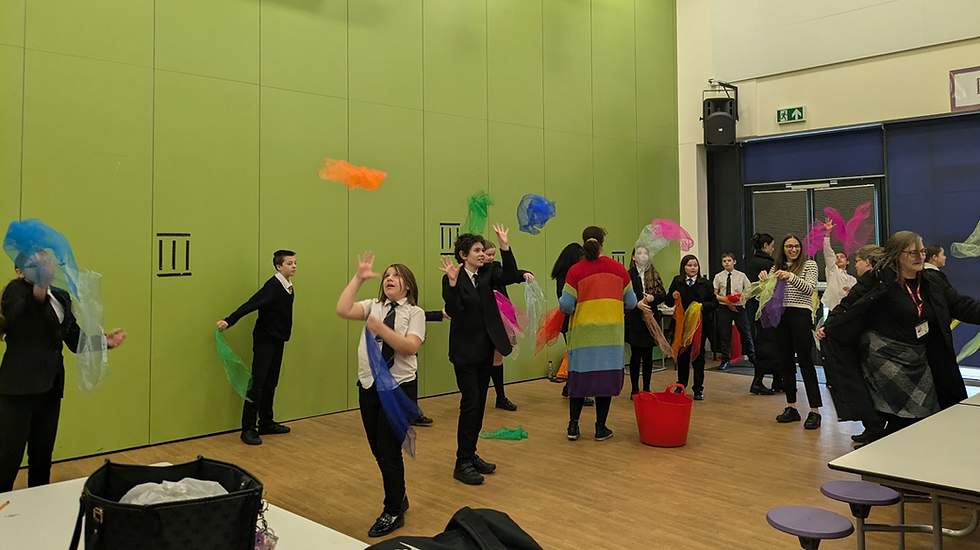
A young person may not walk into a creative space feeling ready, talented, or certain of themselves. They may arrive quiet, unsure, guarded, overwhelmed, or used to being misunderstood in other environments. Yet when they are given the opportunity to try, practise, create, speak, rehearse, collaborate and contribute, something important begins to shift. They start to experience learning as something active, human, and possible.
This is the heart of learning by doing. It is not about waiting until a young person feels fully prepared before they begin. It is about creating the right conditions for them to begin, and allowing confidence, courage and self-belief to grow through the process. Through practical creative programmes, The RYTC has helped young people discover skills that reach far beyond performance. They learn how to communicate, listen, work with others, solve problems, express ideas, and trust their own voice.
This matters especially for those who are brilliantly underestimated. These are the young people whose strengths may not always be recognised in traditional spaces, but who can thrive when they are given the right environment, encouragement and opportunity. The RYTC’s 30-year legacy reminds us that when young people are supported to learn by doing, they are not simply completing a programme. They are building confidence, connection, possibility, and the foundations for a future they can step into with greater belief.
In this article, we explore what The RYTC’s legacy represents, why learning by doing remains so powerful, how creative spaces support real growth, and what 30 years of empowering young talent can teach us about confidence, creativity, and the potential of the brilliantly underestimated.
The 30-year legacy of the RYTC
A 30-year legacy is not built by simply running programmes. It is built by consistently creating spaces where young people feel able to step forward, take part, and discover something new about themselves.
For RYTC Creatives CIC (The RYTC), those three decades have been about much more than performance. They have been about opportunity, access, and creative growth. They have been about opening doors for young people who may not always see themselves as confident, talented or ready, and giving them a practical way to begin. Through creative participation, The RYTC has helped young people move from uncertainty into action, and from action into stronger self-belief.
That kind of legacy matters because young people do not all grow in the same way. Some need time before they trust their voice. Some need encouragement before they share an idea. Some need to experience belonging before they can take creative risks. Some need a space where they are not judged too quickly, compared too harshly, or expected to fit one narrow version of success.
The RYTC’s work has offered that kind of space. It has created environments where young people can explore creativity while also developing the skills that shape how they move through the world. Communication, listening, teamwork, courage, problem-solving, and self-expression are not treated as abstract ideas. They are practised through action, through shared experiences and through the process of creating something together.
This is what makes the legacy so powerful. It is not only about what young people produce at the end of a programme. It is about what happens to them during the process. A young person who begins to speak more clearly, trust their instincts, support others, take responsibility, or believe they have something valuable to offer is already growing in a way that matters.
For the brilliantly underestimated, this can be especially significant. When a young person has been overlooked, misunderstood, or quietly dismissed, a creative space can offer a different message. It can show them that they are not limited by how others have seen them. They are capable of contribution, imagination, leadership, and growth.
That is the 30-year legacy of The RYTC, not just a history of creative programmes, but a long-standing commitment to helping young people be seen, heard, supported and empowered through doing.
Why learning by doing is at the heart of the RYTC
Learning by doing is the idea that young people often understand, grow, and develop more deeply when they are actively involved in the learning process. It is not about simply being told what confidence is, what communication means, or why teamwork matters. It is about experiencing those things in real time, through practical creative activity, shared responsibility, and meaningful participation.
This matters because young people do not always discover their ability through explanation alone. Sometimes they need to step into the experience, try the task, hear their own voice, work with others and realise through the process that they are capable. Learning becomes more powerful when it is something they can feel, practise, repeat and carry with them.
At RYTC Creatives CIC (The RYTC), this approach is woven into the way young people are supported. They are not placed outside the learning as observers. They are invited into it. Through drama, storytelling, creative exercises, group work, rehearsal, discussion and performance based exploration, they are given practical opportunities to take part, respond, adapt and grow.
This is where learning by doing becomes more than a method. It becomes a route into confidence. A young person may begin by joining in quietly, then gradually start to share ideas, speak with more assurance, support others, take responsibility, or recognise strengths they did not know they had. The growth happens through the process, not only at the end.
Through this approach, young people are able to:
Build confidence through action
Practise communication in real time
Develop teamwork naturally
Learn through experience, not just theory
Make mistakes in a safe place
Discover strengths they may not have recognised before
Grow at their own pace
This is why learning by doing sits at the heart of The RYTC. It gives young people more than knowledge. It gives them evidence of their own capability. It helps them see that confidence can be practised, communication can be developed, creativity can be strengthened and personal growth can begin the moment they are given the chance to take part.
Why the RYTC’s work matters in our changing world
The conversation around young people has changed. For a long time, success was often spoken about in quite narrow terms, grades, behaviour, achievement, discipline and visible performance. These things still matter, but they do not tell the whole story of a young person’s potential.
Today, there is a much wider understanding that young people need more than instruction. They need confidence, communication, creativity, emotional awareness, belonging, and opportunities to discover who they are through real experience. They need spaces where they can practise courage, not simply be told to be brave. They need chances to participate, not just be assessed. They need environments where their strengths can be noticed before they are dismissed.
This is why The RYTC’s work continues to matter in our changing world. Its approach speaks directly to the needs of young people who may not always thrive in traditional or highly pressured environments. Through creative, practical, and participatory experiences, young people are given another route into growth. They are not asked to prove their worth before they begin. They are invited to begin, and through that process, they start to build belief.
The world young people are growing up in asks a great deal of them. They are expected to communicate well, adapt quickly, work with others, think creatively, manage pressure, and prepare for futures that may not follow one clear path. These are not skills that develop through theory alone. They are strengthened through practice, reflection, creative challenge, and meaningful participation.
That is what makes The RYTC’s work so relevant. It has spent 30 years doing what the wider conversation is now recognising as essential, creating spaces where young people can learn actively, express themselves safely, develop confidence gradually and discover the value of their own voice.
For the brilliantly underestimated, this matters even more. A changing world needs more than polished confidence and traditional measures of success. It needs young people who have been given the chance to grow in ways that are real, human, and accessible. It needs spaces where hidden talent can become visible, where quiet courage can be strengthened, and where young people can begin to see themselves as contributors to their own future.
That is why The RYTC’s work is not only relevant because of what it has done. It is relevant because of what young people still need.
The Creative Pathway Methodology
The RYTC’s work also sits within a wider approach, The Creative Pathway Methodology. This methodology recognises that creativity, learning and future development should not be treated as separate parts of a young person’s journey. They are connected.
Through RYTC Creatives CIC (The RYTC), young people are given creative spaces where they can express themselves, build confidence and learn through doing. Through Education Selection Box, learners can be supported in ways that recognise their individual needs, strengths and learning styles. Through Give-Get-Go Education, that growth can continue into career development, practical skills and future opportunity.
This joined up approach matters because young people are not one-dimensional. A young person’s confidence in a creative room can affect how they speak in a classroom. Their ability to collaborate in a drama activity can shape how they work with others later in life. Their experience of being trusted, heard, and encouraged can influence how they see their own future.
The Creative Pathway Methodology brings these parts together. It understands that young people need more than one route into growth. Some need creative expression before they can build academic confidence. Some need personalised learning support before they can believe in their own ability. Some need career development that begins with confidence, communication, and self-understanding, not just qualifications.
This is why The RYTC’s legacy is not isolated. It is part of a wider commitment to helping the brilliantly underestimated be seen, supported, and equipped for life beyond one room, one programme or one moment. It offers a pathway where creativity opens the door, education strengthens the foundation, and career development helps young people move forward with greater confidence and possibility.
11 insights from 30 years of empowering young talent
After 30 years of working with young people, The RYTC’s legacy offers valuable insight into what helps young talent grow. These insights are not only about creativity or performance. They are about confidence, opportunity, belonging, and the power of giving young people practical experiences that help them recognise their own potential.
1. Confidence is built through action: Young people do not always need to feel confident before they begin. Often, confidence is built by taking part, trying something new, and realising they can do more than they first believed.
2. Creativity gives young people another way to be seen: Not every young person shines in the same environment. Creative spaces allow different strengths to come forward, especially for those whose abilities may not always be recognised in traditional settings.
3. Participation can unlock hidden talent: Some young people only discover what they are capable of when they are given the chance to participate. The right opportunity can reveal strengths that may have been quiet, hidden, or overlooked.
4. Communication grows through practice: Communication is not only taught through instruction. It grows when young people are encouraged to speak, listen, respond, tell stories, share ideas, and work with others in real situations.
5. Mistakes are part of meaningful learning: Creative learning gives young people space to try, adjust, and try again. This helps them understand that mistakes are not the end of growth, but part of the process.
6. Belonging helps young people take creative risks: When young people feel accepted and supported, they are more willing to step forward. Belonging creates the safety needed for courage, expression, and participation.
7. Teamwork is built through shared experience: Young people learn teamwork by doing it. Through creative collaboration, they practise patience, listening, compromise, responsibility and respect for different ideas.
8. The brilliantly underestimated need opportunity, not limitation: Many young people are not lacking ability. They are lacking access, encouragement, or the right environment. When they are given meaningful opportunities, they can begin to show what has always been possible.
9. Creative learning builds life skills: The skills developed through The RYTC do not remain inside the creative space. Confidence, communication, collaboration, adaptability, and problem-solving are skills young people can carry into education, work, and life.
10. Young people grow when adults believe in their potential: A young person can be deeply shaped by being seen, encouraged, and taken seriously. When adults recognise their potential, young people often begin to recognise it too.
11. Legacy is built when belief is carried forward: The true legacy of The RYTC is not only in the programmes delivered over 30 years. It is in the young people who leave with more confidence, more courage, and a stronger belief in what they can become.
Conclusion
The RYTC’s 30-year legacy is a powerful reminder that young people do not always grow through instruction alone. They grow through experience, encouragement, participation, and the chance to discover their own ability in real time.
Through learning by doing, RYTC Creatives CIC (The RYTC) has created spaces where young people can step forward before they feel fully ready, practise confidence before they fully believe in it, and begin to recognise strengths that may have been hidden, overlooked or underestimated. That is the beauty of creative learning. It does not demand perfection before participation. It gives young people a place to begin.
In our changing world, this kind of work matters more than ever. Young people need confidence, communication, adaptability, self-expression, and the ability to work with others. They need spaces that help them feel seen, not just assessed. They need opportunities that show them they are capable of contributing, creating, and shaping their own future.
The RYTC’s legacy is not only found in the past 30 years. It is found in every young person who leaves with a little more courage, a stronger voice, a deeper sense of belonging, and a greater belief in what they can become. For the brilliantly underestimated, that belief can be life changing.
To explore more about this work and the wider Creative Pathway approach, visit Creative Pathway Methodology Of Course You Can!™ serving the brilliantly underestimated. The full portfolio can be found here.
Helen Kenworthy, Artistic Director
Helen Kenworthy’s career embodies the transformative power of the arts, from her early roles in the prestigious West End with Bill Kenwright to her impactful work in regional theatre. As manager of the Oxfordshire Youth Arts Partnership, she created pathways for young people to thrive in the arts, with many going on to successful careers. Now at RYTC Creatives CIC and Give Get Go Education, Helen continues to inspire and mentor the next generation of theatre-makers and community leaders, offering invaluable opportunities for growth and professional development.



