

You're Not Bad at Sleep, Your Nervous System Has Never Been Told It's Safe to Rest
Lovisa Engstrand is a Nervous System & Stress Specialist and breathwork practitioner who helps high-functioning women shift out of chronic stress and survival mode so they can sleep deeply, feel calm, and show up fully without burning out or pushing harder.

Your sleep problem is not a sleep problem. You are tired in a way that makes you fantasise about a week in bed. Then you actually lie down, and your mind will not stop. You have tried everything: the magnesium, sleep mask, no-screens rule, expensive pillow. Still you cannot sleep, or cannot stay asleep, or cannot wake up feeling like the sleep did anything at all. This article is going to tell you why, and it has nothing to do with your already optimized habits (annoying, I know).
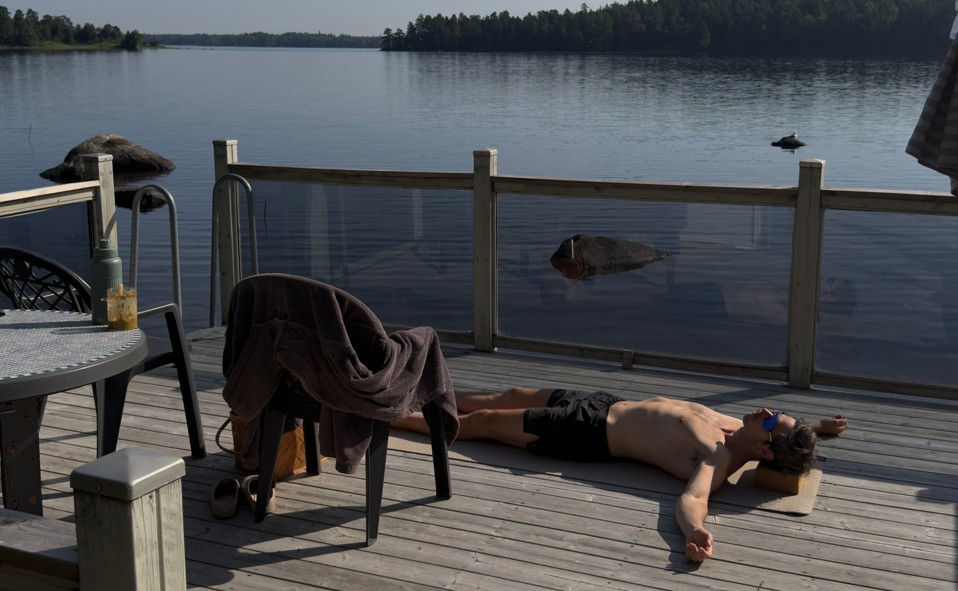
Have you ever been too tired to sleep?
High-performing women have some of the most dysregulated nervous systems I work with, and their sleep is where it shows first. Not because they are undisciplined, they are, almost universally, the most disciplined people in the room. But discipline is not what determines sleep quality. Your nervous system state does. The same drive and capacity that makes you exceptional at your work is often the exact thing keeping your nervous system locked in activation long after the working day has ended.
Rest, when it is finally available, feels like a threat, like something will go wrong if you stop paying attention. Do I have to mention the guilt associated with trying to have a slow, quiet night in with absolutely zero productivity?
You have probably told yourself your sleep problem is a discipline problem, or just who you are. It is not a fact. It is a nervous system that has been under sustained load for long enough that it has forgotten how to fully let go. What if I told you that learning how to rest is probably going to be the most productive thing you have done all year?
What is polyvagal theory and what does it have to do with sleep?
What is actually happening when you cannot switch off? Polyvagal Theory, developed by neuroscientist Stephen Porges, explains that your autonomic nervous system operates across three distinct states. The ventral vagal state is your safety state, present, calm, clear-headed. This is also the state your body needs to access deep, restorative sleep. The sympathetic state is fight-or-flight, heart rate up, breath shallow, body primed for action. The dorsal vagal state is shutdown, the collapse that follows prolonged activation.
To access deep sleep, not just unconsciousness, your nervous system needs to shift into ventral vagal. It needs to believe, below conscious thought, that it is safe enough to fully let go. If you are running predominantly in sympathetic activation, your body cannot make that shift on command. No matter how tired you are. No matter how good your bedtime routine is. The room is not the problem. Your physiological state is. Sleep hygiene is not wrong, but for the kind of tired that does not respond to any of it, sleep hygiene is like mopping the floor while the tap is still running. You can keep mopping. The floor will stay wet.
Why do high performers wake at 3 am? The cortisol awakening response explained
Cortisol, your primary stress hormone, follows a natural daily rhythm. In a well-regulated system, it rises gently around 6 am and stays low through the night. In a chronically dysregulated system, that curve gets pulled forward. When your HPA axis has been running under high load, the first surges of cortisol can spike and wake you at 3 or 4 am instead. Your body is doing exactly what it was designed to do, preparing you for threat. It just has the timing catastrophically wrong.
The secondary problem, the calculation of hours remaining, the effort to force sleep, the catastrophising about tomorrow, raises cortisol further and makes return to sleep almost impossible. This cortisol profile is shaped by your nervous system state across the entire day, not the hour before bed. Which is why the fix is never found at bedtime.
Sleep architecture: Why duration is not the same as sleep quality
Sleep is not about duration alone. It is about how much time you spend in the deeper, restorative stages, slow-wave sleep and REM, where your brain processes emotion, consolidates memory, and your body repairs itself. Chronic sympathetic activation suppresses these stages. Your nervous system, even while technically asleep, stays in a lighter, more vigilant mode. You can log eight hours and wake feeling like you barely rested, because in the ways that matter biologically, you have not. Poor sleep then further depletes the neurochemicals that help you stay regulated the next day, making the next night harder. It is a loop, and it requires nervous system work to break.
Can breathing exercises naturally reduce sleep apnea?
Sleep apnea is more common in high-stress populations than is widely recognised, chronic sympathetic activation affects airway muscle tone, and the same elevated cortisol profile that disrupts sleep quality also worsens the conditions in which apnea occurs. Continuous positive airway pressure (CPAP) therapy addresses the mechanical airway obstruction and remains the clinical standard for moderate to severe cases. But it does not address the nervous system state that keeps sleep light even when the airway is clear.
A meta-analysis published in Sleep Breath found that expiratory breathing exercises produced a significant reduction in the apnea-hypopnea index in patients with mild to moderate obstructive sleep apnea. Myofunctional therapy, targeted movements of the tongue, soft palate, and throat, may also reduce mild sleep apnea by strengthening the muscles that keep the upper airway open. Nasal breathing increases nitric oxide production, dilating the airways and reducing upper airway resistance. If you suspect sleep apnea, a formal sleep study is always the right first step, but consistent breathing practice is one of the most underused supportive tools available.
Four nervous system practices that signal safety before sleep
These four practices work because they speak directly to the nervous system signal that is keeping you awake, not the surface symptoms of it.
The extended exhale, your most portable regulation tool: A longer exhale than inhale signals your body that the threat has passed. Inhale through your nose for four counts. Exhale slowly through your nose for six to eight counts, slow, gentle, expansive. Six to ten cycles lying in bed, as a deliberate nightly state transition. You are giving your nervous system the evidence it has been waiting for, nothing needs to be solved tonight.
Regulate across the day, not just at bedtime: Your cortisol curve is built across the entire day. Trying to regulate in the thirty minutes before bed, after fourteen hours of unaddressed sympathetic activation, is not enough runway. Build four genuine downregulation moments into your workday: a few rounds of extended exhale before a demanding meeting, a genuine break with your phone face down, a moment in the car before you walk into your house where you exhale slowly and let the day close. Your body responds to small, repeated signals of safety.
The orienting response, thirty seconds that signal safety: When your nervous system is in threat mode, your gaze narrows and peripheral vision contracts. Slowly turn your head. Take in the room, the ceiling, the corners, the objects nearby. Let your eyes land and rest rather than flick and scan. This is what a safe animal does when a threat has passed, confirming nothing is left to run from. Thirty seconds. Try it now. You will feel a subtle but immediate shift in your shoulders and jaw.
Treat wind-down as a state transition, not a time block: Give yourself a minimum of thirty to forty-five minutes before bed where the input genuinely changes, dimmed light, screens down, no planning, no difficult conversations. If you wake at 3 am, stop fighting. Keep your eyes soft, place one hand on your chest, breathe slowly without urgency. You are not trying to force sleep. You are trying not to escalate, because sleep will follow regulation far more reliably than it will follow effort.
What is Yoga Nidra (non-sleep deep rest) and why does it work?
Beyond breathwork, the practice that has made the most consistent difference for high-performing women with chronically dysregulated sleep in my practice is Yoga Nidra, sometimes called non-sleep deep rest. It is a guided practice done lying down that brings the nervous system into the hypnagogic state between waking and sleep, where deep restoration happens even without full unconsciousness. Yoga Nidra may increase delta brainwave activity, the same waves generated during deep sleep, and is particularly effective for women who wake at 3 am and cannot return to rest, or who sleep eight hours and still feel depleted.
I have put together a free Yoga Nidra Bundle, guided sessions built specifically for nervous system regulation and sleep restoration, including a pre-sleep session and a 3 am reset for when you surface in the night and need to return to rest without fully waking.
Ready to fix your sleep at the root, not just the surface?
Your inability to sleep, even when you are exhausted, even when you have done everything that is supposed to help, is not a personal failing. It is your nervous system doing exactly what it has learned to do, staying on watch, because at some point staying on watch felt necessary. That protective pattern is not the truth about who you are. It is a symptom. Symptoms can shift.
If you are ready to work on this properly, I work with a small number of women at a time in 1:1 coaching, structured around your specific nervous system pattern, your sleep history, and your life. Not a generic programme. Built around you. Book a free 30-minute discovery call to explore whether it is the right next step.
Your body is not failing you. It is just waiting for enough evidence that it is safe to finally put the watch down.
Read more from Lovisa Engstrand
Lovisa Engstrand, Nervous System & Stress Specialist
Lovisa Engstrand is a Nervous System & Stress Specialist and breathwork practitioner working at the intersection of psychology, physiology, and behaviour change. She specialises in helping high-functioning women who feel exhausted, overstimulated, anxious, or stuck in survival mode. Her work is grounded in her own lived experience of training, eating well, and still waking up anxious, bloated, and depleted - until she understood her nervous system. Through her Regulate & Restore Framework, Lovisa addresses stress regulation, sleep, movement, nutrition, and identity to help women rebuild capacity from the body up. She lives between Australia, Sweden, Canada, and the USA and works with clients globally through 1:1 containers & online programs.
Please note: Sleep difficulties can have many causes, including sleep disorders, medical conditions, medications, and mental health conditions. This article is for informational purposes only. If you suspect sleep apnea or are concerned about your health, please consult a qualified doctor or sleep specialist.
Related articles:






