You Don’t Need Fixing, You Need Fewer Inputs – The Unboxed Way Back to You
Updated: Feb 6
Written by Lee Jones, Entrepreneur
Lee Jones, founder of UnboxedTogether, Bespoke Kitch'en, and Tap to Tile, lives by one focus, clarity. From food to lifestyle, and from mental health to design, his work empowers people to unbox the hidden, reclaim energy, and create dream spaces for their home and life.

For a long time, I assumed something was wrong with me. Not broken in an obvious way, just quietly off. I was still functioning, still working, still showing up. But my clarity had dulled, my energy had dipped, and my tolerance had shrunk. My thoughts felt louder than they used to. Life hadn’t collapsed, but it no longer felt light either.
So, I did what most people do when things start to feel heavier. I tried to fix myself. I added more effort, more discipline, more “healthy” habits. I pushed harder, convinced that if I just did enough of the right things, I’d feel like myself again. Nothing stuck, because I was solving the wrong problem.
How burnout and brain fog really creep up on us
This kind of overload doesn’t arrive as a crisis. It arrives as normal. Normal food, normal drinks, normal shopping choices. The same things most of us have eaten for years without thinking twice. Each product is technically safe. Each ingredient is approved. Each choice is forgettable until the effects aren’t. Because the issue is never one product. It’s the daily accumulation.
Modern food doesn’t overwhelm you in one hit. It layers itself quietly into your nervous system, day after day. You don’t feel it as an alarm. You feel it as fog, friction, irritability, and fatigue, symptoms that are easy to blame on stress, age, or life itself.
Have you ever added up how many additives you consume in a day?
Most people never do. When you slow it down and really look, the number is far higher than expected. A typical day can easily involve forty to fifty separate food and drink products. Not meals, products. Things with labels, ingredient lists, and barcodes.
If each of those contains just three or four additives, which is conservative for modern food, that can mean well over one hundred added substances entering your system in a single day. Not because you’re careless. Not because you’re unhealthy. Simply because this is normal now.
And the most unsettling part isn’t the number itself. It’s that most of us have no idea what those additives are, how they interact, or how they stack up across a day. We don’t feel them individually. We feel the load.
Additives don’t reset at midnight. They accumulate, repeat, and compound. Safety limits are calculated per additive in isolation, but real life doesn’t work that way. We don’t eat in isolation. We eat in patterns. That gap is rarely explained.
Why the same foods affect people so differently
Two people can eat the same foods and have completely different outcomes. One feels fine. The other doesn’t.
Some experience brain fog, anxiety, irritability, or low mood. Others notice gut issues, disrupted sleep, fatigue, or hormonal imbalance. For many neurodivergent people, the effects are amplified. Thoughts get louder, emotional regulation becomes harder, burnout arrives faster, and recovery takes longer.
The inputs may be similar. The nervous systems are not. We were never designed for identical tolerance, yet we are all navigating the same modern food environment.
Why the Unboxed book was written
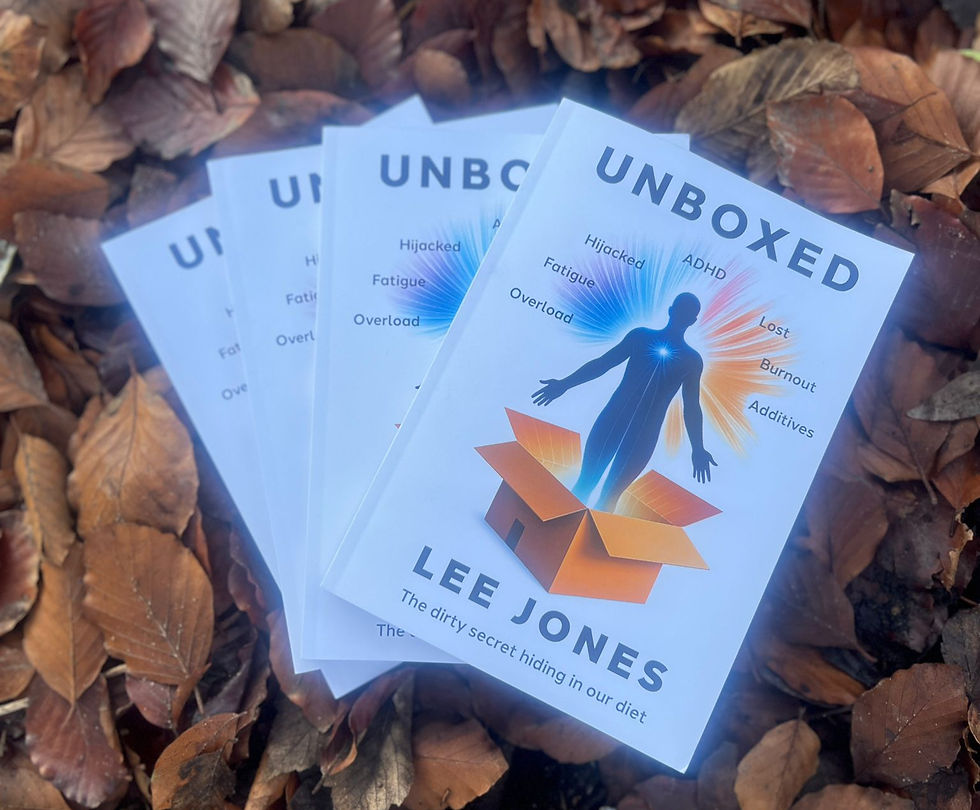
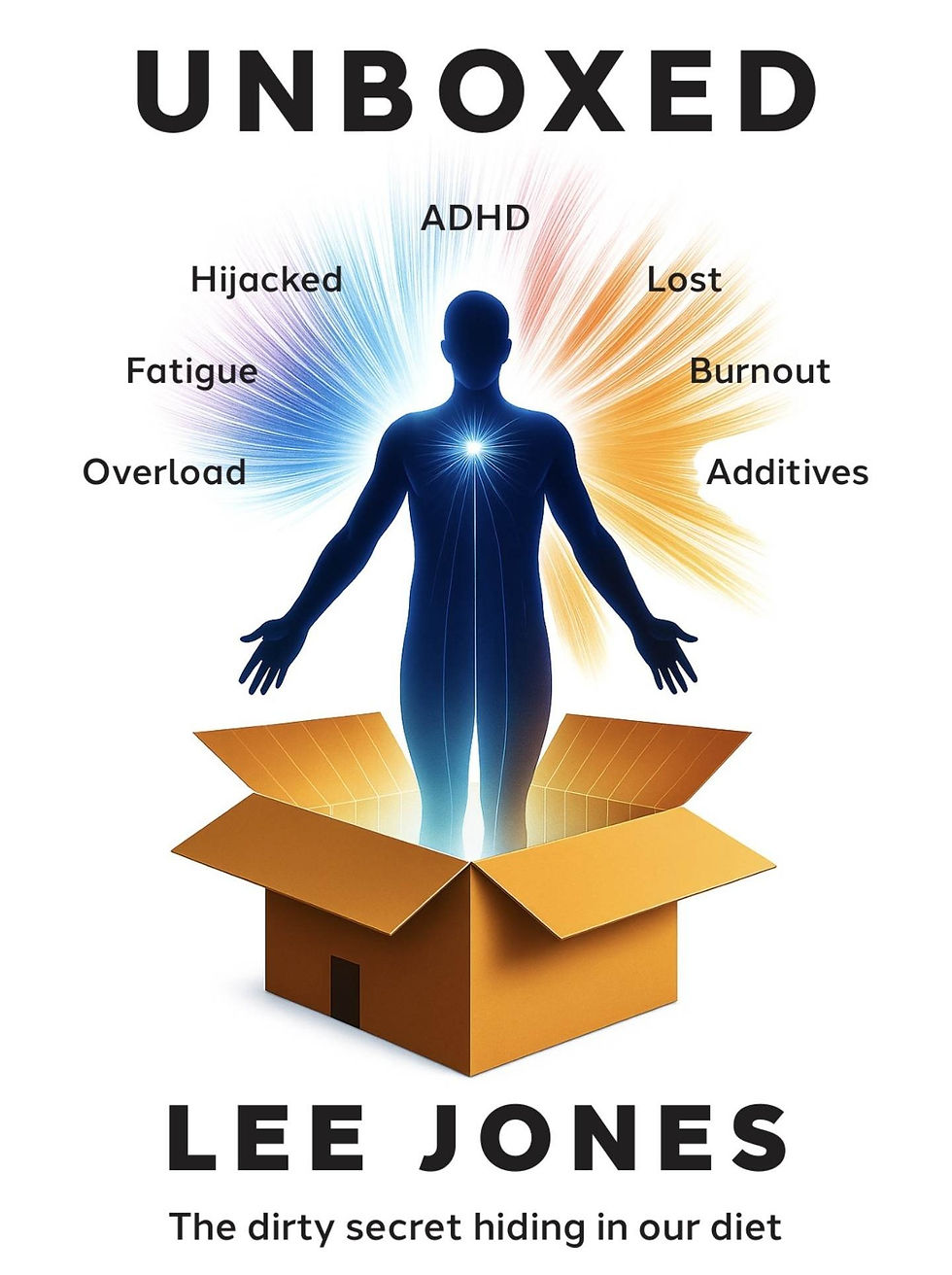
Unboxed wasn’t written because I wanted to create a wellness system. It came from burnout. From brain fog. From the slow realization that I wasn’t broken, I was overloaded. When I began removing unnecessary inputs, not everything, but the ones that didn’t serve me, something unexpected happened.
My clarity returned. My energy stabilized. My sense of self came back. Not because I added more discipline or motivation, but because I reduced the noise. That’s the foundation of Unboxed.
Why Unboxed Together is about simplicity, not self-improvement
This isn’t a detox. It isn’t a reset. It isn’t a lifestyle overhaul. Unboxed and Unboxed Together exist to do the opposite of most self-improvement systems. They simplify. They help people see what’s actually entering their system and make small, realistic changes without guilt or extremes.
This isn’t about becoming someone new. It’s about returning to who you were before the overload. You don’t need fixing. You need fewer disruptors.
The truth most people are never told
You were never weak. You were never lazy. You were never broken. You were carrying more inputs than your system could process, and no one taught you how to see them. When the stack drops, you come back. That’s the Unboxed way back to you.
The Unboxed story doesn’t end with the book
The book was never meant to have a destination. It was never something I planned to put together, or even imagined publishing.
In many ways, during some of the darkest and most confused periods of my life, it was an accident, the first clear signal that something bigger needed to exist. Unboxed began as a way to make sense of overload, but it quickly became obvious that information alone isn’t enough.
The real shift for me didn’t come from a single moment or a dramatic diagnosis. It came quietly, through noticing patterns I couldn’t ignore anymore. Certain foods left me foggier. Certain products made my thoughts louder, my patience shorter, and my sleep worse. When I stripped things back, not dieting, not restricting, just removing what didn’t need to be there, the difference was impossible to dismiss. Nothing else had changed. But I had.
That was the moment I realised it wasn’t me that was failing. It was the cumulative load my system was carrying. Additives weren’t the whole story, but they were a major part of the noise, and once they were reduced, clarity began to return. That insight became the backbone of Unboxed. But it also revealed a bigger problem.
Real help needs to be practical. It needs to move with people. It needs to meet them in everyday life, not just on a page. That’s where Unboxed Together comes in.
What started as a book is evolving into something designed to sit right in your pocket, tools that help make the invisible visible in real time, without pressure, guilt, or overwhelm. Simple awareness. Small decisions. Support that fits into real life.
This isn’t about perfection or restriction. It’s about clarity, choice, and getting back to yourself one step at a time.
If this story resonates, you can follow UnboxedTogether on social media to see what we’re currently building, testing, and learning in the open. The book was the beginning, the real support is just getting started.
Call to action
If you’d like to support this work
If this article resonated, and if Unboxed reflects something you’ve felt but struggled to put into words, there’s a simple way to support what’s being built.
Purchasing the book helps more than most people realise. Every copy sold helps this work reach further, helps Unboxed be seen, and directly supports the wider mission of creating practical tools that help others find clarity again.
The paperback and hardback editions are available to purchase directly from the publisher, with worldwide availability through major book retailers. The ebook is also available on Amazon Kindle and other leading digital stores.
However you choose to read it, every purchase helps keep this work moving forward — not just for me, but for the growing number of people Unboxed Together is being built to support.
Thank you for reading, for sharing, and for being part of what comes next.
Read more from Lee Jones
Lee Jones, Entrepreneur
Lee Jones is the founder of UnboxedTogether, a book and movement exposing how hidden additives in food, everyday products, and daily life fuel brain fog, burnout, and poor health. After years battling undiagnosed ADHD and exhaustion, he uncovered the truth, what we call “normal” is anything but. His mission is to wake people up, reveal what’s been hidden in plain sight, and give them tools to reclaim clarity. Lee also runs two family-owned design businesses, Bespoke Kitch’en and Tap to Tile, where the same heartbeat runs through, stripping back the noise and creating lasting transformations, from wellbeing to dream spaces at home.