Why Rest Should Be a Rhythm, Not a Reward – An Interview with the Founder Miranda Brooking
- 8 hours ago
- 9 min read
Miranda Brooking is a Rest Consultant and the founder of Rest Uncovered. After navigating deep burnout twice in 6 years, she began to understand the deeper relationship between rest and recovery. Drawing on that experience, she developed The Rest Uncovered Method. Five phases and five areas of rest that give a map for those navigating exhaustion and burnout. Helping people understand how they feel points towards the area of rest they need most. Guiding them from depletion to sustainability, building a healthier relationship with rest along the way.
In this interview, Miranda explores the insights that led to the creation of The Rest Uncovered Method. She shares her take on rest and how her method stands out from traditional burnout-recovery options. Her insights offer a gentle, simple way to find a more sustainable relationship with rest.
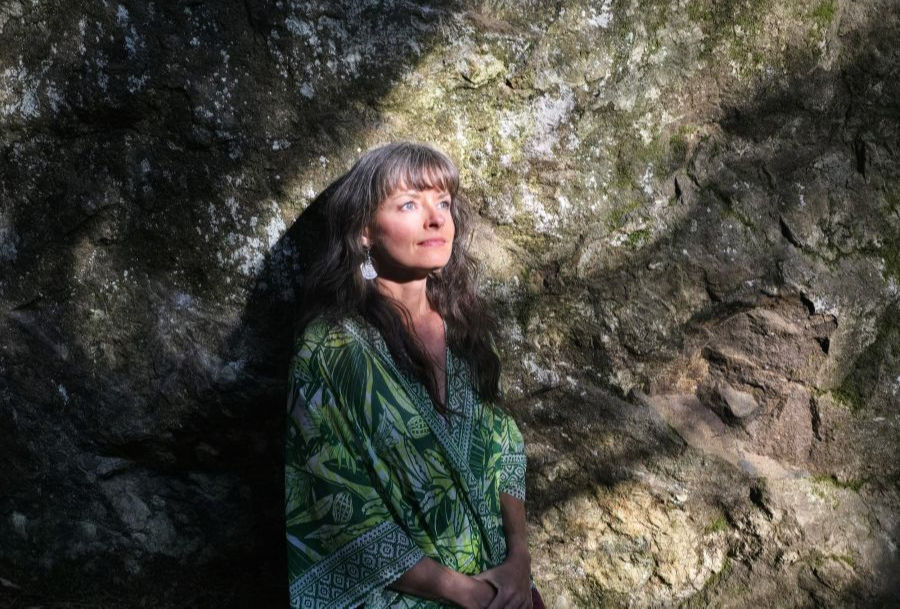
Miranda Brooking, Rest Consultant & Founder
What led you to develop the idea of a “rest map,” and how did that shift your own recovery from burnout?
Once I admitted to myself that I was indeed burnt out, as it can take some courage to recognize how long you’ve been living depleted, and when I did, I felt lost. Not sure how I was meant to feel, what would help, or how to move forward. When I started to truly heal and look towards my future, which took quite a few months for me to get to this point, I started to reflect on my journey with burnout. I started to see how I could have used a map or a guide to meet me where I was at, each day or week a bit different than the previous.
If a map or guide had been available to support me during my experience, I know I would not have felt as lost or alone. After sensing this could be a new direction for me, I paid attention.
Noting how I felt before and after certain activities. It helped my own recovery shift into a space of deeper awareness and forward movement.
How do you define the difference between resting and actually feeling restored?
I love this question because we often treat them as the same, but they are entirely different. To me, resting is a behavioral state. The physical act of stopping. Feeling restored, however, is the somatic state.
The simple way I look at it is, resting is a behavioral state, and feeling restored is a somatic state. Resting is the act of stopping, and feeling restored is the result after the rest. The two are very intertwined and both equally important, but it is good to be mindful of the difference between them.
This allows space to understand what your mind and body need and how they feel afterward. Resting allows what was busy (mind and body) to be interrupted, and the restored feeling comes when the process of returning your mind and body to their original, healthy state. Thought of as ‘filling the tank,’ and as each individual is different, how we fill our tanks is different. Therefore, feeling restored often involves specific activities that satisfy a particular area of rest that is depleted or missing.
What does depletion look and feel like before it becomes full burnout?
Depletion is sneaky, and I break it down into three stages: Whispers, Warnings, and Alarm Bells. There are many signs in the first two stages that often go unnoticed. Some of these are occasional clumsiness, irregular eating, trouble focusing, forgetfulness, and that sense of “I’m fine, just a bit off.” It’s easy to dismiss these, ignore them, or think they are happening for another reason. It will be slightly different for everyone, but it can feel like you are slowly losing the sense of who you are. As the small signs continue being ignored, the body tries harder to get your attention, compounding each sign deeper into full burnout. Becoming more and more disconnected from your body. Eventually, turning away from things that used to fill you up, because now they drain you. For me, I love to latin dance, and as I moved deeper into depletion and burnout, I stopped dancing. The idea of going into a room with lots of people, loud music, and having to be social when I just felt so exhausted was overwhelming, and it was easier to just stay home.
You’ve spoken about burnout in general terms, but is there a particular group you’re seeing this affect more acutely right now?
Yes, I see this a lot right now with women navigating perimenopause and menopause. This season of life for women asks us to slow down, to tune into our bodies, and allow the shift of hormones to happen at the pace the body is asking for. Instead, in our urgent culture, women have been raised to carry a lot of things that past generations didn’t, such as working full-time, raising children, and caregiving for parents or other relatives. Women’s rights through the years have made strides, but it has shot us right into a place of over productivity, multitasking beyond capacity most days. This has led us to putting others before ourselves, quietly accelerating the path to depletion. Yet we keep trying to match the pace we held in our 20s and 30s, and the body, in the middle of a significant hormonal transition, eventually says enough.
Who is Rest Uncovered designed for, and how does someone know if they actually need it?
It’s designed for people who are high achievers, caregivers, or anyone craving to slow down. For those who have tried multiple different avenues and are still feeling the weight of exhaustion, depletion, and fatigue. It’s for those who are at their edge, possibly frustrated, and know they can’t keep going at the pace they are moving. They aren’t sure how to slow down, or who to turn to, or what will actually help. As a Rest Consultant and someone who has been there, I work with individual clients in one-to-one guidance, taking a look at their overall rhythm of life, how rest does or doesn’t show up, and the challenges they have around rest. We work together to uncover what may be blocking a healthier relationship with rest and explore various restful practices that are more nourishing for them. Ultimately, the goal is to create a healthier relationship with rest. One that is sustainable in day-to-day life.
What makes The Rest Uncovered Method distinct from more traditional approaches to burnout recovery?
Many traditional approaches are linear, following a certain set of steps. With The Rest Uncovered Method, it’s not followed in a specific order. It’s designed to meet the person where they are and shift with each day or moment. It was my aim to create something clear and simple to follow. Having been through burnout myself, I know how hard it can be to take in new information when depletion feels heavy. With this in mind, I wanted something that had some structure, but was not rigid. I encourage those I work with to explore. See what phase resonates and which area of rest works best for each moment, as our needs are always shifting. When you are exhausted, the last thing you need is another rigid system to keep up with. The method was designed with that in mind: to feel like support, not another task. It moves with you rather than asking more of you.
Why do you think so many high-performing individuals struggle to recover, even when they’re intentionally taking time to rest?
For many high-performing individuals, rest is a reward. Something they get to at the end of a busy week, or after a certain set of to-dos is complete. Rest is a daily need, especially in our driven culture; it’s always the last thing on the to-do list. Therefore, even when the time to rest is intentional, the exhaustion has already been ignored for days, weeks, or longer. This creates more of a collapse once resting happens, vs resting to restore. This, in turn, makes the feeling of being restored more difficult. The body and mind have been working overtime and in their own way asking to interrupt the cycle. It’s when we ignore the signs consistently that safety in the body gets compromised, and catching up on rest becomes yet another thing to get through. The shift begins when rest becomes something you return to, not something you earn.
“Rest was never meant to be the finish line. It was always meant to be part of the rhythm.”

The Rest Uncovered Method is built around five phases and five areas of rest. Can you walk us through what those are and how they work together?
The Rest Uncovered Method consists of two frameworks that work together: the guidance and the practices.
The five phases are the guidance: Depletion, Pause, Repair, Integration, and Sustainability, and aren’t meant to be followed in order. Someone could easily move from depletion to repair, or pause to integration, once they know what their system needs to truly replenish.
The five areas of rest are the practices: Stimulation, Physical Regulation, Mental Space, Connection, and Emotional Capacity, are where the practices come in. Each one addresses a different dimension of how we experience each phase, because sleep alone doesn’t restore all of them. Used together, they support each other. Not as a program to complete, it’s more of a map to return to.
The wellness world talks a lot about sleep and self-care, but rest still seems undervalued in daily life. Why do you think that is, and what would genuinely shift that?
Generations before us had to work very hard due to the economic demands of their time. Many lived in an era that prioritized survival, where productivity was measured by constant presence and physical endurance, often at the expense of personal well-being. In that landscape, rest wasn’t seen as a tool for recovery, but rather as something that had to be earned or avoided entirely to stay ahead.
What would genuinely shift this is a deeper understanding of our own biology. We talk constantly about optimizing our diets and our workouts, but we ignore the fact that true cellular regeneration requires a completely different nervous system state. Our cells cannot fully replenish and repair themselves on sleep alone (scientific studies speak to this). They need deep, intentional moments and cycles of rest. When we stop viewing rest as lazy or as a reward, and start seeing it as the literal foundation for biological longevity, the narrative changes. It’s not about opting out of life by resting; it’s about sustaining it.
If someone has slept 8 hours, but still wakes up exhausted, what does that signal? And how do they begin to figure out what their body is actually asking for?
That’s the body’s way of saying that sleep and rest are not the same thing. Sleep is only a small part of rest, but it doesn’t restore every dimension of what we carry. When someone wakes still exhausted, something deeper is asking to be heard.
The first step is slowing down enough to notice. Building a consistent awareness of how the body feels, before and after different activities, at different points of the day. This begins to rebuild the trust that depletion quietly undoes. The method I teach takes the guesswork out of a process that, when we’re already depleted, can feel completely overwhelming.
What has learning to be “comfortable with the uncomfortable” taught you about rest and recovery?
It has taught me that they go hand in hand. It’s why a lot of people ignore rest, even though they know they need it and can hear their body asking for it. Because once you slow down, things you’ve been ignoring can surface, and that might be uncomfortable. The shoulder pain you keep pretending is not there. The sadness in your heart from the grief of a lost loved one. There are so many things that keeping busy allows us to forget about, but they are all there, under the surface, building up. This was me after my mother passed away suddenly at the age of 56. I kept busy to ignore how I felt, losing myself in the process and eventually hitting burnout in 2021. I had to learn to sit in discomfort to help move my grief.
By not getting comfortable with the uncomfortable, we risk ending up stuck in whatever situation or feeling we are in for longer than necessary, even if it’s one we don’t want to be in anymore. From my own experience, I’m now a strong believer that when you ignore the body for long enough, it will eventually force you to slow down. For me, that looked like going from full-time work with overtime, to being signed off on stress leave for months. With nowhere to hide, everything surfaced. That’s when the practice really began. As I learned, I began to heal the grief I had carried for over a decade. Now I am on the other side of the things that surfaced. I feel lighter, stronger, and I know now that being comfortable with the uncomfortable is a part of the process of rest.
If someone feels stuck in chronic exhaustion, what’s the first shift you would encourage them to make?
Bring awareness into life as much as you can. Be real and honest with yourself about where you have been giving too much. Where are you stretching yourself too thin? Where are you ignoring yourself and your own needs? What can you remove from your to-do list that can wait?
We get caught up in the urgency of modern life, trying to move and produce at the speed of the algorithms around us. It creates an environment of constant instant gratification, which naturally leads to a deep, collective digital fatigue. We are human beings trying to keep pace with machines, pushing and swimming upstream. This reality requires an even stronger, more protective relationship with rest. Slowing down enough to hear yourself is itself a form of defiance and a form of rest. It doesn’t have to be big; it just has to be honest. The invitation is to begin relearning rest before the body insists.
Read more from Miranda Brooking