

Why Personalized Learning Impacts More Than Just the Grade
Written by Helen Kenworthy, Artistic Director
Helen champions the arts as a tool for change. Now, as CEO of RYTC Creatives CIC and Give Get Go Education, she mentors young people, creates pathways for them to thrive in the arts, and helps launch successful careers.

What if the way we measure progress in education is only telling part of the story? In many educational settings, progress continues to be measured through grades, targets, and visible academic outcomes. These indicators provide structure and direction, but they do not always reflect how a student is actually experiencing learning. It is possible for a learner to meet expectations on paper while feeling disconnected from the process, just as it is possible for meaningful development to take place without being immediately recognised.
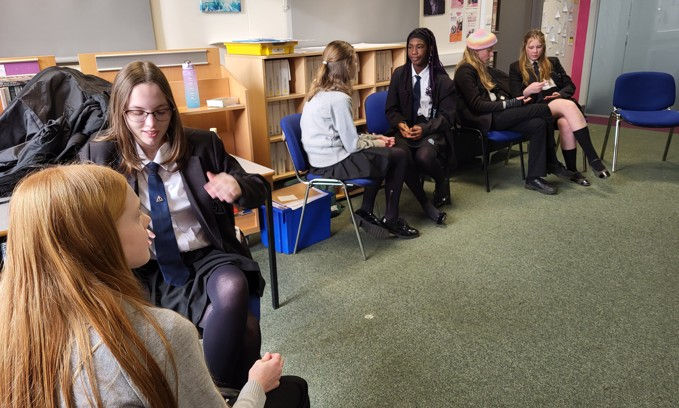
When success is defined too narrowly, important aspects of growth remain unseen. Educational pathways have traditionally been designed to create consistency and clarity across learning environments. While this offers a structured framework, it does not always account for the differences in how students engage with and access learning. Some learners move through the system with ease, while others find it more difficult to connect with what is being taught. These differences are often interpreted as gaps in performance, rather than differences in access.
This is where a more tailored approach becomes essential. A tailored educational pathway begins by recognizing how a student engages with learning and creating the conditions for them to access it more effectively. It does not lower expectations. It makes them more achievable.
The impact of this shift extends beyond immediate academic outcomes. Confidence, communication, and consistency begin to form part of the learning process itself. Students are more likely to engage with challenge when they feel supported in ways that reflect how they learn. This creates a more stable and sustainable learning experience over time.
In this article, we explore how tailored educational pathways challenge traditional models and create a more responsive approach to learning. We examine why change is no longer optional, how recognizing individual needs and diverse learning styles shapes access to education, and what this means for long term development. We also consider how progress can be understood beyond grades, and introduce a structured approach that brings these elements together in practice.
Understanding the traditional educational pathway
Traditional educational pathways are designed to provide structure, consistency, and a clear framework for progression. They are built around shared expectations, standardized benchmarks, and a defined understanding of what success looks like within a learning environment. For many students, this offers stability and direction, making it easier to navigate their learning journey.
However, this approach is often based on the assumption that students can engage with learning in broadly similar ways. It tends to rely on uniform teaching methods, consistent pacing, and standard measures of progress. While this works well for some learners, it does not always reflect the range of ways in which students process, communicate, and respond to information.
In practice, this traditional pathway is commonly seen through:
A fixed pace of learning, where students are expected to move through content at the same speed
Similar methods of teaching, with limited variation in how information is explained
The same types of assessments used to measure performance across all learners
A strong focus on grades as the main indicator of progress
Structured pathways that prioritize consistency over individual differences
Limited flexibility in how students can demonstrate understanding
A focus on covering content rather than how deeply it is understood
Learning environments designed for efficiency rather than individual responsiveness
These elements create a system that is organized and consistent, but not always fully accessible to every learner. Some students can move through this structure with ease, while others may struggle to connect with how learning is presented. When this happens, it is often misunderstood as a lack of ability or effort.
This is not a gap in ability. It is a gap in access. Recognizing this does not diminish the value of traditional pathways. They provide an important foundation and continue to support many learners effectively. However, it highlights the need to consider how these structures can evolve to better reflect the diversity within any learning environment. It is within this space that more responsive and personalized approaches begin to emerge.
What a tailored educational pathway really means
A tailored educational pathway starts with the individual, not the system. It recognizes that students do not engage with learning in the same way and adjusts the approach accordingly. The aim is not to remove structure, but to make it more accessible and meaningful.
When the pathway aligns with the learner, engagement becomes more consistent. Students are better able to understand, respond, and sustain their focus. This creates a more stable learning experience over time.
In practice, this approach is shaped through observation and responsiveness. It involves noticing how a student engages within the learning environment and making ongoing adjustments to support their progress. This may include changing how something is explained, offering a different way to approach a task, or adapting the level of guidance.
A tailored educational pathway often includes:
Flexible pacing based on the student’s level of understanding
Adjusting explanations when something is not yet clear
Multiple ways for students to demonstrate what they know
Varying the level of support or independence where needed
Paying close attention to how the student responds during learning
Prioritizing depth of understanding over task completion
Making ongoing adjustments based on progress and engagement
Creating an environment that adapts to the individual
This does not reduce the challenge. It removes unnecessary barriers. When learning becomes more accessible, progress becomes more consistent.
Why change is the only option
While traditional educational pathways continue to provide structure and consistency, they do not always meet the needs of every learner. As learning environments become increasingly diverse, it is clear that a single approach cannot effectively support all students.
Some learners are able to work within the system with ease, while others struggle to engage, not because they lack ability, but because the pathway does not align with how they learn. This gap between ability and access is often where disengagement begins. Over time, this can affect both progress and confidence.
When this mismatch is not recognized, it can lead to misunderstandings about a student’s capability. Difficulty in engagement may be seen as a lack of effort, rather than a sign that the approach itself needs to shift. Students who require a different pace, method, or level of support may not always receive it within a fixed structure.
Consistency does not always mean sameness. Fairness is not about treating everyone the same. The need for change comes from recognizing that education must respond to the learner, rather than expecting the learner to adapt alone. A more flexible and responsive approach allows differences to be acknowledged and supported, rather than overlooked.
This creates space for students to engage in ways that reflect their individual needs, making learning more accessible and more relevant. When this shift takes place, students are more likely to participate, persist, and make steady progress over time.
The impact of tailored educational pathways on individual needs and diverse learning styles
When a tailored educational pathway is in place, the impact is evident in how students experience learning on a daily basis. Recognizing individual needs and diverse learning styles allows the approach to align more closely with how each student engages, processes, and responds.
This alignment makes it easier for students to access what is being taught without unnecessary barriers. As a result, learning begins to feel more manageable and more relevant, which often leads to more consistent participation.
Students who may have previously struggled to engage often begin to respond differently when the approach reflects how they learn. They are more likely to take part in activities, ask questions, and remain engaged throughout the learning process. This shift is not about making learning easier, but about making it accessible.
Recognizing learning differences also allows for a more accurate understanding of ability. When the method of teaching aligns with how a student processes information, their strengths become more visible. This reduces the likelihood of misinterpreting difficulty as a lack of capability.
This shows up in practice through increased participation during learning activities, greater willingness to engage with tasks and challenges, improved clarity when expressing understanding, reduced frustration when approaching new or complex material, more consistent effort over time, and a clearer demonstration of individual strengths.
These changes may appear small at first, but they build steadily over time. As students begin to learn in ways that work for them, their confidence and engagement develop naturally. This creates a stronger foundation for both academic and personal growth.
Moving beyond grades: Redefining what progress looks like
Grades continue to play an important role in education, offering a structured way to measure performance. However, they do not always reflect the full picture of how a student is developing. Much of the progress that takes place happens beneath the surface and is not immediately visible in results.
Progress is not only about outcomes, but about how a student engages with learning over time. Confidence, consistency, and the ability to approach challenges all influence how a learner moves forward. A student who begins to participate more regularly or communicate more clearly is making meaningful progress, even if this is not yet reflected in academic performance.
In practice, progress can be seen through increased confidence when approaching new tasks, greater consistency in participation and effort, improved ability to communicate ideas clearly, willingness to engage with challenge, greater independence in completing work.
These indicators provide a broader and more accurate understanding of development. When they are recognized, support becomes more aligned with the individual, allowing progress to become more sustainable over time.
The creative pathway methodology
The Creative Pathway Methodology is a structured, tailored approach that places the individual at the center of learning. It is a unified approach developed through RYTC, ESB, and GGGE, bringing together learning, creativity, and career development into one connected pathway.
Rather than treating these areas separately, it recognizes that they work together to support how students engage, develop, and progress over time. This creates a more cohesive and responsive learning experience.
At its core, the methodology focuses on recognizing individual needs and diverse learning styles in a practical and consistent way. It allows learning to be shaped around how students process, communicate, and respond, rather than expecting them to adapt to a fixed model.
As a result, students are better able to access learning, engage more confidently, and express their understanding in ways that reflect their strengths. Differences in learning are no longer barriers, but part of how the pathway is designed.
By bringing together structure, creativity, and career development within a single approach, the Creative Pathway Methodology supports both immediate progress and long term development. It strengthens the connection between how students learn and how they grow beyond the classroom.
Conclusion
Tailored educational pathways represent a shift in how learning is understood and supported. By recognizing individual needs and diverse learning styles, education moves beyond a fixed model and becomes more responsive to how students engage and develop.
This allows learning to become more accessible, more consistent, and more meaningful over time. It also creates space for students to build confidence, communicate more clearly, and approach challenges with greater clarity.
Moving beyond grades as the sole measure of success strengthens this approach. When progress is understood more broadly, students are supported not only in what they achieve, but in how they grow.
As education evolves, the focus is no longer only on performance, but on creating pathways that allow every student to engage, develop, and move forward with clarity. When the individual is placed at the center, learning becomes more aligned, more inclusive, and more effective.
This is where meaningful and lasting growth begins. If this approach resonates and you would like to explore how tailored educational pathways can support meaningful and lasting progress, you can book an initial conversation here.
You can also access a free resource designed to support confidence and engagement in learning.
Helen Kenworthy, Artistic Director
Helen Kenworthy’s career embodies the transformative power of the arts, from her early roles in the prestigious West End with Bill Kenwright to her impactful work in regional theatre. As manager of the Oxfordshire Youth Arts Partnership, she created pathways for young people to thrive in the arts, with many going on to successful careers. Now at RYTC Creatives CIC and Give Get Go Education, Helen continues to inspire and mentor the next generation of theatre-makers and community leaders, offering invaluable opportunities for growth and professional development.



