

Why Overwhelmed Mothers Need More Than a Better Routine – An Interview with Sarah Maynard
Sarah Maynard is a Beroepsvereniging Gewichtsconsulenten Nederland-certified lifestyle coach and the founder of Body & Mind in Harmony, a coaching practice built around one core belief: mothers need to feel regulated and safe in their own bodies before any other change, in diet, fitness, or daily habits, can truly stick. Drawing on her own experience of losing herself across two pregnancies and eight years working as a youth care facilitator, Sarah has built a practice, and a growing community, around helping overwhelmed mothers regulate their nervous system first.
In this interview, Sarah shares what led her to this work, why she believes conversations about maternal wellbeing still miss the mark, and one simple way any mother can begin regulating today, without adding another task to her plate.
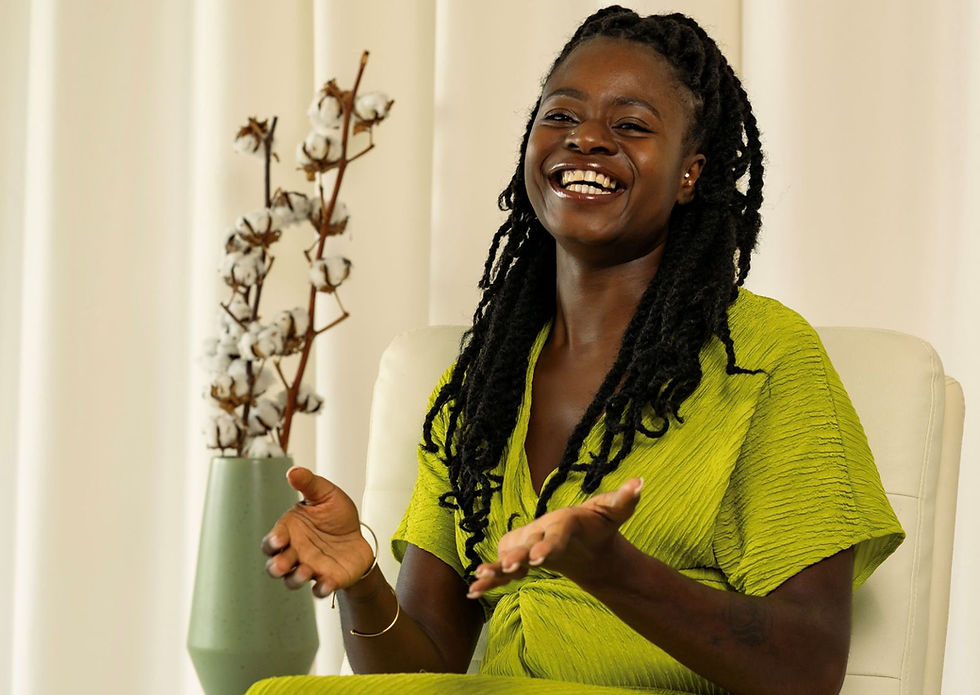
Sarah Maynard, Wellness & Health Coach for Moms
What inspired you to build Body & Mind in Harmony around the belief that mothers need to feel safe before they can truly thrive?
The belief came from two parts of my life meeting in the same place. Growing up, I was adopted, and that early experience taught me what it feels like to not feel fully safe or settled, and how much that unsettledness can shape a person underneath the surface. Later, I spent eight years as a youth care facilitator, working directly with young people and families in crisis, and I saw the same pattern again and again. When someone's nervous system is in survival mode, nothing else works: not better decisions, not new habits, not even good intentions. Then I became a mother myself, and I lost myself completely, twice, across two pregnancies. I finally understood that same truth from the inside. Body & Mind in Harmony exists because I know, personally and professionally, that safety in your own body has to come first. Everything else mothers are told to fix – their diet, their fitness, their routines – only works once that foundation is there.
You often say that nervous system regulation comes before habit change. What led you to challenge the traditional wellness approach?
I noticed the same gap over and over, both in my own life and in the mothers I worked with. Most wellness advice tells tired moms to eat better, move more, sleep earlier, and build better routines, as if the missing ingredient were simply more discipline. But after my own two pregnancies left me feeling completely disconnected from myself, I found that none of that advice held until I addressed something underneath it. What actually helped me come back to myself was regulating my nervous system first, through movement, through breath, through small repeatable moments of calm. Once I started coaching other mothers, I saw the exact same pattern. A meal plan or a workout schedule cannot hold if a mother's body is still stuck in survival mode. That is the traditional approach I wanted to challenge. Regulation is not one more item on the wellness checklist. It is the floor everything else has to be built on, and skipping it is why so much well-meaning advice fails overwhelmed mothers.
How did your years as a youth care facilitator shape the way you now support mothers through stress and overwhelm?
Working as a youth care facilitator for eight years, with more than two hundred families, taught me to read what a nervous system in distress actually looks like, long before I ever coached a mother. I sat with young people in some of the most overwhelming moments of their lives, and I learned that when someone is in survival mode, you cannot reason, plan, or motivate your way through it. Regulation has to come first, every time. That lesson shaped everything about how I coach mothers today. I do not start with a meal plan or a fitness goal. I start by helping a mother recognize when her own nervous system is activated, and by giving her simple, realistic ways to come back to calm. It also shaped how I show up in sessions. I learned in youth care to sit with people without judgment, to ask questions rather than give instructions, and to let someone find their own way back to themselves. That is exactly how I coach mothers now, as a guide who walks beside them, not above them.
Why do you think conversations about maternal wellbeing still focus more on productivity than on emotional regulation and identity?
I think it comes down to what gets measured and praised. Productivity is visible. A clean house, a packed lunch, a full calendar – these are things other people can see and comment on, so they become the unspoken scorecard for whether a mother is doing well. Emotional regulation and identity are invisible by comparison. No one applauds a mother for noticing she is dysregulated and pausing to breathe before she reacts. So the conversation keeps defaulting to the visible metric, more habits, more routines, more output, because that is what culture rewards and what wellness content is easiest to sell. The deeper issue is that a mother can be highly productive and still be completely dysregulated underneath it, running on adrenaline and guilt rather than genuine capacity. I think maternal wellbeing conversations need to catch up to what mothers already sense in their bodies: that how they feel and who they still are underneath the role matters just as much as what they get done.
More coaches are talking about nervous system health today. What do you think is still missing from the conversation?
Nervous system language has become much more mainstream, and that is a genuinely good shift. What I still see missing is the specific context of motherhood itself. A lot of nervous system content is written for a general audience, and it assumes a level of time, quiet, and control over your environment that most mothers simply do not have. You cannot always step away for twenty minutes, and telling an overwhelmed mother to do a full breathing practice she has no time for just becomes one more thing she feels guilty about not doing. What is missing is the translation of nervous system science into moments that actually fit inside motherhood: a few seconds between tasks, a breath before responding to a meltdown, a boundary held in the middle of a busy day. I also think identity is still underdiscussed. Regulation is not only about calming your body. For many mothers, it is tied to grieving and rebuilding a sense of self that motherhood reshaped, and that piece rarely gets named directly.
For a mother who constantly feels overwhelmed, what is one simple way to begin regulating her nervous system without adding another task to her day?
Use your breath as an on-off switch, right in the middle of whatever you are already doing. You do not need a separate block of time or a quiet room. The next time you feel your body tense up, during a meltdown, a school run, or a moment right before you walk back into the house, try four seconds in, hold for four, and six seconds out, repeated for about a minute. It takes less time than scrolling your phone, and research on breathwork shows that slow, regulated breathing calms the very system responsible for your stress response. The reason this works so well for overwhelmed mothers is that it does not ask you to change your schedule. It asks you to change what you do inside the moments you are already living through. Once that becomes a habit, you start noticing your own activation earlier, and that awareness alone gives you far more choice in how you respond.
Your group program helps women reconnect with themselves. What shifts do participants often experience first?
The program helps mothers reconnect with themselves rather than only fixing outward habits. In the earliest group I ran, the first shift participants noticed was rarely about a specific habit changing. It was more that they finally had language for what they were feeling, and permission to name it without guilt. From there, mothers consistently reported more energy and more calm within just a few sessions, along with a noticeable drop in exhaustion, even before any major lifestyle changes were in place. Several described feeling steadier in daily moments that used to set them off completely. What tends to happen is that regulation creates a kind of relief valve first, mothers stop feeling like they are constantly reacting, and only once that settles does the deeper identity work, remembering who they are outside of the mom role, really begin. A new cohort of the group program, How to Mom – Guilt Free, will start on the 21st of October, and you can find all the details here.
Your message, "You matter too," has become the heart of your work. What does that phrase mean to you today?
It means that a mother's needs are not something to address once everyone else's are handled. For a long time, I lived as if my own well-being was optional, something to get to later, if there was time left over. There rarely was. "You matter too" is my way of interrupting that pattern, both in myself and in the mothers I coach. It is not about choosing yourself over your family. It is about recognizing that you are part of the family too, and that your regulation, your rest, and your sense of self directly affect everyone around you. Today, the phrase feels less like a tagline and more like a daily practice. It shows up in the smallest moments, taking five minutes before responding to something that upset me, or letting myself rest without justifying it first. Every time I say it to a mother I am coaching, I am really reminding both of us of the same thing.
If every mother reading this interview remembered just one thing about caring for herself, what would you hope it would be?
That regulation comes first, always. Not after the laundry is done, not after the kids are settled, not once you have earned a break. Your nervous system is not a background detail in your day; it is the foundation everything else stands on: your patience, your energy, your ability to actually enjoy the motherhood you are working so hard to hold together. You do not need a perfect routine or a free afternoon to start. You need a few honest minutes, a breath, a pause, a boundary held, repeated consistently. If there is one thing I hope every mother takes from this, it is that caring for yourself is not selfish and it is not optional. It is maintenance, and you are allowed to give it to yourself before you run out completely. You matter too.
Read more from Sarah Maynard


