

Why Europe Cannot Understand Its Future Without Understanding Its History
Amedeo Baçi is an Albanian novelist, essayist, and historical researcher. He is the author of more than 800 novels in just over 12 years of literary creativity, internationally recognized for transforming history into compelling literature that preserves collective memory and cultural identity.

Europe's future cannot be understood only through the crises of the present. To make sense of what comes next, the continent must preserve its ability to remember what came before. History is often treated as a collection of dates, wars, treaties, revolutions, and famous personalities. Yet history is far more than that. It is the accumulated memory of civilization.
A society inherits more than territory, institutions, and monuments. It also inherits memories, traumas, victories, mistakes, ideals, and questions that previous generations did not always manage to answer. For that reason, the future never begins from zero, and perhaps nowhere is this more visible than in Europe.
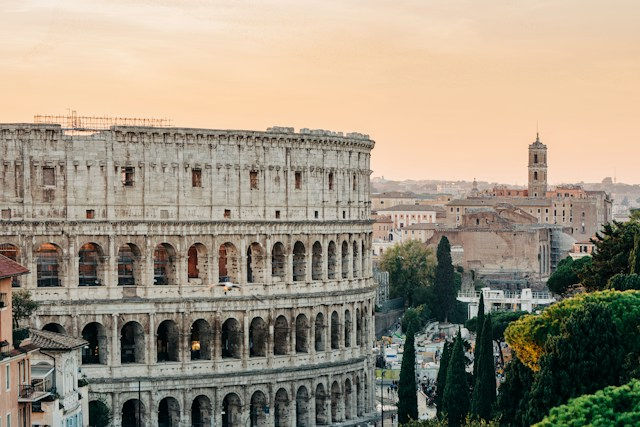
Europe is more than a geography
Europe cannot be understood simply by looking at its map. The continent we know today is the result of centuries of historical layering: empires that rose and fell, borders that shifted, revolutions that transformed societies, wars that devastated generations, and cultural renaissances that changed how human beings understood themselves and the world.
Within a relatively small geographical space, languages, religions, identities, political systems, and competing visions of society have coexisted and collided.
Modern European democracy did not appear overnight. Neither did civil liberties, the rule of law, or cooperation between nations. To a significant extent, they emerged as historical responses to earlier experiences.
Institutions can therefore be fully understood only when we understand the history that made them necessary.
What happens when historical memory fades?
The greatest danger of historical amnesia is not simply the loss of knowledge. It is the loss of context. When context disappears, complex realities become easier to reduce to slogans. Conflicts with roots stretching back generations can be presented as though they began yesterday. Political decisions can be judged entirely through the emotions of the moment. Societies may begin to regard rights and freedoms as permanent and guaranteed, even though, historically, they were achieved through extraordinary sacrifice.
Historical memory does not automatically provide the correct answer to every contemporary problem. What it can do is teach us to ask better questions.
What brought a society to this point? Which forces were operating before a crisis became visible? Which mistakes have been made before? Perhaps most importantly, have we seen similar mechanisms in the past, even when the circumstances were not identical?
To think historically is to resist the temptation to treat the present as though it had no past.
Borders remember what maps cannot explain
A line on a map can show where one state ends and another begins. It cannot always tell us the story of the people who have lived on either side of it. Borders have memories.
Behind them may lie migrations, wars, vanished empires, diplomatic settlements, divided communities, and identities that survived political transformation.
The same is true of alliances. International alliances do not emerge in a vacuum. They are shaped by interests, fears, experiences, and the historical memories of nations. National identity itself is a historical process rather than a frozen image.
To understand Europe today, therefore, it is not enough to know what is happening. We must also understand why what is happening became possible. That distinction matters.
History records events, literature restores human experience
This is where literature acquires a distinctive role. The historian researches, verifies, compares, and reconstructs facts. Documents tell us what was decided. Archives tell us what was written. Statistics can reveal the scale of a catastrophe.
But human beings do not experience history as statistics. They experience it as fear, loss, love, hunger, hope, separation, loyalty, betrayal, sacrifice, and survival. This is where literature begins its work.
Historians reconstruct facts, novelists reconstruct human experience. This does not mean that the novel should replace history. On the contrary, history and literature carry different responsibilities.
History must protect the fact. Literature can help us understand what that fact may have meant to a human being.
A document may tell us that thousands of people were forced to leave their homes. A human story can help us understand what it means to close, for the last time, the door of the house in which one has spent a lifetime.
This is the power of historical narrative: it does not replace documentary memory. It gives memory a human dimension.
Memory must not become an instrument of the present
Historical memory, however, carries a danger of its own. History can illuminate the present, but it can also be used to manipulate it.
Societies may select only those parts of the past that support contemporary beliefs. The victims of one group may be remembered while those of another are forgotten. Complex historical figures may be reduced to absolute heroes or absolute villains. That is not memory. It is the selection of memory.
A mature society must be capable of confronting the parts of its history that make it uncomfortable. Remembering does not mean worshipping the past. It means examining it.
History is valuable precisely because it can force us to challenge our myths rather than merely confirm them.
Technology accelerates the present but cannot replace memory
We live in an age in which humanity has access to quantities of information that previous generations could scarcely have imagined.
Artificial intelligence, search engines, digital archives, and instant communication are transforming the way information is produced, distributed, and consumed. But access to information is not the same as understanding.
We may know more facts while simultaneously losing the ability to place those facts within a historical perspective. Speed is one of the defining characteristics of our age. History, by contrast, demands patience.
Technology teaches us to expect an answer within seconds. History reminds us that some answers require centuries to understand. Technology changes the tools of civilization. History helps us understand civilization itself.
A technologically advanced society is therefore not necessarily a historically conscious one. Without memory, progress can become disconnected from wisdom.
Europe needs historical intelligence
Thinking historically does not mean expecting the past to provide ready-made formulas for the future. History does not repeat itself mechanically.
Circumstances change. Technology changes. Institutions change. Societies change. Yet human nature, fear, ambition, the desire for power, the need for security and belonging, and hope continue to play powerful roles in collective life.
Europe therefore needs what might be called historical intelligence: the capacity to interpret the present through an understanding of the processes that produced it, without becoming a prisoner of the past.
That requires more than memorizing dates. It requires education, debate, archives, scholarship, serious journalism, art, and literature. It also requires a willingness to accept that history is rarely as simple as we might wish it to be.
Memory is a responsibility, not a museum
Europe's historical inheritance should not be preserved merely as a collection of objects behind glass. Memory must remain a living conversation between generations.
Educational institutions, historians, writers, journalists, and intellectuals have different roles, but they share a common responsibility: not to allow the past to become either a forgotten museum or a political weapon of the present.
Europe does not need to live in the past. But it cannot wisely build its future while forgetting the road that brought it here.
Every generation inherits more than territory and institutions. It inherits memory. Then it must decide what to do with it.
Because a civilization that ceases to understand its history risks losing not only the memory of what it has been, but also the ability to choose wisely what it wants to become.
Reader reflection
What parts of Europe's past do we risk forgetting, and how might remembering them change the way we understand its future?
Read more from Amedeo Baçi
Amedeo Baçi, Novelist, Essayist & History Researcher
Amedeo Baçi is an Albanian novelist, essayist, and historical researcher whose work explores European history, historical fiction, geopolitics, and cultural identity. He is the author of more than 800 novels published in just over 12 years of literary creativity. His books transform extensive historical research into engaging literature that preserves collective memory and makes history accessible to modern readers. Through his writing, he seeks to inspire critical thinking, cultural dialogue, and a deeper understanding of the forces that shape nations and civilizations.


