

When Wellness Stops at Policy, Are Modern Health Clubs Truly Thinking Holistically?
Aiga Smite is a multi-award-winning holistic healing and wellbeing expert, author and founder of Healing with Gaia. Her work explores the connection between physical, emotional and energetic wellbeing, empowering people to approach healing from a whole-person perspective.

What does it really mean for a health club to embrace holistic wellbeing? Is it Himalayan salt saunas, crystals, meditation, steam rooms and beautifully designed spa spaces? Or should holistic thinking extend beyond the appearance of wellness and into the policies, materials, communication and everyday decisions that shape the member experience?
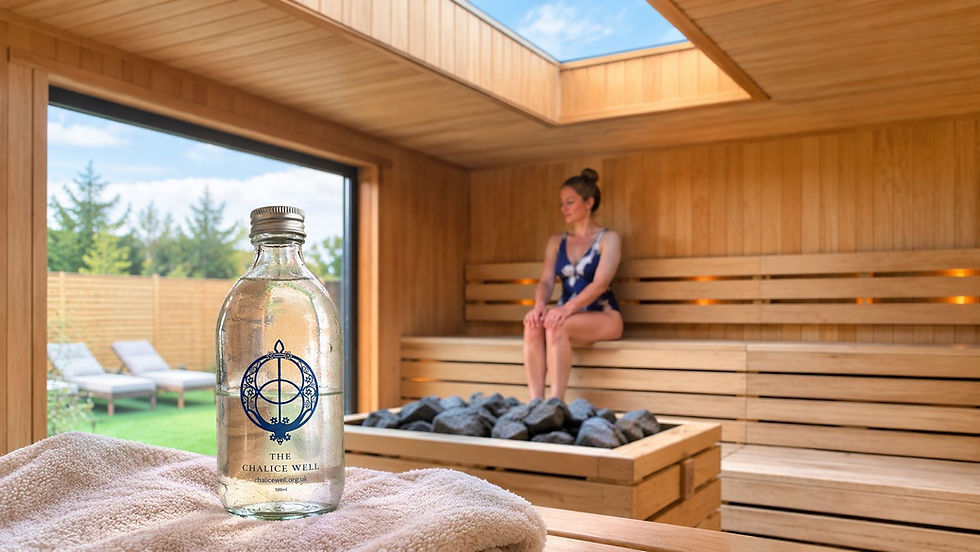
I recently found myself asking this because of something remarkably ordinary: a glass water bottle. What began as an uncomfortable experience inside a health club raised a much more valuable question about where modern wellness is heading.
Because if the wellness industry encourages us to become increasingly conscious about our bodies, our environments and our choices, it must also be prepared for conscious consumers to start questioning the industry itself.
When health consciousness creates more questions
A few days before the incident, I was sitting in the sauna discussing environmental exposures, plastics, heavy metals and sweating with another member. There is legitimate scientific interest in substances excreted through perspiration. A systematic review, for example, identified arsenic, cadmium, lead and mercury in sweat and concluded that sweating deserves consideration as a route of excretion, while making clear that further research is needed.
That distinction matters. As a holistic wellbeing professional, I believe one of our responsibilities is to distinguish between asking legitimate questions and making claims that go beyond the evidence.
I am not claiming that a sauna magically “detoxes” everything from the body. Nor am I claiming that every plastic drinking bottle is harmful.
My question is more intelligent than either extreme. If we are interested in what may leave the body, shouldn’t we also be interested in reducing unnecessary exposures before those substances enter it? That is part of the reason I prefer drinking water from a glass where practical.
The glass bottle
My bottle also has personal significance. I bought it at Chalice Well in Glastonbury, and it carries an image of the sacred well. For me, it represents a more conscious relationship with water, something fundamental to human health that we can easily take for granted.
I had been taking the same bottle into my health club about once a week for two months. Nobody had previously stopped me or told me it was prohibited. I had not seen signage in the spa area telling members that glass bottles were not permitted. Then, on one particular visit, I was approached about it.
The bottle was taken from me in front of other members during an interaction that I experienced as angry, confrontational and embarrassing. I choose those words carefully. I cannot tell another person what they intended. I can only describe how I experienced the interaction.
Had somebody calmly explained, “Glass isn’t permitted here because of the consequences if it breaks. Please don’t bring it next time,” I would have understood. Instead, my first meaningful introduction to the policy came through its enforcement. That raises a simple leadership question. If a safety rule is important enough to enforce immediately, shouldn’t it also be important enough to communicate clearly before members unknowingly break it?
Safety and dignity can coexist
Something else happened during the experience. I found a plastic water bottle that was not mine tucked behind my towel on the shelf. I don’t know who placed it there or why, and I won’t speculate about somebody else’s intention. But coming immediately after an interaction about my choice of glass over plastic, the discovery felt uncomfortable and personal to me.
Again, there is a distinction between claiming to know another person’s intention and describing one’s own experience. I cannot say it was intended as a message to me. I can say that, in that moment, it felt like one. This matters because wellness is not purely physical.
We speak increasingly about stress, emotional well-being, and regulation of the nervous system. We deliberately create spa environments intended to make people feel calmer. The interactions between people in those environments are part of that experience too.
Staff absolutely need to enforce legitimate safety policies. But firm boundaries and respectful communication are not opposites. Safety and dignity can coexist.
I asked management to explain the policy
Rather than build an argument around assumptions, I contacted management. The general manager explained that glass is not permitted in wet areas because if broken glass enters a swimming pool, hydro pool or plunge pool, the affected pool may need to be completely drained and cleaned, resulting in significant downtime and the costs associated with reheating the area.
That is a legitimate explanation. I understand why a commercial pool facility would want to prevent broken glass from entering its pools. This is where critical thinking matters. Changing your understanding when new information is presented is not weakness. It is intellectual integrity.
So this article is not an argument that health clubs should simply allow glass bottles around swimming pools. Once I understood why glass was prohibited, however, another question emerged. What should a member who is conscious of their health use instead?
So I asked the next question
I went back to management and asked which drinking vessel the club recommended as the safest and most appropriate alternative for members who consciously avoid plastic, particularly in hot environments such as saunas. I also asked whether a particular material or bottle had been assessed or approved specifically for sauna and spa environments.
The response was illuminating. “Our only guidance is that it is not glass.” I was told that many members use bottles like those made by Stanley or Chilly’s, but that ultimately much of it comes down to personal choice, provided the vessel isn’t glass.
For me, that is where the real story begins. Because a prohibition and a health recommendation are not the same thing. A safety policy answers the question “What can’t I use?” A conversation genuinely guided by health should also ask, “What is the most appropriate alternative, and what evidence supports it?”
Water deserves a more sophisticated conversation
Modern wellness has become incredibly sophisticated. We monitor sleep. We measure heart rate and recovery. We discuss gut health and regulation of the nervous system. We practise breathwork. We examine nutrition. We deliberately expose our bodies to heat and cold. We scrutinise ingredients and environmental exposures.
Yet when it comes to the vessel holding the water we drink in a hot environment, the guidance can effectively become “Anything, as long as it isn’t glass.” I believe the wellness industry can do better.
Research into materials that come into contact with food already examines chemical migration because different materials and different conditions can influence what migrates into food and beverages. That doesn’t mean “plastic equals poison.” It doesn’t mean stainless steel is automatically problematic. It certainly doesn’t establish that glass belongs beside a swimming pool. It means materials deserve intelligent consideration.
Hydration products designed for saunas already exist. Premium wellness organisations could assess available options, develop recommendations based on evidence, provide suitable hydration points or work with manufacturers to identify appropriate solutions. A rule is not the same thing as a solution.
The contradiction within modern wellness
There was another interesting dimension. Through my health club membership benefits, I discovered Healf, a wellness retailer. Among its products, I found a borosilicate glass water bottle whose stated benefits include helping consumers avoid contact with plastic bottles. That does not mean my health club endorses that particular product for sauna use, and I would not suggest that it does.
But the cultural contradiction is fascinating. The modern wellness industry actively encourages consumers to think about ingredients, materials, sustainability, environmental exposure and conscious consumption. Then those increasingly informed consumers enter wellness facilities carrying the questions that the industry itself helped create.
You cannot encourage consciousness and then dictate where consciousness should stop. That is where I believe the next generation of wellness leadership begins.
Risk is already part of wellness
Another event that evening made me think about how we perceive risk. Inside the sauna, there is an arrangement of extremely hot rocks. Shortly after my bottle was removed, I saw another member accidentally come into contact with the heated rock area and hurt himself.
I am not suggesting that the rocks should be removed. Quite the opposite. They demonstrate something important. Saunas carry inherent risks, including exposure to extreme heat and hot surfaces, dehydration and the possibility of feeling faint. We don’t eliminate the sauna because risk exists. We manage the risk.
That evening, the risk of glass breaking was addressed immediately when my bottle was removed. Shortly afterward, I witnessed an injury involving another inherent hazard in the same environment. One does not invalidate the other. The incident doesn’t prove that glass should be permitted. It demonstrates that risk is rarely binary.
Sophisticated wellness environments constantly balance benefit, risk, behaviour and appropriate controls. That makes clear communication even more important. If glass represents a serious enough risk to justify immediate removal, members should know the rule exists. A rule that matters deserves to be visible.
When does holistic wellness become an aesthetic?
This brings me to the question I believe the wellness industry needs to confront. We increasingly see Himalayan salt, crystals, aromatherapy, meditation, saunas, cold therapy and other practices associated with holistic wellbeing appearing within mainstream health clubs. I welcome that. But embracing the principles of holistic health also invites us to reflect on what the word holistic actually means.
Holistic health isn’t created by Himalayan salt. It isn’t created by crystals. It isn’t created by beautiful spa interiors. Holistic health is a way of thinking.
It means considering the whole person and the environment around them. That includes physical and emotional wellbeing, lifestyle, prevention, the nervous system, environmental considerations, and human experience and evidence.
Risk management asks, “What could cause immediate harm here?” Holistic health asks, “What supports human wellbeing as a whole?” Both questions matter. The strongest wellness organisations should be capable of asking them simultaneously.
The conscious consumer is not the problem
For years, people have been encouraged to become more conscious. Read the ingredients. Understand your stress. Improve your sleep. Question what you consume. Think about your environment. Become informed.
But genuine consciousness inevitably produces questions. Why? What is this made from? What evidence supports this recommendation? What alternatives exist? Does this policy align with the wellness philosophy being promoted?
A questioning consumer is not necessarily a difficult consumer. Sometimes that person is identifying a gap that an organisation has not yet recognised. Today’s uncomfortable question can become tomorrow’s innovation. That is how industries evolve.
A rainbow, the Moon and a moment of synchronicity
There was also a personal dimension to that evening. While everything was happening, an extraordinary rainbow appeared outside and was photographed from different places across the surrounding area. Later, as I sat in the jacuzzi and looked ahead, the Moon appeared directly in front of me. For some people, those are simply beautiful coincidences.
For me, spirituality includes paying attention to nature, timing and symbolism. I had entered carrying a glass bottle from Glastonbury bearing the image of a sacred well. There was water around me, the Moon before me and a rainbow across the sky.
For some, coincidence. For me, synchronicity. I don’t offer that as scientific evidence. I don’t need to. The questions raised in this article stand independently, but the experience reminded me to pay attention. Sometimes leadership begins with recognising when something deserves a better question, even when you think you already have every answer.
What I would ask the wellness industry
If an organisation wants to position itself around holistic wellbeing, I believe five questions are worth asking.
If we prohibit something, can we recommend an appropriate alternative?
Are important safety policies communicated clearly before members inadvertently break them?
Do we base our health recommendations on evidence or simply on convention?
Does the way we treat people reflect the wellbeing culture we market?
Perhaps most importantly, if we removed the salt, crystals, luxury spa imagery and the word “holistic”, would the way we make decisions still look holistic?
That last question reaches far beyond a water bottle.
This was never really about glass
Management gave me a legitimate reason for prohibiting glass. I listened. I accepted it. Then I asked the next question. That distinction matters.
My position is not against safety. It is not against evidence. It is certainly not against mainstream wellness. I am advocating for deeper thinking about all three. Give people evidence. Explain the reasoning. Communicate policies clearly.
Protect people’s physical safety without forgetting their dignity. Listen when informed consumers ask difficult questions. Don’t treat curiosity as disobedience.
The wellness industry has helped create a generation of increasingly conscious consumers. It should celebrate that achievement. Because we will read. We will research. We will notice. We will ask questions. That is not a threat to wellness. That is how wellness evolves. Sometimes those questions begin with something as simple as a glass bottle carrying the image of a sacred well.
Read more from Aiga Smite
Aiga Smite, Holistic Healing & Wellbeing Expert
Aiga Smite is a multi-award-winning holistic healing and wellbeing expert, author and founder of Healing with Gaia. With years of experience in holistic wellbeing, her work explores the interconnected nature of physical, emotional and energetic health and the importance of looking beyond symptoms to understand the whole person. Her approach brings together holistic wellness, energy healing and mind-body awareness to support greater balance and wellbeing. Aiga is the author of Beyond Symptoms and has been recognised with multiple awards for her work in holistic healing and wellness. Through her writing, she aims to inspire people to become more deeply connected with their bodies, wellbeing and innate capacity for healing.







