

What Happens in the Gym That Parents Never See
Written by Arj Perera, High-Performance Coach
Arj Perera is a staunch advocate for the progression of women's sport, having spent over 15 years as a high-performance coach in basketball and volleyball at the elite levels. He is the founder of Human Mechanics Australia and The Brown Bear Coaches, providing high-performance coaching for elite and developing female athletes.

Ask most people what a strength and conditioning coach does, and you'll get some version of the same answer. Reps, sets, sprint times, force plate numbers. That's true. That's part of the job, and it matters. But it's not the part that actually changes how an athlete performs. The real work happens before any of that. It happens the moment someone walks through the door.
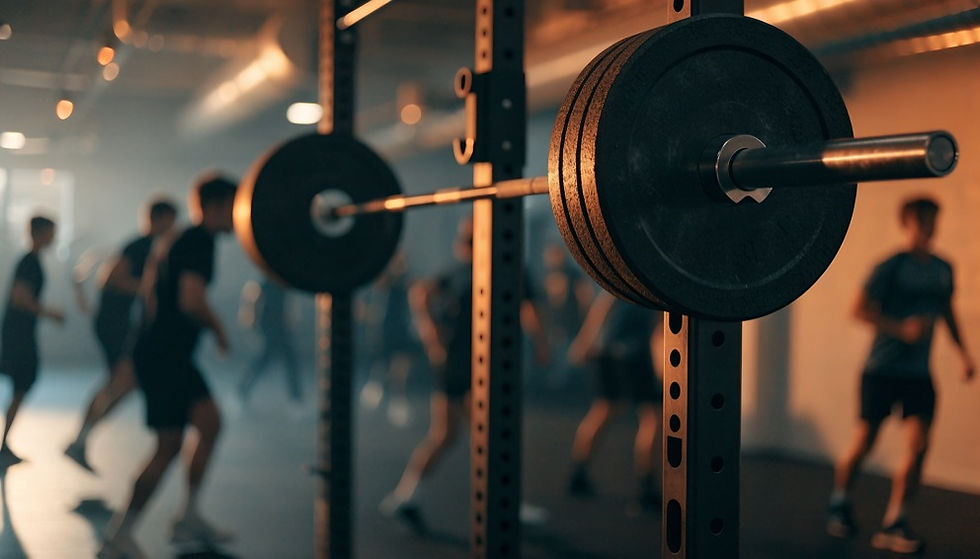
Reading the room before the session starts
One of the things we pride ourselves on is picking up what our athletes are putting down the second they walk in. You can look at somebody and just know they haven't had a great day. That they're carrying something. Maybe it's stress, maybe it's something that's been circling in their head all day. It's rarely subtle if you're actually paying attention.
So we ask. Every time. The coaching environment we've built here is built on that instinct. Good coaching is based on intuition. You need to know your athlete inside and out, not just their numbers. And nine times out of ten, if you think something's up with a person, you're right, so it's always worth the question.
The conversation that had nothing to do with sport
A few years ago, one of my athletes came in, and she was quieter than usual. Not herself. So I asked her straight up, “Hey mate, what's going on?” Turned out it was a friendship group issue. Nothing to do with netball, nothing to do with physical development. Just life.
It became a teachable moment. Being a bit older and having a bit of life experience under the belt, I talked to her about her inner circle, the idea that you're roughly the sum of the first four or five people closest to you. I explained that as you get older, friendships solidify and mature, and the number of genuinely close people in your life tends to shrink. That's not a bad thing. It's actually a good thing.
Trying to maintain a best friend group of 25 or 30 people is impossible. There are too many dynamics to manage. What actually matters is the four or five people who'd come and get you in the middle of the night if you were in trouble. Those are the people worth investing in.
She looked at me like I was a bit of a weirdo at first. Fair enough. But it sank in, and over the following weeks and months, she started to realise that all those fringe relationships weren't serving her at all. She'd been spending far too much time and energy putting out spot fires in that friendship group, and it was draining her. So she started to cull the fringe relationships and focus on the ones that actually mattered to her and to the other person. That brought her real joy and real value, and none of it had anything to do with a barbell.
Why this is coaching, not a detour from it
Good coaching, when you really lean into it, is as much about the mental and interpersonal side as it is about physical capability. If you can't connect with someone on a human level first, it's genuinely difficult to influence their performance on a physical level. That's not a nice sentiment to put on a poster, it's just tried and true methodology from 20 years of coaching. I've watched it play out too many times to think otherwise.
This isn't a rare occurrence either. It's daily. Every session has a version of this moment somewhere in it, whether it's obvious or not. The good coaches will notice this straight away and just check in with their athlete.
A note for younger coaches
If you're early in your coaching career, here's something worth hearing. Connecting genuinely with the people you coach matters more than any piece of testing equipment you'll ever own. It's not just about going by the numbers, reading what the data spits out, and coaching from there. You need to connect with the person in front of you to actually get the best out of them.
Spend time developing your interpersonal skills, your intuition, that softer side of coaching. It'll make you better at this job than any certification will. Yes, there are moments when you need to be firm, and that's part of it too, but there are just as many moments when you need to go gently, and it's always worth the effort to build the connection first.
Making the invisible work visible in the gym
A lot of our parents actually do see this side of it because we welcome them into the gym to watch sessions. It's part of our belief system. This is an investment parents are making in their child, but it's still their child at the end of the day, and they deserve to be engaged in what we're doing, not locked out of it.
So they can have peace of mind that we're not just building a resilient athlete who performs well. We're building a coachable one. That's a phrase we use constantly with prospective athletes and their parents. We will create a ‘coachable athlete’ here, someone who can give and receive feedback, have the hard conversations, and not go to water when things get uncomfortable.
That's the work most people never see. Not because we're hiding it, but because it doesn't show up on a spreadsheet. It definitely shows up in how an athlete carries themselves five years from now.
Follow me on Instagram for more info!
Read more from Arj Perera
Arj Perera, High-Performance Coach
Empowering our female youth athletes to focus on their physical development and build strong, athletic, and resilient bodies has been Arj’s primary focus over the last 15 years. With conference and national championships under his belt, he brings this knowledge and expertise to our most important athletes outside of the national and professional circuits: our youth.







