

Understanding the Parent Wound
Written by Aleya Belamour, Relationship Recovery Coach
Aleya Belamour is the founder of Breakup to Blissful, a program that helps women recover from breakups and rebuild confidence, clarity, and self-worth. Her work focuses on practical emotional healing, mindset tools, and behavior change to support real-life recovery after heartbreak.

The parent wound typically stems from childhood experiences such as criticism, abandonment, emotional neglect, overcontrol, inconsistency, or name-calling. These experiences can shape the way we see ourselves, others, love, safety, and connection. Over time, they often lead to patterns of unhealthy relationships, low self-worth, people-pleasing, emotional dysregulation, or difficulty feeling truly safe and secure.
Recognizing that these wounds are rooted in past experiences is the first step toward healing. Acknowledging your parent wound does not mean blaming or resenting your parents forever. It means understanding how their patterns shaped yours.
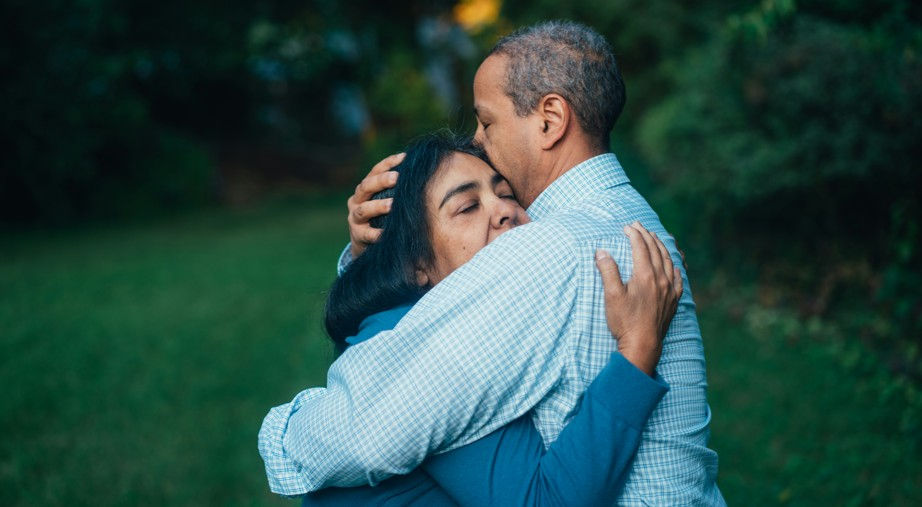
For me, it wasn’t until my mid-30s that I fully connected the dots between the relationships modeled to me growing up and the unhealthy relationships I later chose for myself. I realized I had unconsciously normalized emotional instability and name-calling because it was familiar. Once I became aware of the connection between my childhood experiences and my adult patterns, everything started to make sense. That awareness gave me the power to break the cycle and begin making different choices without carrying resentment toward my parents in the process.
Sometimes doing this work can strengthen your relationship with your parents, especially if they are emotionally mature enough to listen, acknowledge your experience, and take accountability. Sometimes one sincere apology can soften years of pain. Other times, healing comes from accepting that your parents may never have had the emotional tools or self-awareness to do this work themselves, but you do. That is a gift not only to yourself but to future generations as well.
Self-reflection check-in
Take a moment and notice what comes up as you read this:
What emotions arise when you think about your childhood?
Do you feel more anger, sadness, numbness, guilt, or confusion?
Do you feel protective of your parents or critical of them?
Where do you notice these wounds showing up in your current relationships?
What coping mechanisms did you develop to feel loved, safe, or accepted?
What toxic pattern have I emulated or accepted in romantic relationships because I experienced it at home first?
There are no right or wrong answers here, only awareness. Awareness is where healing begins.
Steps to heal the parent wound
Healing begins when you stop minimizing your pain. Many people spend years dismissing their childhood experiences because “others had it worse” or because their parents “did their best.” While both things can be true, your pain still deserves acknowledgment.
Allow yourself to feel the emotions associated with your experiences, whether anger, grief, sadness, disappointment, or resentment. You cannot truly release pain you refuse to acknowledge.
Understand the context
Understanding your parents’ upbringing, trauma, limitations, or emotional capacity can create compassion and soften blame. This does not excuse harmful behavior. It simply allows you to see the full picture.
Often, our parents were operating from wounds they never healed themselves. Generational trauma gets passed down unconsciously until someone becomes aware enough to stop the cycle. Sometimes that person is you.
Seek support
Parent wounds often run deep and can be difficult to untangle alone. A therapist, support group, coach, or trusted friend can provide a safe space to process emotions and identify patterns. If possible, look for someone who specifically specializes in childhood trauma, attachment wounds, family systems, or inner child healing. Healing in safe connection with others can be incredibly transformative.
Inner child work
Inner child work involves reconnecting with the younger version of yourself who felt unseen, unsafe, abandoned, criticized, or emotionally neglected.
Through journaling, visualization, meditation, or guided healing exercises, you begin learning how to give yourself the validation, protection, and love you may not have consistently received growing up.
One powerful question to ask yourself is, “What did I need most as a child that I didn’t receive?” Your answer often reveals what still needs healing today.
Healing the parent wound sometimes requires changing the dynamics that continue to hurt you in the present. Healthy boundaries are not punishment, they are protection.
You are allowed to distance yourself from conversations, behaviors, or family dynamics that are emotionally harmful. You do not have to tolerate name-calling, manipulation, emotional invalidation, or disrespect simply because someone is family. Sometimes healing relationships requires space first.
Practice self-compassion
Healing is not linear. You may notice yourself falling back into old patterns, reacting emotionally, or struggling to communicate differently. That does not mean you are failing, it means you are rewiring years of conditioning.
If you grew up without healthy relationship models, it makes sense that emotional regulation and communication may feel difficult at times. Be patient with yourself as you learn. You are not becoming difficult. You are becoming aware.
Create a new narrative
Many parent wounds leave behind limiting beliefs such as:
“I am not good enough.”
“Love must be earned.”
“My needs are too much.”
“I have to prove my worth.”
“I am responsible for other people’s emotions.”
“Screaming and name-calling come from people you love.”
Healing involves consciously replacing these beliefs with healthier truths. You are allowed to rewrite the story you carry about yourself.
Sometimes, true healing also means no longer obsessively revisiting the pain. Once you have processed, learned, grieved, and grown, you are allowed to move forward without constantly reopening the wound.
One of the hardest but most freeing parts of healing can be realizing your parents were imperfect humans carrying their own unresolved pain.
This realization can create deep compassion. Not every parent had the emotional tools, support, safety, or awareness needed to parent in healthy ways. Many were surviving rather than consciously parenting.
Understanding this does not erase your pain, but it can help release the emotional weight of resentment. We are all shaped by what shaped us.
Long-term benefits of healing the parent wound
Healing the parent wound can transform every area of your life. You may begin to choose healthier relationships, feel safer expressing your emotions, stop seeking validation from emotionally unavailable people, build stronger boundaries, improve your self-esteem, feel more emotionally regulated, break generational cycles, and experience deeper inner peace. Could you benefit from doing this inner work?
Read more from Aleya Belamour
Aleya Belamour, Relationship Recovery Coach
Aleya Belamour is a certified Relationship Recovery Coach, Energy Medicine Practitioner, and the founder of Breakup to Blissful, a transformational journey that helps women heal their hearts, release emotional baggage, and rediscover their inner radiance after a painful breakup or divorce. She offers free guided meditations and an online support group, with deeper transformation available through her signature program and soulful healing journeys around the world.





