Undercharging is Not Generosity
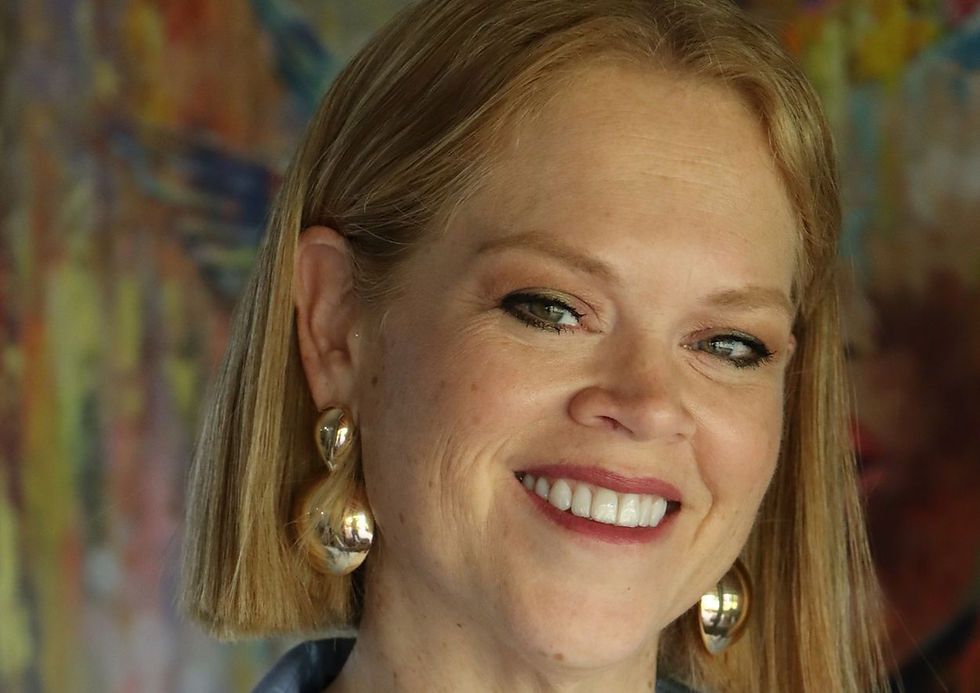
With more than two decades of expertise spanning psychotherapy, healthcare operations, and business strategy, Jessica Echeverri empowers service professionals to build high-impact organizations. Through her Clinical CEO framework, she transforms overburdened founders into strategic leaders who build ethical, scalable businesses without sacrificing their well-being.

I sat in a community center on hard metal folding chairs, under tube lighting that hummed and flickered, listening to a local business owner explain how he made money. The program was called Second Careers. The people teaching it were mostly business owners who had gotten good at one thing, and a lot of what they taught sounded like a pitch for their own services, aimed at a room full of people who could not afford any of it.
I was one of those people. I was on welfare with a young daughter depending on me, and I had just lost the job I thought would finally make us stable.
I did not learn much in that room. I did learn what money felt like when you did not have it. It felt like shame, and it felt like something other people had. I carried that feeling into my first years of practice, and I want to tell you what it did to the way I thought about getting paid.
The guilt that follows helpers
Most therapists I coach can sit with a stranger on the worst day of that person's life and stay steady. Then they open their laptop to send an invoice and feel a pang of guilt.
I understand it. We are trained to give. We learn to put the client first, to hold back our own agenda, and to measure our worth by how much we pour out. Somewhere along the way, many of us absorb the belief that wanting to earn well means caring less.
That belief sounds like virtue, which is why almost nobody questions it. When I started out with a red rolling briefcase and a notebook on my knee, I was so grateful that anyone let me into their living room that I rarely stopped to ask what the work was worth. Gratitude is a beautiful quality in a healer. As a pricing strategy, it is a trap.
What undercharging actually costs
When you charge less than the work requires, the cost does not disappear. It moves, and it moves onto your shoulders.
It shows up as a caseload with no room to breathe. It shows up as resentment that creeps into the end of a long day. It shows up as a business that depends on one tired person working every hour available. Your clients feel it as well. A depleted helper cannot offer the presence they are paying for, which makes underpricing a question about quality of care long before it is a question about money.
I lived the math. Years into my practice, I sat at my kitchen table past midnight with a stack of notes, ready to close my first clinic. More clients meant more hours I did not have. Fewer clients meant less money I could not survive without. Every dollar I earned was tied to an hour I personally worked, so growth only made me more exhausted.
A business without margin has nothing left to be generous with. That was the sentence I needed to hear at that table and did not.
The question behind the number
When I finally asked what needed to exist so my business did not need me inside every piece of it, the answer ran straight through money. Hiring my first therapist cost money. Writing down my systems took paid time. Building something that could run without me required the business to earn enough to support it.
That is when my relationship with revenue changed. I stopped seeing it as the price of my effort and started seeing it as fuel for the people the business could reach. One person can only see so many clients. A well-funded practice can serve far more people than I ever could alone.
I also stopped treating my fee as a verdict on whether I deserved to be paid. A fee carries years of education, supervision, trauma training, and the lived experience of sitting with hard stories. When you state it with confidence, you tell the person in front of you that this work is serious and that they are worth a serious investment. Healing is not an undercharged product, and pricing it like one teaches people to value it less.
Access is still part of the plan
None of this means charging more simply because you can. Many of the clinicians I know build sliding scale spots, community programs, and pro bono work into their practices. The difference is that they do it by design, funded by a business that is financially healthy, instead of by accident, funded by their own burnout. Generosity works best from a full cup.
What my life looks like now
Today, other people handle the daily operations in my clinics, and I make only a few high-level decisions. I spend my time coaching therapists through the same shift I made. I live in Colombia because it is better for my family. I do school pickup and drop-off, I sit at my kids' soccer games, and my phone stays in my bag.
None of that would exist if I had kept treating profit as a bad word. Revenue is what paid for the team, the systems, and the freedom. It is the structure that lets purpose last.
I often think about the woman in that community center, doing math in her head about whether she could afford the bus. I would tell her that wanting a good living did not make her greedy. It made her someone who was planning to stay in the work.
Three questions for this week
What story do you tell yourself about money, and whose voice does it really belong to?
Is your fee based on your expertise, your costs, and your goals, or on your fear of what someone might say?
If you stopped working tomorrow, would your income stop with you?
The answers are rarely comfortable. They are almost always useful.
An invitation
There is a ripple in this that I do not hear discussed enough. When a woman in a helping profession charges what she is worth and holds it without apologizing, the newer clinician watching her starts to believe she is allowed to do the same.
If you are ready to look at your pricing, your systems, and your business with fresh eyes, I teach that work through The Clinical CEO™ Academy. I would be honoured to help you build a practice that is generous, sustainable, and well-paid.
Read more from Jessica Echeverri
Jessica Echeverri, Clinical Entrepreneur, Business Strategist & Psychotherapist
Jessica Echeverri is a clinical entrepreneur, psychotherapist, and business strategist with over 20 years of experience in clinical work, leadership, program development, and service-based business growth. She has built companies across mental health, court-related programming, equine-assisted therapy, healthcare operations, and business leadership, serving clients across the world. Her writing explores the human systems behind sustainable success, including burnout, leadership, ethical service delivery, business structure, emotional responsibility, AI-supported operations, and the future of care. Through her Clinical CEO philosophy, Jessica helps professionals understand why success often becomes unsustainable when the structure underneath it cannot support the people, values, and outcomes it was built to serve.