Tracking the Mind with Embodiment Practices
Updated: Jan 20
Kellie and Kelly are the founders of the Academy of Embodiment Arts and hosts of the Soul Discovery podcast. They combine Qigong with meditation and energy mastery to guide people to embody new frequency through transmutation and transformation for lasting change.

Kelly recently gave a presentation to a local IACT (International Association of Counsellors and Therapists) chapter titled Tracking the Mind with Embodiment Practices. This article takes key features of his talk to share with our subscribers and participants.
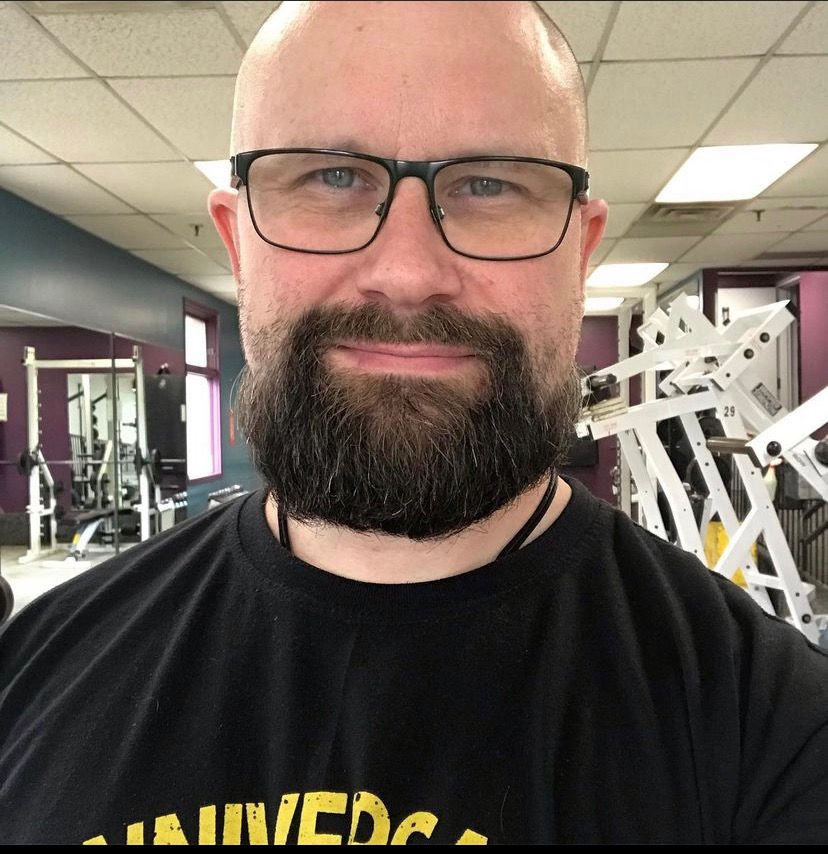
As a child, Kelly was severely hypoglycemic, had asthma that almost killed him numerous times, suffered regularly from bronchitis, and had many food allergies. Losing his fingertips at nine months of age due to an accident with an exercise bicycle meant he had a profound learning experience of being present from a very young age. Over time, having to deal with constant pain in his fingers taught him that resisting or denying the pain only made it worse. By surrendering to it, he taught himself a form of meditation that he did not realize was meditation until much later in life.
After watching the mini-series Shogun as a youth, Kelly became fascinated with the idea that, through training and meditation, the body could heal itself. He learned the Ba Duan Jin, 8 Pieces of Brocade, and Zhan Zhuang basics when he was 13, and cured himself of his asthma and bronchitis by the time he was 15. The rest, as they say, is history. To deepen his understanding of how and why the 8 Pieces of Brocade worked so well, Kelly dove into both qigong and internal martial arts training, spending over twelve years studying Kenpo Karate, Xinyi Liu He Quan, and Yang style Taijiquan, meeting his first Baguazhang teacher at the age of 24.
For nearly thirty years, Kelly has dedicated himself to studying and practicing the Chinese internal martial arts of Taijiquan, Baguazhang, and Xingyiquan, training with master teachers such as Andrea Falk, and learning the rare style of Ma Gui Baguazhang.
Alongside his martial arts training and conditioning, Kelly has over 20 years of experience studying the Medical Qigong system of Grandmaster Peng Jiu Ling, a combination of old Shaolin Waidan moving methods and Luohan Neidan Zhan Zhuang methods. This system specializes in developing the meridians and sensitivity to qi flow inside and around the body, a rare method of training neuro-differentiation that accelerates and deepens the mind-body connection. (To book a healing session, check out the information here.)
Combined with this depth of physical training, Kelly brings an equal level of experience in Taoist, Zen Buddhist, and Tibetan Buddhist meditation and internal alchemy that spans 30 years. Through all his years of experience and training, Kelly has learned that stillness is the key to everything.
Emotional stories are expressed through the body. Resisting pain causes more discomfort than being present with it. In his experience, many people avoid pain, believing they are doing the body good, and yet the body keeps score. What you avoid or suppress will express itself physically, especially if you refuse to feel it emotionally or mentally.
There are many systems of qigong, but the one Kelly has stuck with, and that has stood the test of time for him, is the 8 Pieces of Brocade Qigong set. These eight movements open and close the body, healing and building strength from the inside out. It washes blood through the body in a specific way due to how the horse stance and accompanying movements engage the fascia system.
Fascia is in and around all of our organs and tissues. This set is also famous for healing the organs, especially the kidneys. By putting internal pressure on the fascia system as a whole through the spiralling movements, you are able to signal your body to show you where you hold tension and to release it.
The sequence of the Ba Duan Jin has many health benefits, one of which relates to Eye Movement Desensitization and Reprocessing (EMDR), an integrative psychotherapy approach that has been extensively researched and proven effective for the treatment of trauma and many other mental health challenges. As a person works through the movements of the Ba Duan Jin, there are many sequences that involve moving the eyes from side to side. This is the basis for EMDR and one of the many reasons the Ba Duan Jin Qigong set is still practiced today. It is often used by martial arts schools to strengthen students’ health and help others heal from injuries.
For those who may have trouble sitting to meditate, the 8 Pieces of Brocade, as well as the other arts Kelly has trained in, allow you to track what the mind is doing as you move through the practice. These moving meditations are important in helping you stay in the present moment. They assist you in becoming aware of your body, how it feels under pressure, while reducing stress and regulating your nervous system.
The way the tongue is held on the roof of the mouth while breathing in and out through the nose signals the vagus nerve to calm the body and restore inner peace. As a psychic and medium, these practices have helped Kelly immensely.
Qigong connects you not only to your body, but also to the earth. The more connected you are to your body, the more deeply you can connect to the earth. It builds your Guardian Qi (Wei Qi) and provides protection from energies that intend to attack. There are many seen and unseen energies that surround us daily. Having a consistent Qigong practice helps not only to rejuvenate the physical body, but also to protect it energetically from those meaning us harm.
Your level of discernment rises, and you begin to understand more fully what energies you are receiving in different situations. If you practice any form of mediumship, having a Qigong practice strengthens the physical body to embody new energies as you release old, stagnant energy, and protects you from the energies of other people and entities while channeling.
No matter who you are, having a regular Qigong practice will help regulate, stabilize, and balance your organ functions, your nervous system, and your energy.
To learn more, visit our classes page. Currently, we offer individual and private group sessions, both in person and online. We also have courses on our online course platform that offer extensive detail in Qigong, Standing Stance (Zhan Zhuang), Earth Marrow Washing, and much more. We highly recommend taking these courses, as you will have lifetime access to all of the information. There is also a community chat where you can ask questions and connect with other participants. You are welcome to book private classes as well to refine your practice.
Read more from Kellie Winzinowich and Kelly Whelan-Enns
Kellie Winzinowich and Kelly Whelan-Enns, Active Embodiment Coaches
Kelly Whelan-Enns is a master of Shaolin Qi Healing, Qigong, and the internal art of Baguazhang. Plagued by asthma and hypoglycemic in his youth, Kelly's journey of healing and self-mastery has spanned over 35 years, training with master teachers, and studying Taoist, Zen Buddhist, and Tibetan meditation, teaching many along the way.
Kellie Winzinowich is a former elite gymnast whose journey brought her to Qigong and the study of internal alchemy. Now a Certified Hypnotherapist, she helps others navigate personal transformation Together Kellie and Kelly guide others to embody lasting change through physical, emotional, and spiritual self-mastery.