

The Whole Truth Unveiled
Written by Lynn Thorsell, Leadership and Team Coach
A student of Buddhism with a history of outdoor athleticism, Lynn Thorsell brings an adventurous spirit and multi-faceted perspective to organizational life and leadership development. Since 2019, she's coached leaders and teams on six continents, enriching her appreciation of human diversity and ingenuity.

I’ve hurt people. Maybe you have, too. But what do we do with that knowledge? There’s no one answer, of course, any more than there is one reason why our actions have hurt someone. You may have set a personal boundary, come out of the closet, or acted in alignment with a core value.
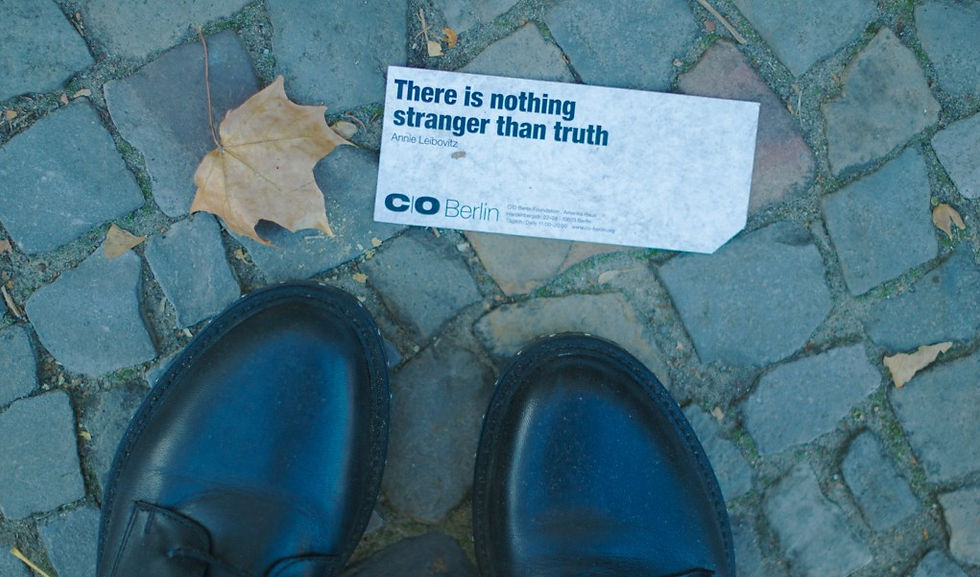
Being true to ourselves doesn’t always please the people closest to us. You may have acted to prevent worse harm. Medical professionals and first responders have to make those decisions every day. Or someone may have wanted you to take responsibility for their emotional pain when the responsibility wasn’t yours. Just because someone is hurting doesn’t mean you were the cause. But then there are the times we do something vengeful, thoughtless, selfish, or mistaken.
The most comfortable self-conception for most of us as individuals, teams, and nations is as a hero and protagonist. We want to see ourselves as good people. Many of us also readily identify with how we’ve been hurt, proclaiming our innocence and helplessness. But if we are to tell the whole truth, we have to include the stories about how we’ve unjustifiably hurt others.
From victim to persecutor
In my late twenties, rapidly heading nowhere, I had the good fortune of finding a therapist who helped me grapple with the idea that perhaps my childhood and adolescence hadn’t been completely idyllic, and that some events had left me with psychological scars that were poorly influencing my behaviour and relationships. While identifying as a victim came with its own issues, the therapist helped plant seeds for what eventually grew into self-compassion and got me standing on firmer ground.
Working with other therapists through my thirties, I developed healthier ways of thinking and relating to others, and began to see myself from a fuller perspective. Eventually, an uncomfortable question kept coming to mind. I remembered incidents as a teenager when I had treated a younger person comparably to the ways I had been treated as a child, ways that I now identified as psychologically damaging. Could I have caused him the same type of harm?
The recurring thought was intensely uncomfortable. Eventually, I accepted that I could only resolve that discomfort by knowing. So I asked him, and, of course, the answer was yes.
We met in person so that he could tell me about his experience of what I’d done and feel heard. He told me he had been deeply hurt, that the experience had affected his relationships with women, and that he had been working through those issues in therapy. Hearing that was difficult. It hurt to know that my actions had had a lasting impact, that he had been suffering for so long, and that it had taken me until now to ask. I felt deeply disappointed that I had been first blind to my actions and then in denial. I felt humbled and ashamed to know that I was just as culpable as the person who had hurt me.
I listened with empathy. I told him I was sorry for what I’d done. It was difficult to imagine what I could do to make amends.
Untold stories
As a coach, why am I writing about something so personal? The fact is, we’ve all hurt people. It’s just something we rarely talk about undefensively. Psychological injuries happen at home, at school, and in the workplace. We hear about them all the time from the perspective of the injured party. We’ve likely told those stories ourselves.
Yet if we’ve been hurt, there must be someone who’s done the hurting. Where are those stories? Not the ones in which we justify our actions. The ones where we take responsibility for them.
I was afraid of knowing I had hurt someone. It was painful to hear that I had. What I didn’t expect was that it was also enriching, liberating, and empowering.
The self-made prison
Because the truth is, denying my capacity to hurt someone denied me so much more. Only being willing to think of myself as a “good” person, I had to deny evidence to the contrary and defend myself against anyone who experienced me differently. This didn’t just happen in my personal life. It happened in every arena, fed by an invisible undercurrent of fear and shame.
Admitting I made a mistake or hurt someone could have opened the door to all my fears about being an unforgivably bad person, so I was quick to deny it. I shut myself off from information that contradicted my preferred self-perception. I blamed other people or circumstances, casting myself as a fellow victim (poor me!) or a misunderstood hero, fighting the good fight. Without even realizing it, I avoided the people associated with those incidents or kept our interactions superficial.
This didn’t only affect one relationship, it became a pattern. My world became smaller. My sense of self remained limited.
Does any of that seem familiar? I’m not the only person who’s been trapped there. Case studies of team dysfunction, a scan of LinkedIn, or any book on diversity, equity, and inclusion reveal similar stories:
The team member who justifies why a colleague wasn’t included in a decision rather than directly addressing an underlying resentment.
Rivalries within an executive team, each person trying to be seen as the hero and casting certain colleagues as villains or fools.
The manager who responds to an employee’s feedback about a hurtful comment with explanations about what was really meant, how much the manager cares, and what kind of person the manager really is, until attention turns to reassuring the manager, leaving the employee feeling doubly dismissed.
When we don’t own our actions, conflicts go unresolved, colleagues compete instead of collaborating, and injured parties become disengaged. These fractures damage professional relationships and impair people’s ability to do their best work.
Those examples are relatively normal. Much more extreme is the leader who feels so threatened and isolated that they repeatedly lash out. What kind of intervention is most likely to address whatever harm has happened, prevent future outbursts, and, ideally, support that leader to change? We’re navigating sensitive and complex terrain.
Opening the door
The individual who wishes to have an answer to the problem of evil, as it is posed today, has need, first and foremost, of self-knowledge, that is, the utmost possible knowledge of his own wholeness. He must know relentlessly how much good he can do, and what crimes he is capable of, and must beware of regarding the one as real and the other as illusion. Both are elements within his nature, and both are bound to come to light in him, should he wish, as he ought, to live without self-deception or self-delusion.
Being willing to know that my actions had caused long-lasting harm to someone was a first step towards freeing myself from the prison of my preferred self-perception. While painful and difficult, it brought me into a closer relationship with the person I’d harmed and gave me a deeper sense of our humanity. It also deepened my relationship with myself. Unexpectedly, owning my actions and their effect helped me recognize the full extent of my power: that I can hurt someone. Or not, and my power to take responsibility for that.
I now see the admission that we’ve caused harm as an act of courage. It’s a first step towards restoring trust and relationship, although that restoration is never a given. Perhaps as importantly, it’s essential to any honesty with ourselves about our power to both help and harm. One cannot know oneself fully without that honesty.
To reconcile
This is as true for teams and countries as it is for individuals. In Canada, as in South Africa and other countries, the ongoing process of Truth and Reconciliation challenges us to take stock of the whole truth of who we are.
Acknowledging, documenting, and seeking to understand the histories of the Holocaust, apartheid, the Rwandan genocide, and the treatment of Indigenous peoples in Canada is painful, difficult, sometimes traumatizing work, most especially for those who were directly and indirectly harmed by those horrors. That work reveals a fuller history, invites more people to participate in the act of understanding, and illuminates our vulnerabilities and capabilities as human beings. Ultimately, it is work that enriches the nation willing to sponsor it. We become collectively bigger, not smaller, better integrated, and much more whole.
As long as we see the Truth part of Truth and Reconciliation as a threat to our identity, we limit ourselves, individually and collectively. We erect walls within us and between us, narrowing our view. We put others and ourselves at risk. We remain imprisoned by our preferred self-perceptions. Reconciliation, within ourselves, much less with another, never becomes possible.
Truth is, first and foremost, an inside job. Owning the ugliest parts of our history, personally and collectively, we open the door to our full humanity, our full responsibility, our full potential, and to each other.
Read more from Lynn Thorsell
Lynn Thorsell, Leadership and Team Coach
Lynn Thorsell is a team and leadership coach whose practice is informed by outdoor athletics. Buddhist philosophy and her time working in Malawi. A student of human diversity and resourcefulness, she is continually heartened by the many leaders and teams working to increase our collective wellbeing, and honoured to support them.
Reference:
Carl Jung, Memories, Dreams, Reflections, p. 330 (softcover edition)


