

The Unexpected Gift of Being Forced to Slow Down
Madeleine Daleng, a five-time Norwegian figure skating champion, now empowers people through rehabilitation, obesity coaching, and fitness training, blending insight from elite sport with a warm, practical approach. As the founder and CEO of MAD, she helps clients build strength, confidence, and sustainable habits that fit their everyday lives.

Are you the active kind of person? Are you the one always reaching higher? The one everyone thinks is never tired or out of energy? Well, there are quite a few of us in this category, and staying on top of our game, no matter what our game is, feels amazing! Everyone we meet and most situations we move through boost our energy and excitement. What’s not to love about it? A daily, natural endorphin and adrenaline rush we can surf on, even on those slightly heavier days. That’s a fortunate way of living, and it can become even more rewarding.
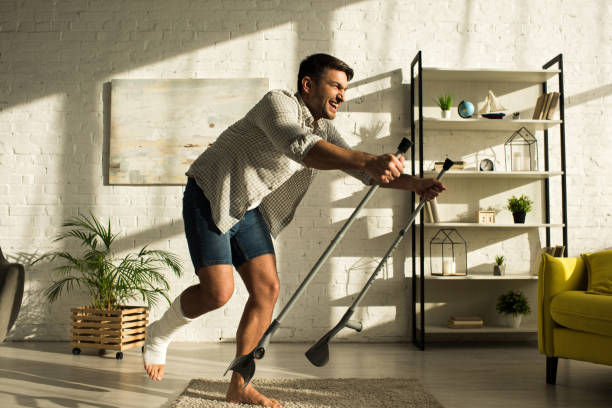
What happens when you get kicked out of that, all of a sudden? You’re forced to slow down. In my case, it was a fracture in the neck of my femur, an injury more commonly associated with older people. It was a stress fracture that had been going on for far too long and had become more serious than I would have liked by the time I first noticed it. From teaching around 21 classes a week at different intensities, and doing my running and my own random workouts, to walking on crutches and not being allowed to put my foot on the ground, with zero load on the leg, that’s a big one.
The first few days were surprisingly not that difficult. I expected my brain to give me some real resistance, yet that did not happen. However, the sudden loss of freedom from being stuck with my two new legs (the crutches) stole way too much time from my day. Also, not being able to attend everything I wanted to is not the most enjoyable part of this journey. I don’t like being left out when it isn’t my decision.
I am used to moving. I teach, train, create, and spend most of my day in motion. Suddenly, simple tasks became complicated. Walking to the kitchen required planning. Carrying a cup of coffee became a challenge. I now need to carry a backpack around the house to get all my stuff from place to place.
What surprised me most was how much of my identity was tied to movement.
When movement disappeared, I had to ask myself a difficult question, "Who am I when I can’t do the thing I normally do? The answer was not too difficult to find. I’m the same; now I just need to use my skills more effectively."
There are basically two options: sit down and dig yourself into the gloom, or try to find ways to handle it that make your day valuable. I know we are all put together differently. Some have a darker mind; some are a lighter type of person. All can be good in different situations, and in moments like these, those with a heavier mindset do have a harder job staying positive, yet it is possible.
Here are my pros when I’m unable to do “my thing”:
1. More family time
When life moves at full speed, quality time often becomes something we squeeze into the gaps. My injury removed many of my usual activities and unexpectedly created more space for the people closest to me.
2. Creativity grows when options shrink
Being limited physically forced me to think differently about work. Instead of focusing on what I couldn’t do, I started looking for what was still possible. The one thing I’m most proud of managing so far is my new class, Cardio Step: One Voice, One Body, where I’m the voice and a wonderful, sporty colleague is my body, performing for the class what I teach orally. My goodness, it was fun, both because we nailed it and because I actually managed to create a class and guide the participants through it in a good way!
3. Greater empathy as a coach
This is potentially the strongest point. As someone working with people in rehabilitation, I suddenly became one of them.
That creates a perspective very few professionals get.
4. Patience
Most high performers don’t naturally excel at patience. That’s relatable.
5. Accepting unexpected help
Another very strong lesson. Especially because successful, independent people often struggle with this.
Looking back, I would never have chosen this experience for myself. If someone had offered me the alternative of staying healthy, teaching my classes, running, and continuing life as usual, I would have taken it without hesitation.
Yet here I am. Somewhere between the frustration, the crutches, the planning of simple daily tasks, and the endless reminders to slow down, I have discovered something unexpected.
My value was never in how fast I could move, how many classes I could teach, or how many things I could fit into a day. Those things are still part of me, but they are not me.
Sometimes life puts us on pause, not because we have failed, but because there is something we still need to learn. For now, my lesson is patience.
While I’m looking forward to walking, teaching, and training freely again, I have decided not to waste this chapter wishing it away.
Read more from Madeleine Daleng Nyland
Madeleine Daleng Nyland, Founder & CEO of MAD
Madeleine Daleng is a five‑time Norwegian figure skating champion who now channels her competitive drive into helping people rebuild strength, confidence, and health. With a background from the Norwegian School of Sports Science, she works across rehabilitation, obesity coaching, and fitness training. Her approach blends elite‑athlete discipline with warmth, humor, and real‑life understanding. As the founder and CEO of MAD, she supports clients through personal training, group fitness, and long‑term lifestyle change. She also inspires a wider audience through her YouTube channel, Madeleinedaleng_goodvibes.







