Are We Teaching Young People Everything Except How to Know Themselves?
Written by Karen Whelan, Therapist, CEO & Founder of The SOULution
Karen is an award-winning psychotherapist, shamanic medicine & spiritual advisor. A 7-time international bestselling author and top motivational speaker featured in Forbes, USA Today, and Thrive Global, renowned for empowering others to achieve profound personal transformation.

Are we teaching young people everything except how to know themselves? Psychotherapist Karen Whelan shares the personal experiences and self-leadership vision behind I’m the Boss of Me, an app designed to help young people explore identity, emotions and belonging.
What if we are asking the wrong question?
What if the greatest challenge facing young people is not simply what they experience, but what those experiences lead them to believe about themselves? Instead of continually asking what is wrong with our teenagers, what if we asked something different: how can we help them understand who they are before the world begins telling them who they should be?
Young people are growing up amid social media comparisons, instant judgments and powerful expectations about appearance, achievement and belonging. So much attention is given to preparing them for exams, careers and success. But where is the everyday education that helps them recognise their worth, understand their emotions and develop a relationship with themselves?
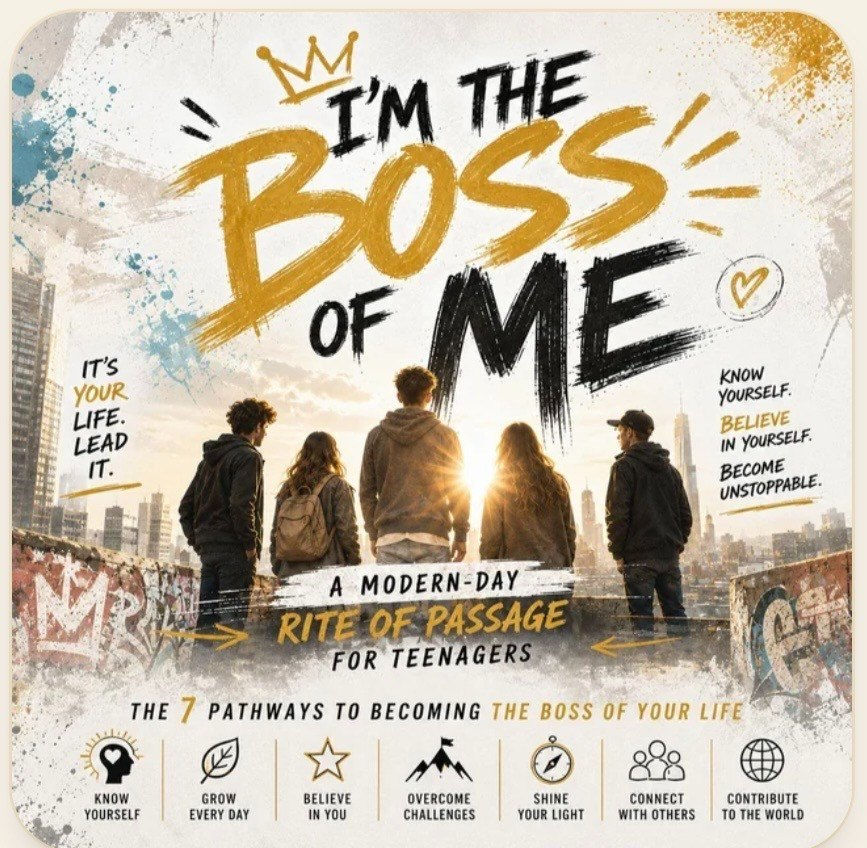
This question is at the heart of I’m the Boss of Me, the self-leadership and personal empowerment app I created for young people aged 13-25. It is about something far bigger than a screen: changing the conversation around identity, self-acceptance and belonging.
The beliefs we carry into adulthood
For more than two decades, I have worked as a psychotherapist with people navigating trauma, difficult relationships, identity challenges and the journey back to themselves. Again and again, I meet adults who are trying to unravel beliefs that began much earlier in life: “I’m not good enough.” “I don’t belong.” “My feelings don’t matter.” “I must become someone else to be accepted.”
These beliefs may arise from family dynamics, childhood experiences, friendships or the meanings we attach to painful moments. Repeated over time, they can begin to feel less like thoughts and more like facts. They influence decisions, relationships and what people allow themselves to hope for.
I began wondering: what if we could help young people recognise these internal stories while they are still forming? What if emotional awareness, self-respect and personal responsibility were taught as ordinary life skills, rather than discovered only after years of self-doubt?
Imagine a teenager understanding that rejection is painful but does not define their worth; that anger is an experience, not an identity; and that a critical inner voice can be questioned rather than obeyed. This does not remove the inevitable challenges of growing up. It gives young people more ways to meet those challenges without losing themselves.
The personal journey behind the vision
My commitment to this work is also deeply personal. Long before I became a psychotherapist, author or speaker, I was a young girl trying to make sense of experiences that affected my safety and sense of belonging. My childhood included profound adversity and trauma. By 15, I had experienced homelessness, substance misuse and a suicide attempt.
I know what it is to be young and disconnected from your own worth, to search outside yourself for acceptance, and to carry emotions you do not yet have the language to understand. I also know that our earliest experiences need not be the final definition of who we are.
Through healing, education and self-inquiry, I came to understand how powerfully our relationship with ourselves shapes our experience of life. That understanding became central to my therapeutic work and to my book Seven Pathways to Self-Love. Eventually, I began asking how to take these teachings beyond the therapy room and put them into a format that belonged to the world of young people.
I did not want to build something that told teenagers who to become. I wanted to create something that helped them discover who they already are.
Why “I’m the Boss of Me”?
So much of human life can be spent caught inside one question: “What do other people think of me?” We worry about being liked, fitting in and appearing good enough. The irony is that many of the people whose opinions we fear are busy worrying about how they themselves are perceived.
For a young person, these pressures can be all-consuming. Gradually, they may begin seeing themselves through the imagined eyes of other people rather than through their own. The name I’m the Boss of Me is a reminder that we do not have to abandon ourselves to earn our place in the world.
It does not mean controlling others, rejecting guidance or believing we always know best. It means becoming curious about our thoughts, recognising our emotions, taking responsibility for our choices and learning to honour the person we are becoming. We can be open to others without handing them the authority to define our worth.
Self-leadership is not a diagnosis
I’m the Boss of Me is not positioned as a mental health app. It is a self-leadership, empowerment and personal development platform. Professional mental health care remains essential for those who need it, and no app can or should replace it. But everyday self-understanding also deserves a place in a young person’s life.
Not every difficult feeling means something is wrong. Adolescence and early adulthood bring uncertainty, change and experimentation. Young people deserve opportunities to explore those experiences with curiosity rather than automatically viewing themselves through a lens of deficiency.
My hope is that a young person can begin asking: “Who am I when I am not trying to impress anyone?” “When do I feel most like myself?” “What matters to me?” “What if I stopped measuring my life against everyone else’s?”
These are not questions with one correct answer. They are invitations to build a relationship with the self, a relationship that can travel into friendships, families, classrooms and the choices of adult life.
The story we can help them rewrite
I have sat with adults who spent decades believing they were unworthy of love, who silenced themselves to keep belonging, or who mistook rejection for proof that they were inadequate. I have also witnessed the courage and possibility that emerge when those beliefs are finally questioned.
Perhaps we do not have to wait until adulthood to begin that inquiry. Before asking young people to become leaders in the world, perhaps we can give them opportunities to become leaders of themselves. The message I want them to hear is simple: you do not have to spend your life becoming who you think everybody else wants you to be. You deserve the freedom to discover who you are, and to belong without abandoning yourself.
Read more from Karen Whelan
Karen Whelan, Therapist, CEO & Founder of The SOULution
Karen is an internationally recognized spiritual advisor, psychotherapist, and shamanic medicine woman celebrated for her transformative approach to healing and empowerment. She is the founder of SOULution Therapy and a 7-time international bestselling author honored with the James Madison Literary Award. Named a Top Motivational Speaker for 2025, Karen’s insights have been featured in Forbes, USA Today, and Hollywood Digest. She continues to inspire global audiences through her therapy, books, and retreats.