The Spiral Path and Why Transformation Isn’t Linear
Dr. Erin Oksol. "The Success Psychologist" and founder of The Higher Life, is an expert in the psychology of success and helps evolve the human behind the business. She is the best-selling author of the book Mind Your Own Business, a keynote speaker, high-performance mentor, and host of the Oh How Human of Me Podcast on Substack.

For much of my life, I believed transformation was a ladder. You worked harder. You got smarter. You achieved. You climbed. The goal was always to become a better version of yourself.
So I did what many high achievers do. I earned the degrees. I graduated with honors. I collected the awards. I built a successful career as a clinical psychologist. From the outside, my life looked like a steady ascent.
Yet beneath every achievement lived the same question, "Am I enough?" No accomplishment ever answered it. No degree erased it. No amount of proving, pleasing, performing, or perfecting could quiet it.
Eventually, that relentless pursuit of worthiness led me to my own breaking point. Within a single year, I became an alcoholic and found myself sitting in a jail cell. Ironically, that was the moment I realized I had been held captive long before I ever entered the jail. It wasn’t alcohol that imprisoned me. It was the belief that my worth had to be earned.
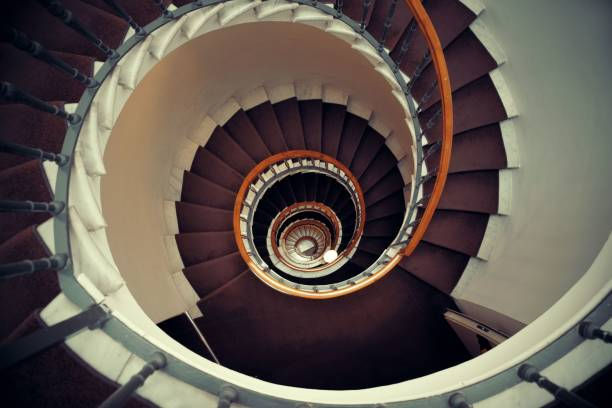
Looking back, I can see that life wasn’t punishing me. Life was inviting me into the deepest lesson of my life. That lesson would become the foundation of everything I now teach. For years, I thought transformation should look like a straight line. Now, I believe it looks like a spiral.
A spiral returns us to familiar places. The same questions. The same fears. The same relationships. The same emotions. At first glance, it can feel discouraging. People often tell me, “Why does this keep happening to me? I thought I healed this already.”
As a psychologist, I’ve heard some version of that question thousands of times. My answer is almost always the same. It isn’t the same lesson. It’s a different version of you meeting the same theme. That distinction changes everything. The spiral doesn’t mean you’re stuck. It means you’re expanding.
When I was a child, I loved playing video games. I was always the same character, but every new level required something different from me. Sometimes, I needed a new skill. Sometimes, greater courage. Sometimes, better timing. The character never changed. My capacity did.
Life works much the same way. We remain ourselves, but each season asks us to develop new capacities. More wisdom. More discernment. More self-awareness. More compassion. More courage.
My recurring theme has always been worthiness. That theme still visits me. But the woman meeting it today is profoundly different from the young woman who believed her value depended on achievement.
The theme remained. I transformed. That is the spiral. Many people believe recurring themes exist because they haven’t learned the lesson. I do not. I believe they return because they are intimately connected to the purpose of our lives.
I often tell my clients that the purpose of your life can be found at the intersection of two questions: What lights you up? What breaks your heart?
What breaks your heart is often more than pain. It is your invitation. It is the place where life asks you to alchemize suffering into wisdom. The wound becomes the place from which you serve.
For me, that wound was worthiness. For someone else, it may be abandonment. Trust. Belonging. Control. Grief. Courage.
Whatever the theme, life doesn’t ask us to eliminate it. Life asks us to deepen our relationship with it. Every return expands our capacity, not only to love ourselves more completely, but also to love others more compassionately.
Perhaps that’s why I no longer wish my theme away. Without it, I might never recognize it in another human being. Without it, I could not sit across from someone in pain and genuinely understand.
I often imagine transformation as walking a mountain trail. The first time, I stumbled over the rocks. I lost my way in the fog. I couldn’t see what was waiting around the next bend.
Today, I still walk the same mountain. But I know where the trail narrows. I know where the cliffs are. I know where the light returns. When I turn around to guide someone else, I don’t guide them because I’ve avoided struggle. I guide them because I remember.
That, to me, is the deeper purpose of healing. Not perfection. Not transcendence. Not leaving our humanity behind. But becoming someone who remembers the path well enough to walk beside another.
Psychology has taught me to understand the mind. Spirituality has taught me to trust the soul.
Together, they remind me that difficult emotions are not evidence that something is wrong. They are information. They reveal where we are protecting ourselves, where we long to belong, where old stories still shape new experiences, and where life is quietly asking us to grow.
We live in a culture that celebrates constant optimization. More productivity. More certainty. More success. But nature has never grown that way. The seasons do not apologize for winter. Trees do not rush their roots. A seed does not mistake the darkness of the soil for failure.
Perhaps we have confused movement with growth. Perhaps some of our greatest transformations happen in the quiet seasons no one applauds.
The spiral honors those seasons. It reminds us that descent is often preparation for ascent, that uncertainty is often the birthplace of wisdom, and that becoming more whole is very different from becoming better.
Wholeness is not the absence of fear. It is the willingness to embrace every part of ourselves with compassion. It is allowing our joy and our grief, our confidence and our uncertainty, our strength and our tenderness to belong in the same human heart.
Perhaps the greatest misunderstanding about transformation is believing we eventually graduate from our deepest themes. I don’t believe we do. I believe we grow with them.
When the ascent brings you back to familiar questions, familiar fears, or familiar grief, don’t mistake the spiral for failure. Life is not asking you to begin again. It is inviting you to see with greater wisdom.
You are not moving backward. You are not lost. You are not broken. You are remembering. Perhaps that has been the destination all along. You are not becoming someone new. You are coming home. Welcome home. You’ve been waiting for you.
Imagine this. A spiral staircase inside an old lighthouse. Every floor has one window. Every time you complete another revolution, you arrive facing the same direction. North. The same ocean. The same horizon.
But the view is different. Not because the ocean changed, but because you are seeing it from a higher perspective. That’s the spiral.
You’re looking at the same life. The same theme. The same wound. From a higher level of consciousness.
What if the thing you’ve spent your life trying to overcome is actually the place where you’ve been called to become wise?
Dr. Erin Oksol, High Performance Psychologist, Speaker, Author
Dr. Erin Oksol is an expert in the psychology of success and human optimization. She blends science and spirituality to help visionary leaders create a business and life sourced from their truth. She founded The Higher Life, where high performance is informed by and co-created with one's highest self and higher power. Her mission is "to set the captives free", freed from any limitations and freed to live with purpose, peace, and prosperity.