The Power of Protein and Why Women Should Prioritize It
Updated: Dec 17, 2025
Rosanna Shillolo is a certified yoga instructor, personal trainer, and nutrition coach. She runs a lakeside hot yoga studio in Ontario, Canada, which also offers stand-up paddle board (SUP) yoga classes and guided tours and has produced a 3 part vinyasa yoga video series available online.

Protein has been trending on the wellness front for good reason. Let’s uncover what all the hype is about, starting with a closer look at what it is and does. Protein is one of the 3 macronutrients your body needs to thrive, along with fats and carbohydrates. Proteins are organic molecules made up of amino acids, the building blocks of life. Since our bodies need proteins and amino acids to produce important molecules in our body, like enzymes, hormones, neurotransmitters, and antibodies, without an adequate protein intake, our bodies can’t function well at all.
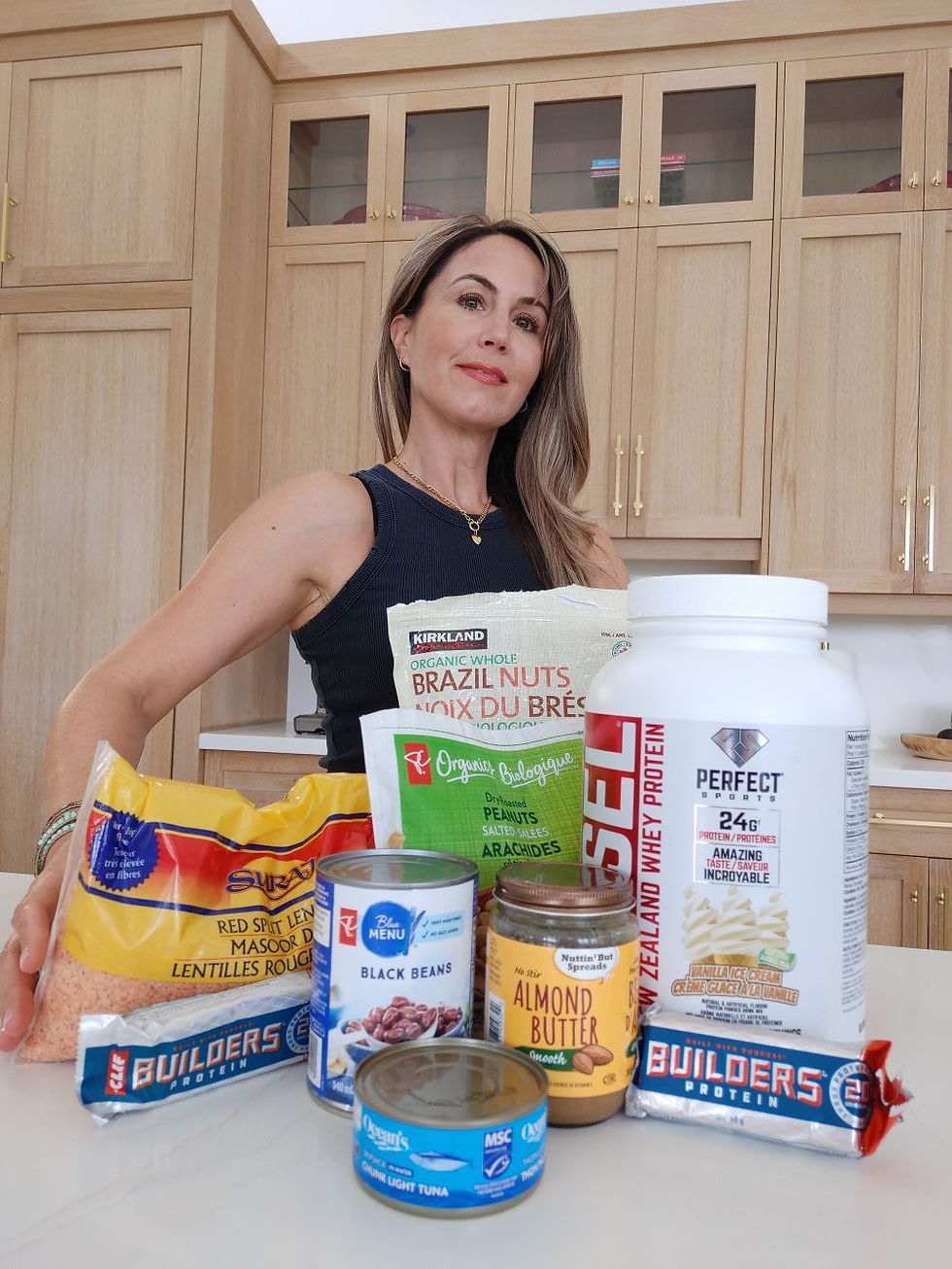
Protein helps replace worn-out cells, transports various substances throughout the body, and aids in growth and repair.
After the age of 40, muscle mass begins to decline (a condition known as sarcopenia), but adequate protein intake helps preserve lean body mass and strength. It also counteracts the increases in fat deposition resulting from a decline in estrogen and supports bone mineral density, which is important for postmenopausal women who face a higher osteoporosis risk. In addition, protein supports collagen production as well as healthy hair, skin, and nails. To reap the rewards protein has to offer it is essential you meet your daily requirements based on your activity level.
The basic RDA (recommended daily allowance) for protein is 0.8 grams per kilogram or around 0.36 grams per pound of body mass in untrained, generally healthy adults. However, this recommendation is equivalent to only 10% of your daily calories and is too low. It’s enough for you to survive, but not enough for you to thrive. This amount would only prevent protein deficiency, which is not necessarily optimal, particularly for people such as athletes who train intensely and consistently.
For those doing high-intensity training, protein needs might go up to about 1.4-2.0 g/kg or around 0.64-0.9 g/lb of body mass. A hypothetical 150 lb (68 kg) person would thus need about 95-135 g of protein per day, with the lower range suiting an inactive individual and the higher range suiting a more active person. If your goal is weight loss, aim for 1.6 to 2.2 grams of protein per kilogram or 0.73 to 1 gram per pound of your goal body weight.
Adjustments within the recommended ranges depend on a person's goals and activity levels. For example, physique training or bodybuilding athletes generally aim for 1g of protein for every 1lb of body weight. Generally speaking, most people should aim for 0.7 grams of protein per pound of body weight as the minimum and 1 gram per pound as the maximum.
Confused? Simplify by aiming for 5-6 palm-sized portions of protein throughout the day. Your hand can be your best portion guide, which is convenient since it’s always handy.
Can you consume too much of a good thing? Yes, too much protein can cause negative effects. The body can't store protein, so once its needs are met, any extra protein is used for energy, and the excess calories will be stored as fat in the body. While the body prevents blood from becoming significantly acidic, a long-term, high-protein/low-fruit-and-vegetable diet can create an acidic environment in the body, which is associated with several chronic health risks. Ideally, we want our body to be in an alkaline state (lots of fruits and veggies will contribute to this) so that the body will not be as hospitable to disease. Excess protein intake can also lead to elevated blood lipids and heart disease since many high-protein foods are high in total and saturated fat. Because it can tax the kidneys, extra protein intake poses an additional risk to people predisposed to kidney disease. The aforementioned suggested intake ranges provide guidance to help avoid overconsumption but also to ensure you get what’s necessary for basic protein synthesis, the process cells use to create proteins.
Protein synthesis is essential for building and repairing tissues and other functions, therefore, it is beneficial to monitor your intake.
Is there a superior protein source? Try to consume complete proteins containing all 9 essential amino acids, such as meat, fish, poultry, eggs, and dairy. Complete plant sources include: soy (tofu, edamame), quinoa, buckwheat, chia, and hemp seeds. Both plant and animal protein sources seem to work equally well in increasing muscle protein synthesis as a result of exercise. The amino acid leucine acts as a major stimulus for protein synthesis. Good sources of leucine include spirulina, soy protein, egg white, milk, fish, poultry, and meat.
Incomplete proteins (missing one or more essential amino acids) can be paired to form a complete protein. Examples of pairings that combine to form a whole protein include beans and rice (a classic combo), peanut butter on whole wheat toast, hummus (chickpeas) and pita (wheat), or lentil soup with whole grain crackers.
Proper protein intake supports healthy weight management and weight loss by quelling hunger hormones and keeping you feeling fuller longer to aid in reducing overall calorie intake. When you can achieve a calorie deficit, muscle mass is preserved, which keeps your metabolism active.
Metabolic health is also boosted due to the thermic effect of ingesting protein. This means the amount of energy you require to digest, absorb, transport, and store protein burns more calories compared to digesting fats or carbs.
To meet your ideal daily protein requirement, try keeping a serving of nuts, such as almonds, or a protein bar in your purse, car, or work station. That way, when hunger strikes, you’ll have something healthy on hand to provide satiety that holds you over until your next meal. Another tip is to cook proteins such as chicken, steak, or fish in bulk a couple of times a week to have ready-to-use sources in your fridge. This makes throwing together a wholesome salad, bowl, or wrap a quick and easy option.
New research shows that the more protein you eat, the less age-related inflammation and oxidative stress you experience as you age. The study shows an inverse relationship between protein intake and inflammatory markers. Your 40s and beyond needn’t be a time to slow down, so be sure to get enough protein to stay strong, energetic, and resilient.
Read more from Rosanna Shillolo
Rosanna Shillolo, Yoga Instructor, Wellness Coach. Entrepreneur
Rosanna graduated from the University of Guelph with a Bachelor of Arts degree in psychology. She personally experienced the positive impact of exercise and good nutrition, both mentally and physically, and wanted to help others do the same. She first became certified as a CanFitPro Personal Trainer. Years later, due to injury, she sought out yoga to heal her body and discovered it also helped balance a busy family life raising three children. Living on the lake inspired Rosanna to take her yoga practice to the water and, naturally, to a Paddle Canada certification as a stand-up paddleboard (SUP) instructor to offer SUP yoga classes. Most recently, she was certified as a Precision Nutrition Coach so that she can offer a wide range of wellness services.