

The Hidden Perinatal Mental Health Struggles Parents Face – Exclusive Interview with Rebecca Reddin
Rebecca Reddin is a Perinatal Psychologist, PMH-C, based in Ireland, who is passionate about supporting the mental health and wellbeing of parents and the professionals who care for them. Her connection to this work began early. Rebecca’s mother was an obstetric nurse, and she grew up understanding how much the care families receive around birth matters. When Rebecca became a parent herself, she found the transition trickier than she expected. That experience gave her a lived understanding of how vulnerable this season of life can be, and it shaped her path into specialist perinatal practice.
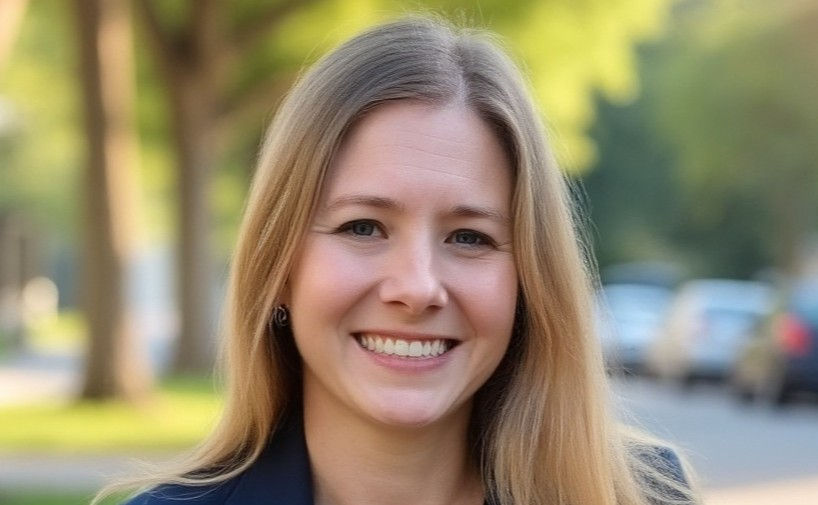
Rebecca Reddin, Perinatal Psychologist
What first drew you to perinatal psychology, and how did your own experience of becoming a parent shape the work you do today?
My experience with the perinatal world began very early on. My mother was an obstetric nurse, which meant I grew up talking about birth and babies at the dinner table. My friends loved to come over because they always learned so much! Because the transition to parenthood was something I had grown up around, I just assumed that meant I would find my own transition easy, and I waltzed into it with the confidence you can only have when you have no idea what is coming. I actually said the words, “I don’t think this is going to change our lives that much!” So, when I found myself tearful, anxious, and completely overwhelmed, I assumed, as many parents do, that I was the problem; I just wasn’t made to be a mother.
I am the type of person who needs to understand the why, so I dove into trainings, books, and articles to try to wrap my head around what was happening to me. That was how I stumbled into the world of perinatal mental health. I realized I wasn’t alone, and I haven’t looked back. Through my therapeutic work with individuals and couples on the journey to parenthood, I have noticed the same themes show up time and time again: 1. I wish someone had told me; 2. I wish someone had noticed earlier; and 3. I was told something wrong, and it made my experience so much harder. This made me realize the essential importance of making sure all providers who work with those on the path to parenthood have accurate, compassionate knowledge and training to provide the right information at the right time and in the right way.
What gaps in perinatal care led you to establish the Perinatal Mental Health Institute?
I always loved working with individuals to help make their journey to parenthood just a little bit smoother, but I found myself continuously frustrated by the brokenness of the system and the lack of information about perinatal mental health among perinatal providers. I kept hearing the same stories in my therapy room and felt such a strong urge to work upstream and start to change the environment these parents were navigating.
So often, we place the onus on parents to advocate for the changes we need, and that just feels like such a big ask while you are also navigating the journey to parenthood. The parents I work with all too often describe care from providers that was uninformed, inaccurate, and, without anyone meaning it to be, harmful. A disclosure of low mood dismissed as “just baby blues.” Intrusive thoughts met with alarm and panic instead of understanding and curiosity. Grief after loss that nobody named. A partner who was never asked how they were coping.
It wasn’t that these professionals didn’t care or didn’t mean well. They were just never trained to recognize or respond to how differently mental health challenges can show up in the perinatal period. Most perinatal professionals, whether they are midwives, GPs, public health nurses, doulas, lactation consultants, or therapists, receive very little specialist training in this area, yet they are so often the people parents turn to first.
The Perinatal Mental Health Institute was created from a desperate need to close that gap. We offer CPD-accredited training for the whole multidisciplinary team, from introductory courses through to our ten-month Advanced Perinatal Mental Health Specialist Training. Our mission is simple: to support perinatal professionals so they can be the village that families need as they navigate the transition to parenthood.
Through your work at Mindful Roots Counselling, what have you learned about the emotional challenges parents often struggle to put into words?
How much time do you have? There is so much to cover here! I will mention a few common points I hear in my therapy room.
First of all, so much of the burden that parents carry is shaped by unrealistic expectations and by the stories we tell about what parenthood “should” feel like. Many parents struggle to share that they don’t feel the instant bond they expected, or that they love their baby deeply but miss their old life. They may not know how incredibly common and normal these experiences are, leaving them feeling broken or inept. They struggle to disclose the scary thoughts they are having because they fear what it says about them or that someone will take their child away. In reality, these thoughts are common and usually a sign of being overly vigilant. The fear of being seen as a bad parent is so deeply entrenched and gets activated by the fact that parenthood very rarely looks how we expected it to!
Another challenge I so often see is that many parents carry a heavy burden of unspoken grief. Grief after pregnancy loss or a difficult fertility journey, grief for the birth they hoped for, or grief for the person they were before. Nobody tells us how much grief is intertwined with parenthood, and it hits us like a freight truck. Giving space to this grief, naming it, and normalizing it are powerful steps to help reduce the pressure to “only feel happy,” something that isn’t realistic at any stage of our lives.
Lastly, I hear about the loneliness many parents feel: they are surrounded by people and advice, yet feel that no one really sees them. We were never meant to parent in isolation, but in our modern world, we are often home alone with our babies for days on end, leaving us feeling like we are failing when, really, we are trying to play a team sport all by ourselves. We truly need a village. What I’ve learned is that when parents are given a safe place to share with someone who can help them navigate what is normal and what needs a little extra support, powerful healing happens. Often, the most healing moment is simply hearing, “You are not the only one, and the way you feel makes sense.”
Where do you see the biggest gaps in how healthcare professionals recognize and respond to perinatal mental health concerns?
The first gap is around providers knowing what to look for. We still tend to expect the stereotypical picture of postnatal depression: a tearful, withdrawn mother. In reality, perinatal mood and anxiety disorders often look very different from what we expect. Many parents primarily experience anxiety, as well as irritability, rage, difficulty sleeping, or a constant need for reassurance. Even when depression is present, perinatal depression is usually an anxious depression, and it is easily missed when the parent is trying so hard to hide how difficult they are finding it all. Across the globe, we are generally far behind the recommendations for screening, and many who can screen don’t, meaning essential information for recognition and treatment is missed.
The second gap is in how we respond. Even when a parent shares that they are struggling, professionals don’t always feel confident about what to say, how to ask, or where to refer. This leads to an unresolved loop: a parent opens up but leaves empty-handed, making it even more difficult to reach out again. At the very least, this delays care and treatment; in the worst-case scenarios, the consequences can be disastrous.
The third gap is who we forget about. Partners and fathers also experience fertility struggles, pregnancy loss, and fear of getting it all wrong. They are experiencing their own transition to parenthood and yet are often left out of the conversation, rarely checked on, and often struggle to identify, “What is my role here?” Ten percent of all dads experience mental health challenges during the journey to fatherhood. We need to be checking on dads, too.
Finally, perinatal care can be fragmented. Families are referred and expected to move between many different providers, and too often no one holds the whole picture. Siloed care just doesn’t work with the perinatal population. There is way too much sleep deprivation, overwhelm, and fear of being seen as a failure to expect a new parent to hold it all together. Imagine a world where families were held throughout the journey, proactively provided with support, and regularly checked on along the way. It would be a very different picture, and a beautiful one.
Why is it important to recognize matrescence as a psychological transition rather than focusing only on the physical changes of motherhood?
Matrescence, the process of becoming a mother, is a developmental stage just as significant as adolescence. It impacts our identity, relationships, body image, career, values, and sense of self, not to mention all the biological, neurological, and hormonal changes that happen during this time! Yet it isn’t talked about, leaving mothers feeling the huge impact of this transition without a word to describe it.
I often talk about matrescence as “clunky but normal,” a phrase I learned from my mentor, Michelle Anderson from Mobile Mama Therapy. Many women on the perinatal journey feel deeply unsettled, grieve for parts of their old selves, feel as though they have lost themselves in motherhood, and don’t recognize themselves. They assume they are failing because no one told them this was a normal part of the transition or gave them a pathway to navigate it.
Naming matrescence gives parents a way of describing what they are experiencing. It helps them understand that feeling pulled between who they were and who they are becoming is not a disorder; it is normal development. It also helps professionals tell the difference between the expected turbulence of a major life transition and the signs that someone needs more specialist support. Twenty percent of new parents experience a perinatal mood and anxiety disorder; 100% experience matrescence. Fathers also go through their own transition, called patrescence, which needs and deserves the same recognition.
What are some early signs that a parent’s emotional struggles may require more than reassurance or routine support?
This is the big question, and one I get all the time from parents and professionals. How do I know when how I am feeling is normal or if I need more support? The fact that we so often hear this question speaks to the lack of information and education for parents and providers around perinatal mental health. So, let’s get into it. It is important to know that some adjustment is expected in the early weeks, but there are signs that suggest more support is needed. These include:
Low mood, anxiety, or irritability that lasts beyond the first two weeks or seems to be getting worse rather than better.
Being unable to sleep even when the baby is sleeping, or a constant sense of being on high alert.
Intrusive thoughts that cause significant distress or lead to protective behaviors, such as not wanting to bathe the baby or be left alone with them.
Not wanting to be with people you love, or feeling numb or disconnected from your baby, even when you know you love them.
Panic attacks, persistent physical symptoms of anxiety, or an ongoing feeling of dread.
Feelings of guilt, hopelessness, or being a burden to their family.
Re-experiencing a difficult or traumatic birth through flashbacks or nightmares.
Behavior that is out of character, strange, or bizarre for that individual.
Any thoughts of self-harm or suicide, or signs of confusion, unusual beliefs, or rapid changes in behavior require urgent attention.
The most important thing is to listen to the parent. If they are telling you something feels wrong, take it seriously. Reassurance has its place, but it should never replace curiosity and an appropriate referral.
What can perinatal professionals do differently to help parents feel heard, understood, and emotionally safe?
It starts with how we ask. “How are you feeling?” is often answered with “Fine.” Asking more specific questions that include some normalization of common challenges can lead to a more open response. For example: “Lots of new parents find the journey to parenthood harder than they expected. Has anything about it surprised you?” This gives parents permission to be honest and to know they are not alone.
Next is how we respond to what we hear. Staying calm, curious, and non-judgmental matters so much. If a parent shares something vulnerable and sees fear or judgment on our face, they learn not to share again. Professionals can also make a real difference by naming the stigma out loud: telling parents that struggling is common, that it is not a reflection of their love for their baby, and that help is available and works.
Finally, know your referral sources. Being able to say, “I know someone who can help, and here’s how we get you there,” is one of the most reassuring things a parent can hear.
You often speak about the importance of building a village around both parents and professionals. What does that philosophy mean to you personally?
We often say it takes a village to raise a child. I like to extend that idea: it takes a village to support a parent, too. But in our modern world, many families don’t have the village they need and deserve. We might live very far away from our families, have chosen not to rely on them, or sometimes feel afraid to ask for help. This means that professionals have become a much bigger part of a new family’s modern village.
For me, that means every provider who meets a family, from the GP to the doula to the public health nurse, has an opportunity to make the transition to parenthood smoother and more supported. This is a real honor and a real responsibility. Holding this responsibility on our own isn’t sustainable, so professionals need a village, too. This work can be emotionally tender, and we need support ourselves to hold the grief, trauma, and distress with our clients. That is why we built the PMHI Community Hub, where providers across the globe can connect with like-minded professionals to get the support, education, and resources they need to be the village their own clients need. It is also why I am delighted to be a founding member of the Perinatal Psychotherapy and Counselling Association of Ireland. This idea is also central to our podcast, Perinatal in Practice: every professional deserves a village.
For me personally, I was truly lucky when I started in perinatal work. I had an incredible mentor and a fabulous community of perinatal professionals I could call on. It made me a better therapist and helped my clients feel held in a powerful and wonderful way. I truly want every provider to have the same experience I did.
What is the one change you would most like to see in how we support families through the transition to parenthood?
I would love to see perinatal mental health education become a core part of training for every professional who works with families, not just a token add-on. If every midwife, GP, obstetrician, nurse, doula, lactation consultant, and therapist had the knowledge, the language, and the confidence to recognize when a parent is struggling, respond with compassion, and refer effectively, we would catch so much more, so much earlier. Parents would no longer have to be lucky enough to meet the “right” person to be heard.
Alongside that, I’d like to see the transition to parenthood treated as a family experience, including partners, fathers, and those who have experienced fertility struggles and loss, with emotional wellbeing considered as routinely as physical recovery. It is not just the birthing partner who navigates these tricky waters. Ultimately, I want every parent to be met by an informed, compassionate village at every step of their journey.
Read more from Rebecca Reddin







